



Universitetsavisen
Nørregade 10
1165 København K
Tlf: 35 32 28 98 (mon-thurs)
E-mail: uni-avis@adm.ku.dk
—
Science
Treasure chest — For 70 years, the University of Copenhagen’s living gene bank Pometet has preserved old fruit varieties, experimented with new cultivation methods, and fought to hold on to space in a surrounding world that has repeatedly tried to build over it.
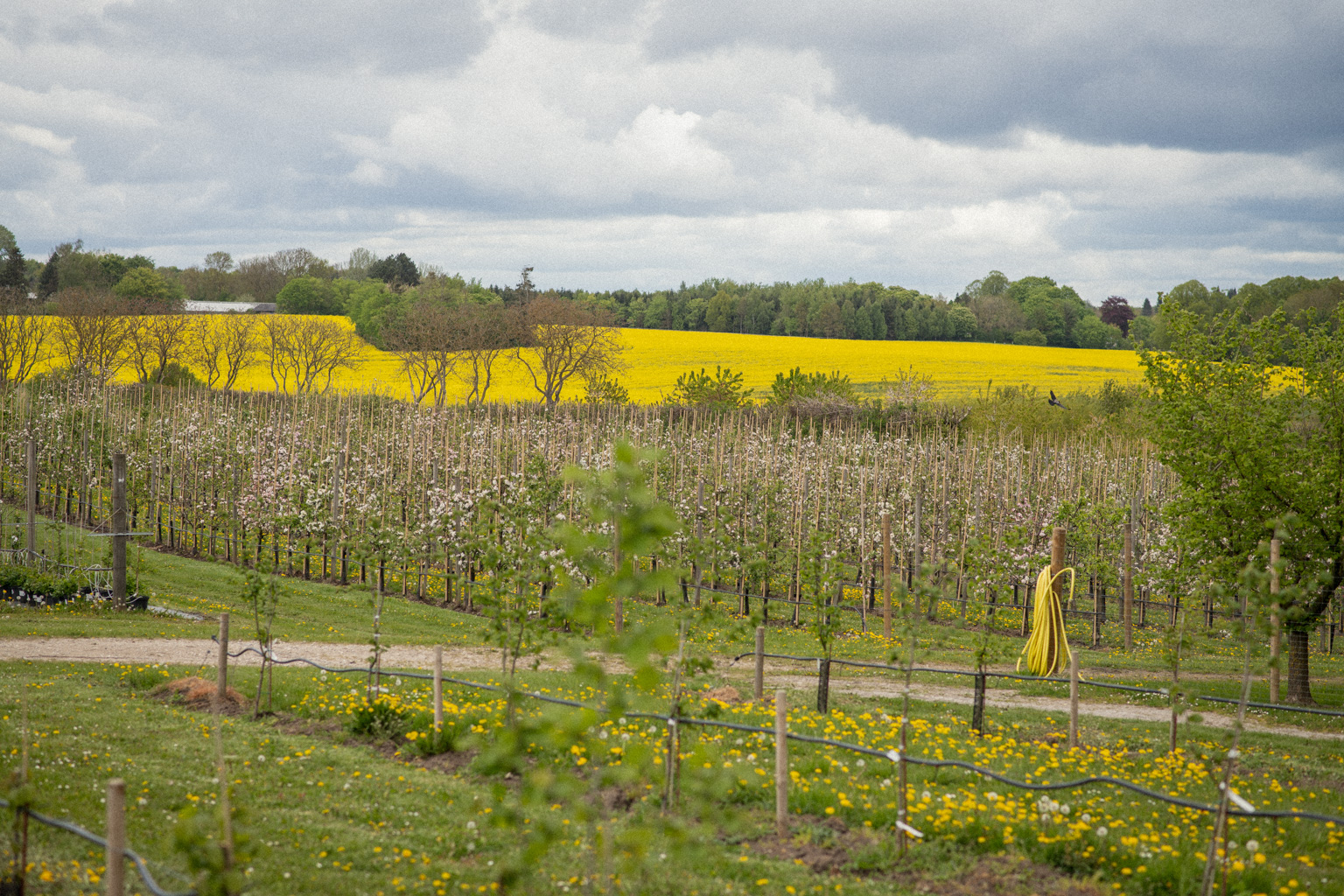
There is a sweet smell of rapeseed along the country road leading to Pometet. A Burger King cup lies abandoned in the ditch. A tractor and a lorry roar past at an ambitious speed, and further away, behind the wavy, yellow fields you hear the constant hum of the Holbæk freeway.
Heavy clouds hang above us, threatening rain.
»It’s not going to rain today,« says Lasse Lose. It is as much a statement as a prayer.
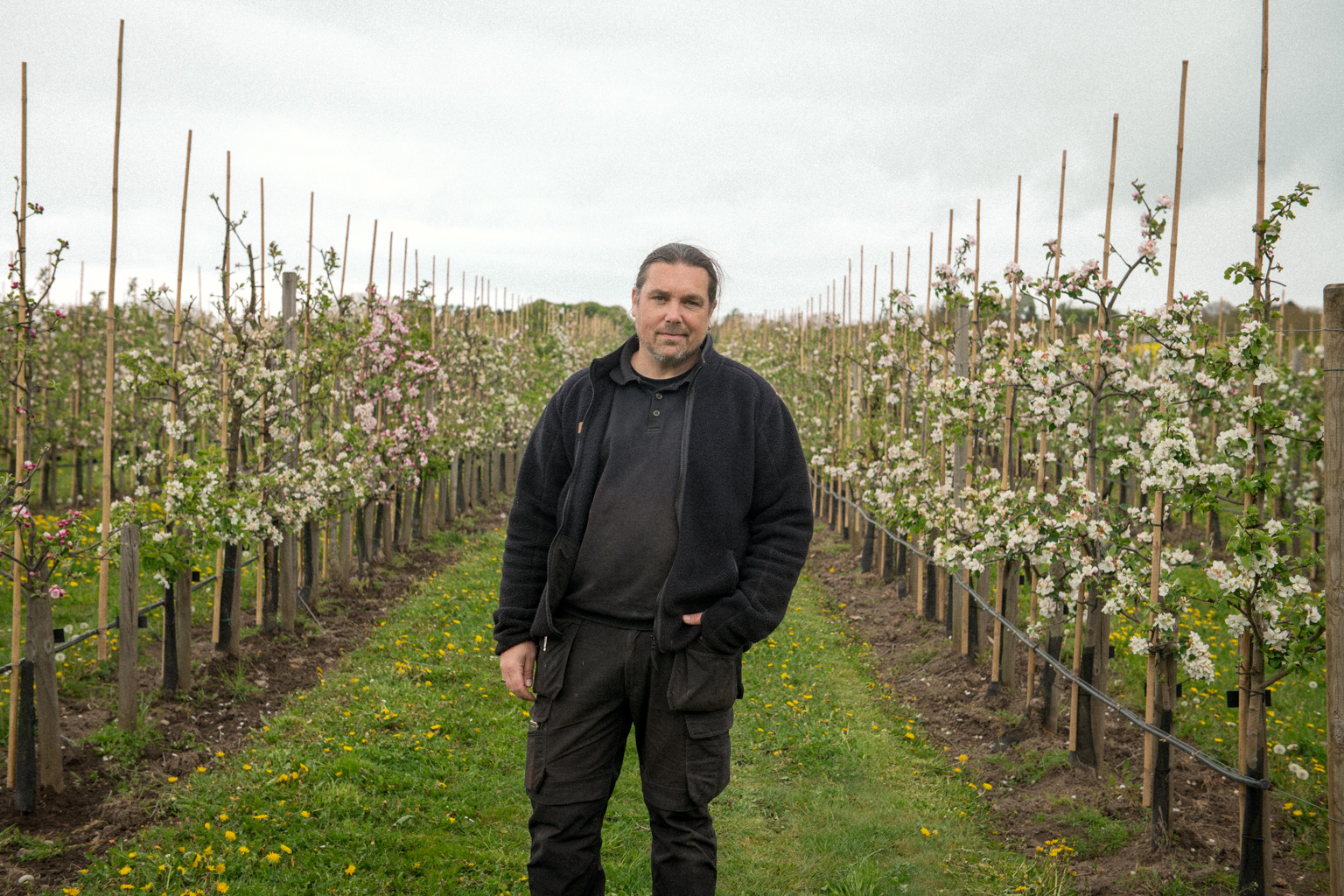
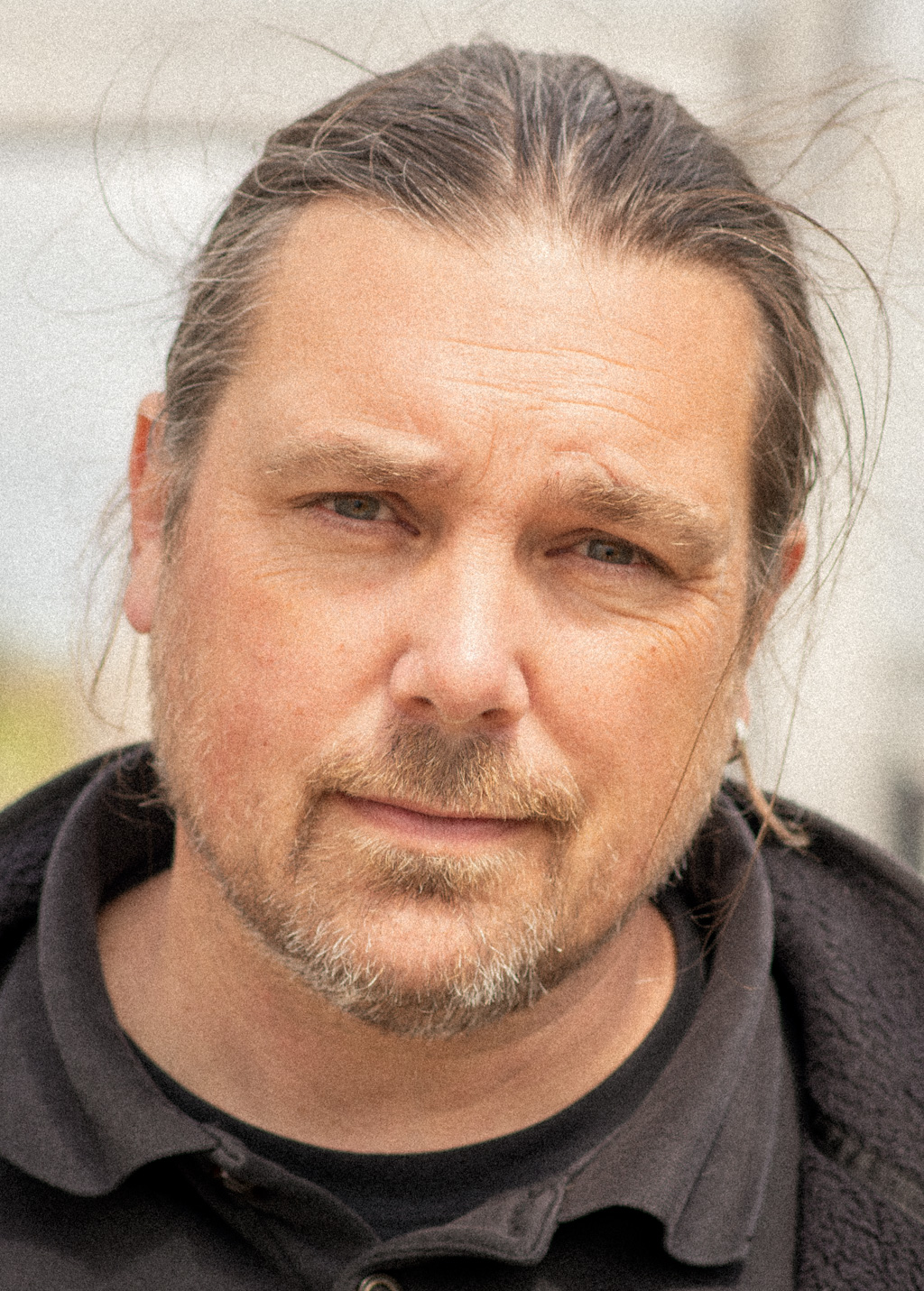
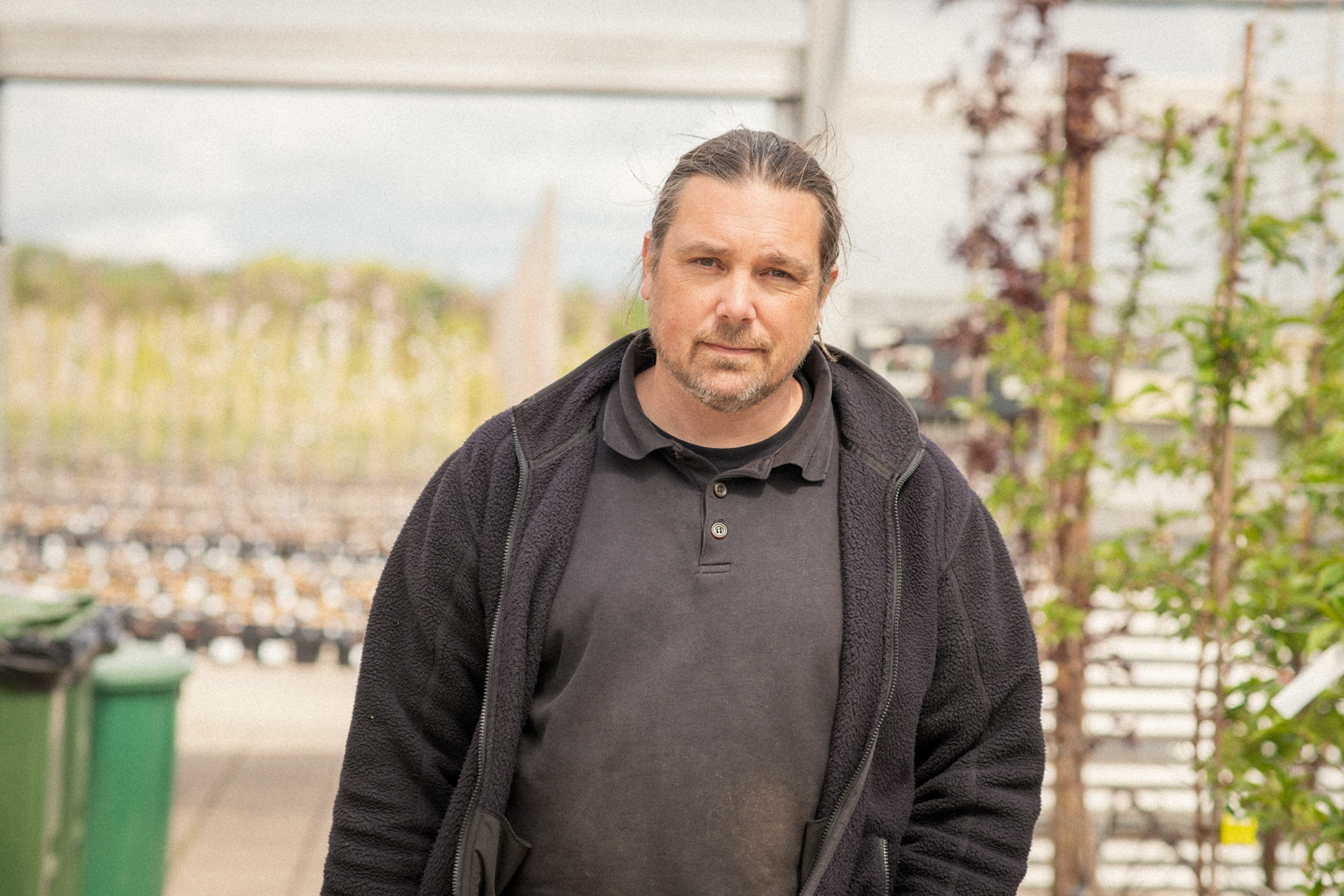
He needs dry weather. Today they are spraying against fungal diseases, and that becomes difficult if the sky suddenly decides to opens. He is dressed in work trousers and a fleece jacket and describes his own job as »20 per cent gardener and 80 per cent manager.«
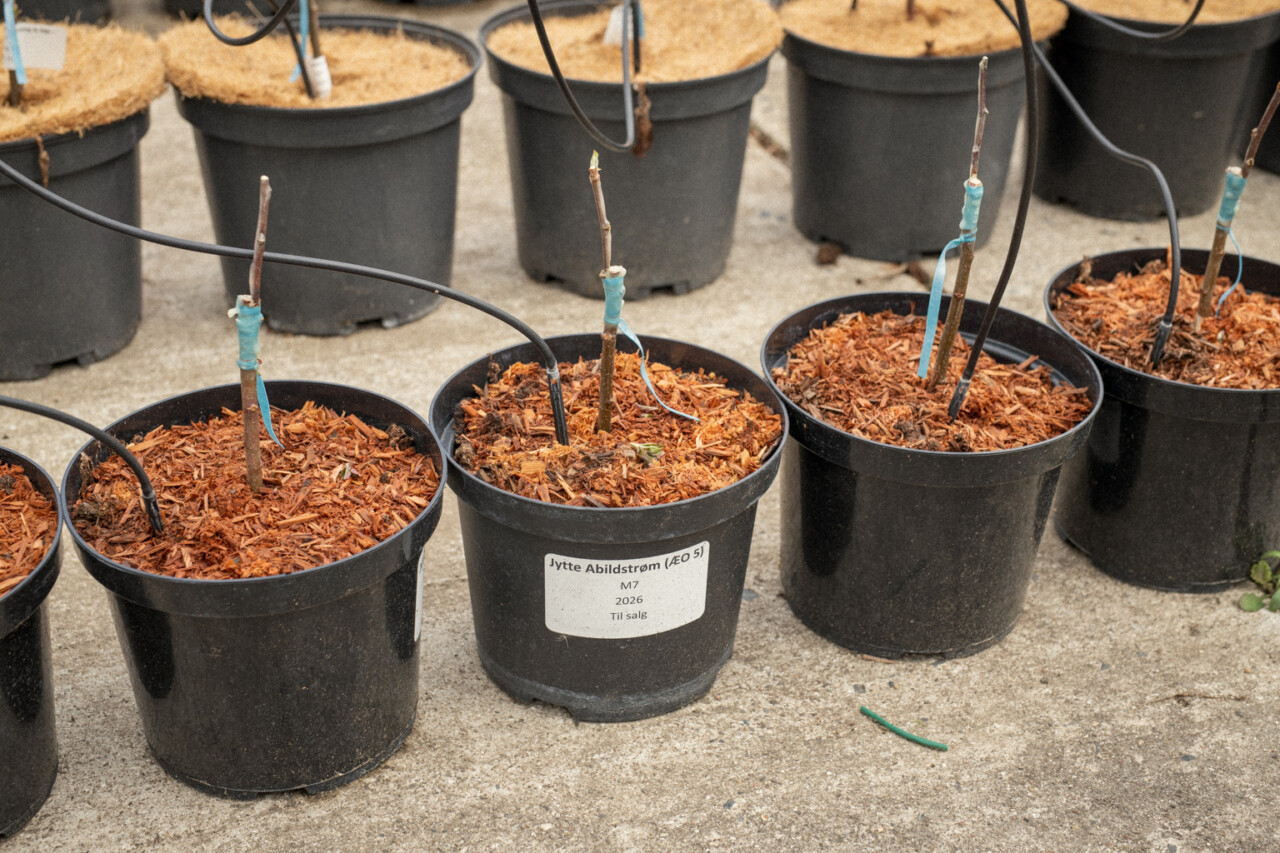
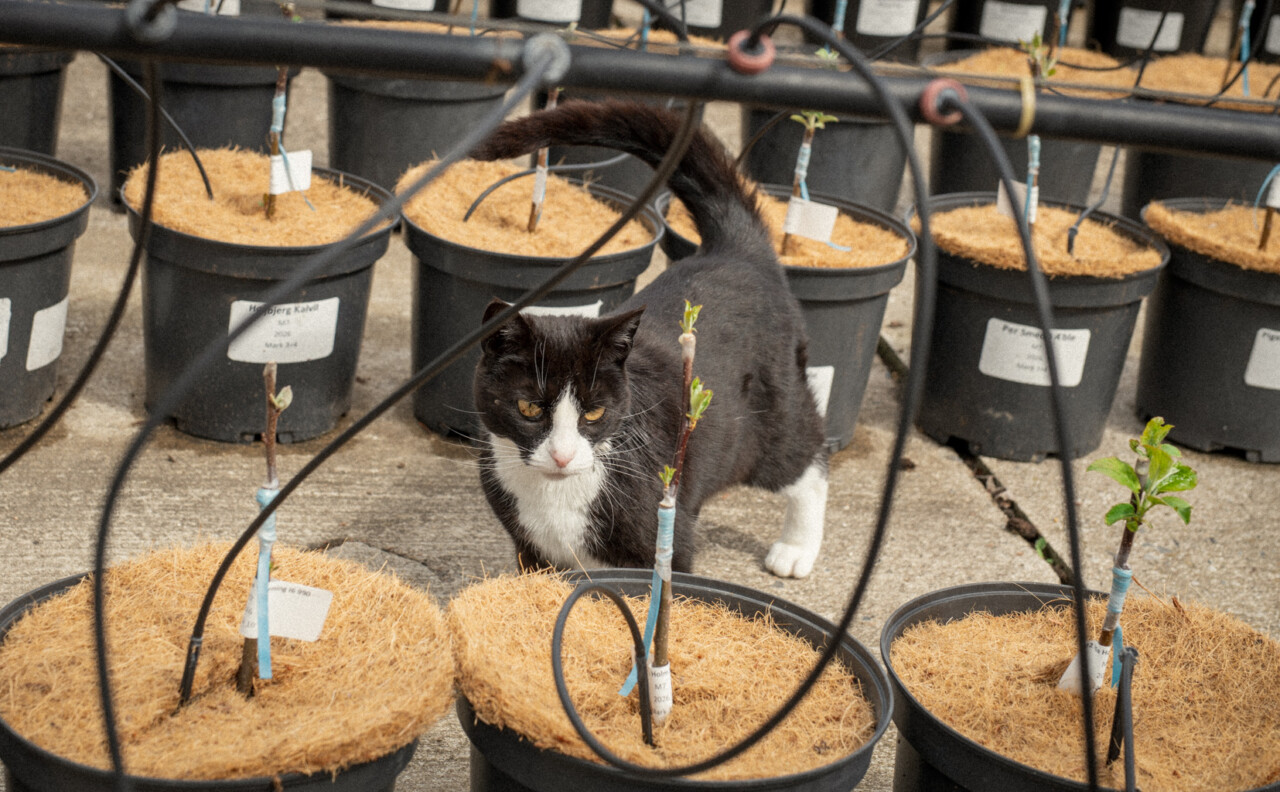
On the ground stand endless rows of black pots with almost bare branches sticking out of them. One of them carries a white label reading »Jytte Abildstrøm«, the name of a beloved Danish actor who died a couple of years ago. If you squint, you can just about imagine that all these pots will one day become flowering apple trees spread across the large grounds. But for now, they stand here in the nursery section, forming a maze for the site’s youngest employee: a black-and-white cat named Iris.
»She’s our youngest employee,« says Lasse Lose. »She catches rats and mice here.«
We are at Pometet, the University of Copenhagen’s living gene bank in Taastrup. It is at once an orchard, a research facility, a laboratory, and a cultural archive. Old varieties of fruit trees and berry bushes are grafted, studied, propagated and preserved here, while new ones are constantly added to the collections.
But the history of Pometet began long before Taastrup.
In 1858, at what was then called the Royal Veterinary and Agricultural University in Frederiksberg, an orchard was established with the ambition of collecting as many fruit varieties as possible. Students were to learn how to distinguish between them and assess their suitability for Danish conditions.
The problem was that there was never quite enough space.
J.R. Dybdahl, a lecturer in horticulture who took charge of the garden in 1863, »appeared to acquire more fruit trees than there was room for,« as one old account of Pometet puts it.
At the time, several varieties would be grafted onto the same tree simply to fit them all in. As Copenhagen expanded, the orchard repeatedly had to give up land for new buildings, railways and roads. Urban development had not exactly planned around a large fruit plantation in the middle of Frederiksberg.
POMETET
The name Pometet derives from the Latin word pomum, meaning fruit growing on trees. Pometet was established in 1858 as part of the Royal Veterinary and Agricultural University in Frederiksberg, but only received its current name when the entire collection was moved to Taastrup in 1956.
Pometet is part of the Nordic Gene Bank network. Its core mission is to support research and teaching at the University of Copenhagen.
There are 17 duplicate collections across Denmark containing copies of Pometet’s collections.
Eventually, the entire collection had to be moved out of the city. In 1956 and 1957, around 1,000 trees were relocated to Højbakkegård near Taastrup. About 20 students helped with the move and were rewarded with apple juice for their efforts.
Pometet is still here today, slightly hidden behind shelterbelts and fields on a sloping site where the wind continues to batter the trees.
»It’s very windy out there,« Professor Anton Pedersen wrote as early as the 1950s. »Shelter is a necessity.«
Pometet is many things, but first and foremost it is a gene bank, explains Lasse Lose as we walk among the bare branches. He is the head of Pometet, or Pometmester, as it is called in Danish.
Here, fruit varieties are preserved and categorised because they are valuable — or may one day become so. The University of Copenhagen houses many libraries, but this must surely be its most vibrant one.
There are around 800 different apple varieties here. Some 350 are Danish, and a few date back to the 17th century. Others are newer creations with names like Karen Blixen, beloved Danish author, and Jytte Abildstrøm.
Some of the newer trees are what Lasse Lose calls »railway apples«.
They are varieties that emerged because over the years train passengers sat in their seats eating Granny Smith apples, throwing the cores out the windows back when train windows could still be opened. Some of the seeds sprouted, grew into trees and were pollinated by bees from far and near. Over time, new varieties appeared along the old railway lines.
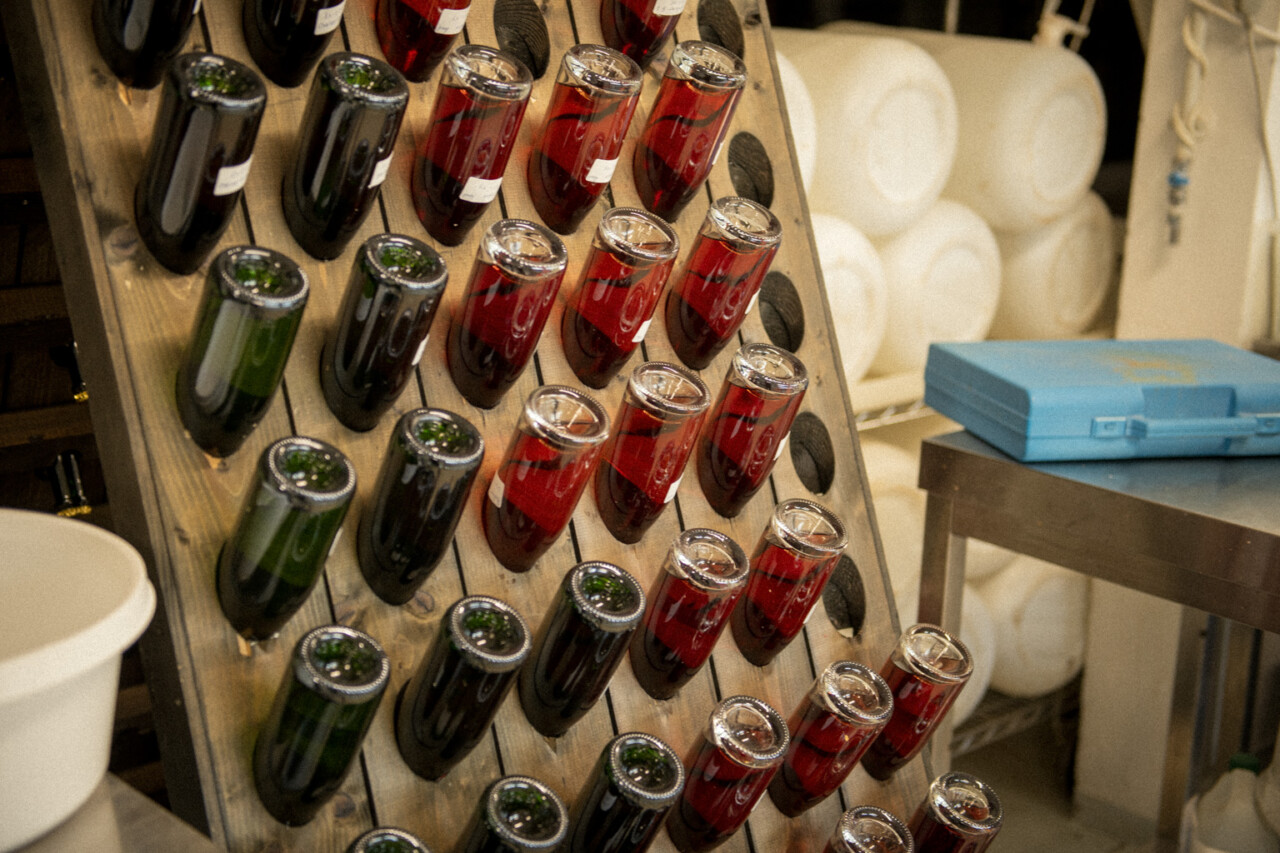
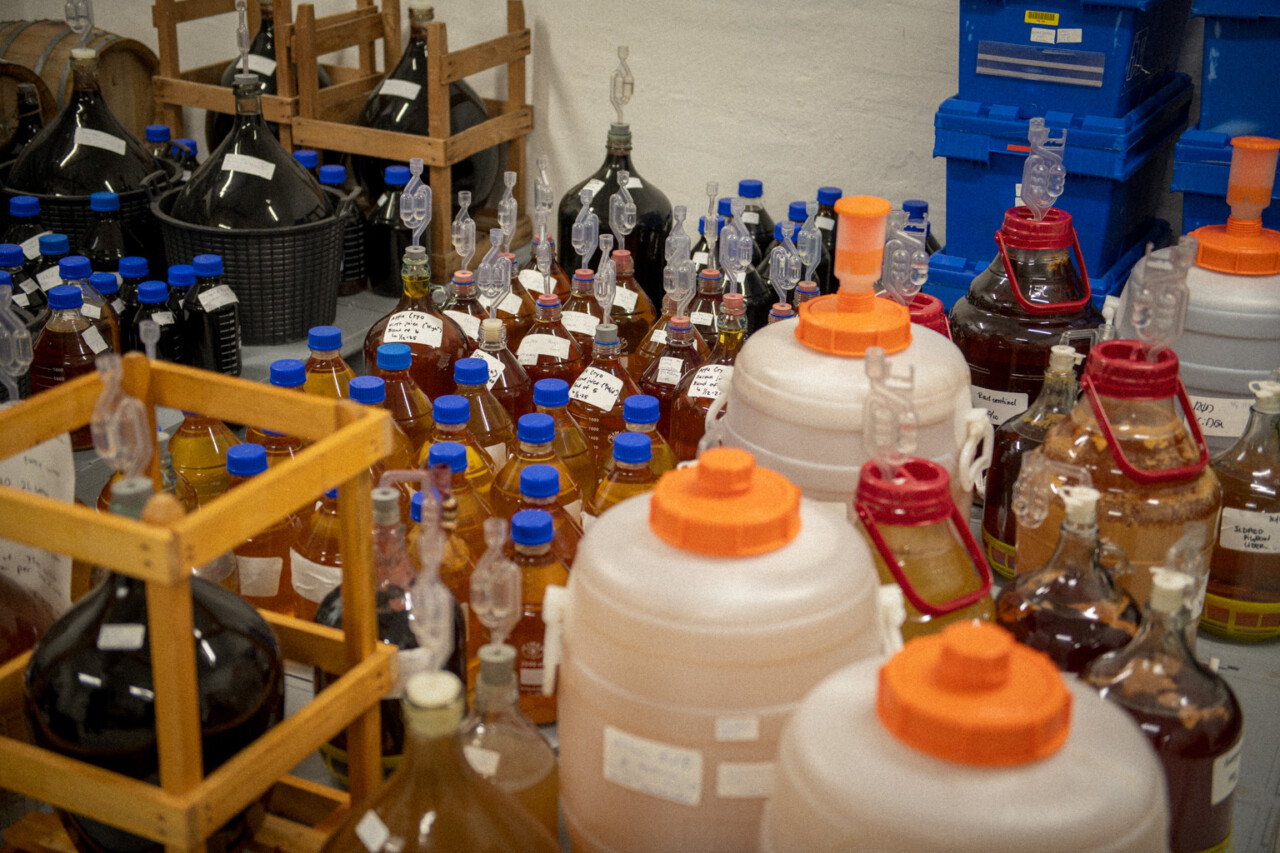
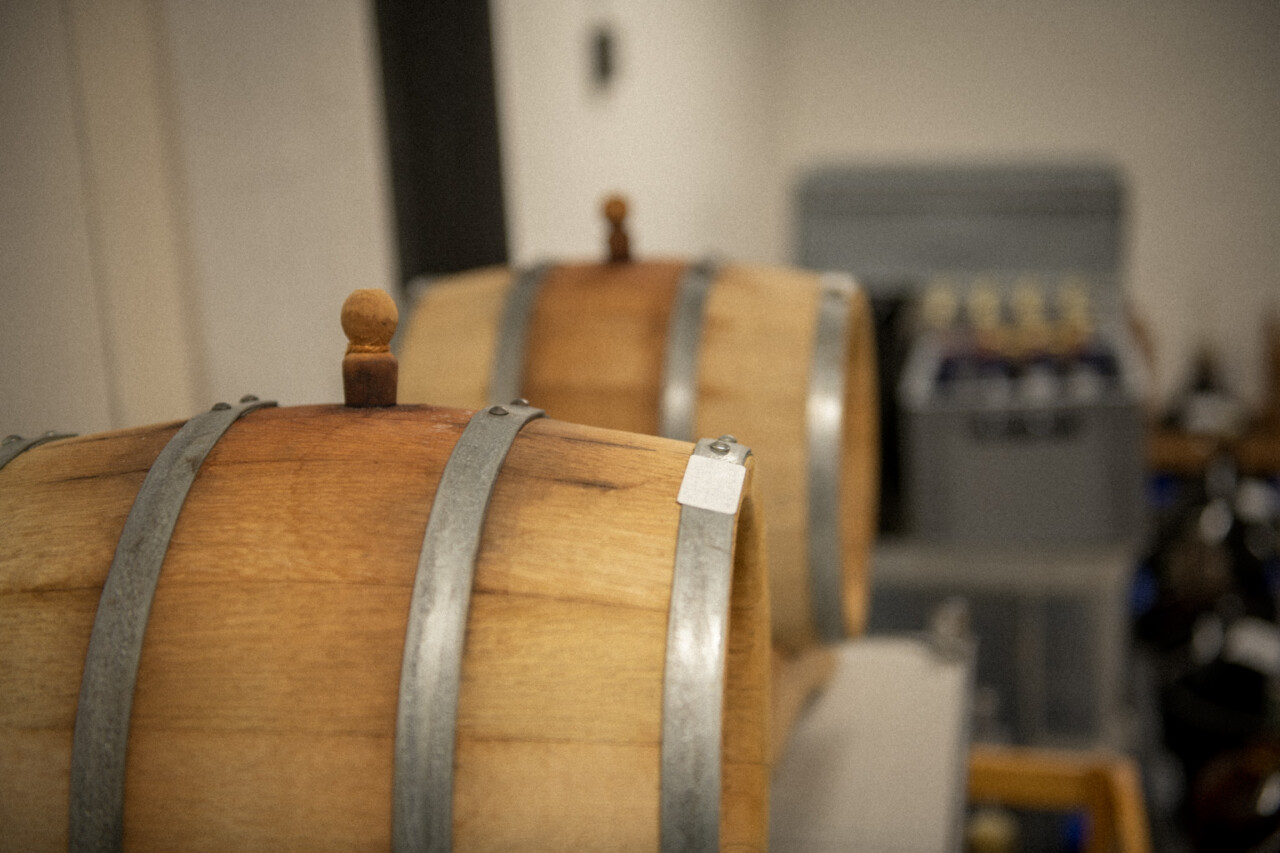
In the basement beneath the main building, the air smells sweet and musty, of cherries and the first signs of decay. Bottles, fermentation balloons and oak barrels filled with wine made from the orchard’s fruit stand in rows.
If you go back a few decades, they used a lot of chemicals out here. Everything had to look spotless.
Upstairs, the staff room is packed with grafting cuttings, plastic buckets and tools. A pot of grafting wax sits with a hardened brush inside, and chestnut branches that Lasse Lose had been grafting earlier this morning lie on the table. In here, the place feels less like an orchard and more like an archive of living organisms.
Pometet is not organic, Lasse Lose explains as we move away from Jytte and the other young plants towards the mature trees. In the distance, a small blue tractor moves through a white mist. Their main task is to keep the varieties alive, and if diseases or pests attack the trees, they need to be able to fight back.
»We lost the entire pear collection 14 years ago because a new pest arrived in Denmark,« he says.
Still, they have significantly reduced their use of chemicals.
»If you go back a few decades, they used a lot of chemicals out here. Everything had to look spotless. But that obviously comes at a cost.«
He likes that he and the other gardeners can walk freely among the trees, pick fruit and taste things without worry. He likes being able to let his children visit without concern.
»Instead of thinking about the maximum we’re allowed to use, we start with a minimum and work from there.«
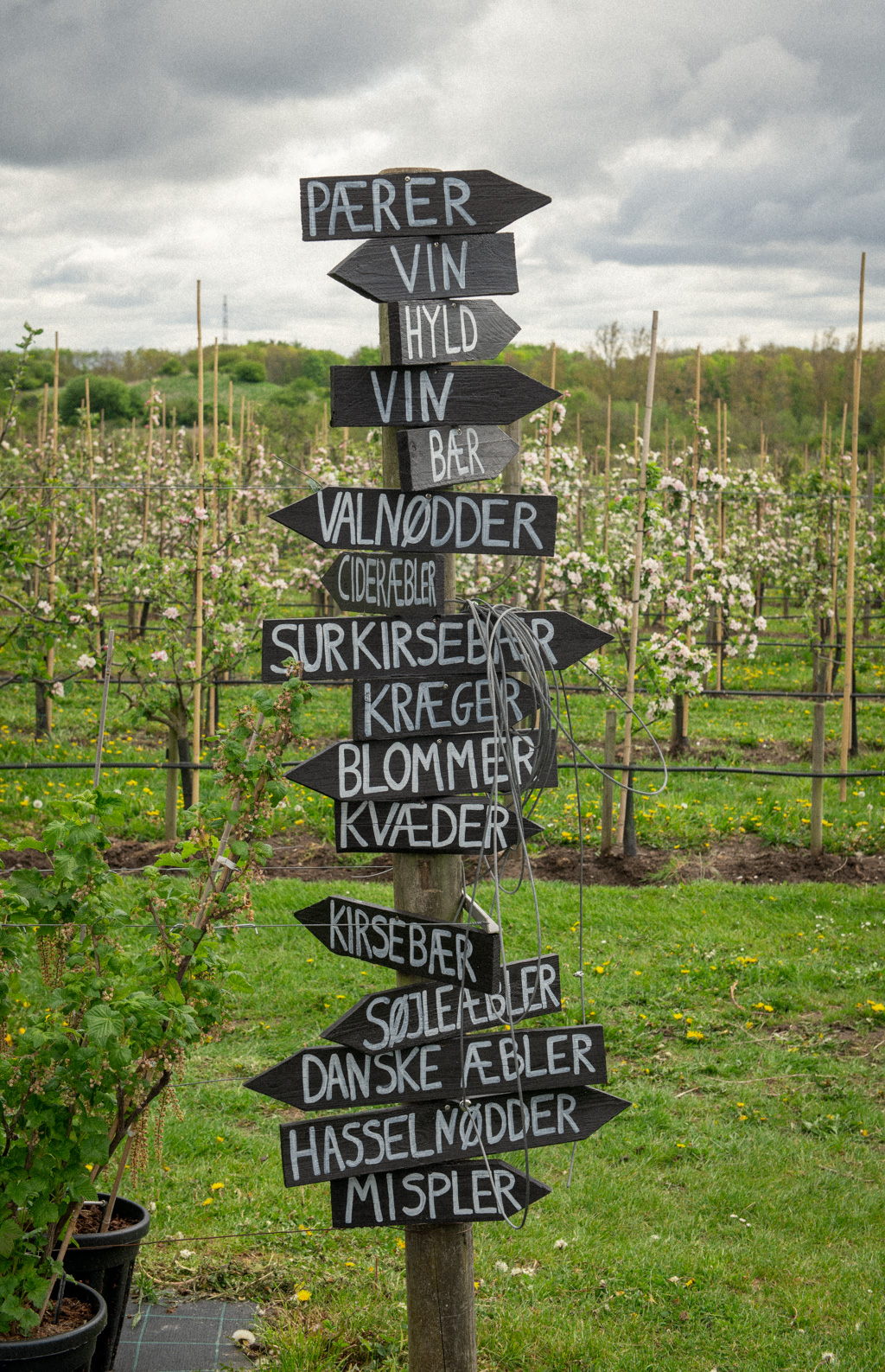
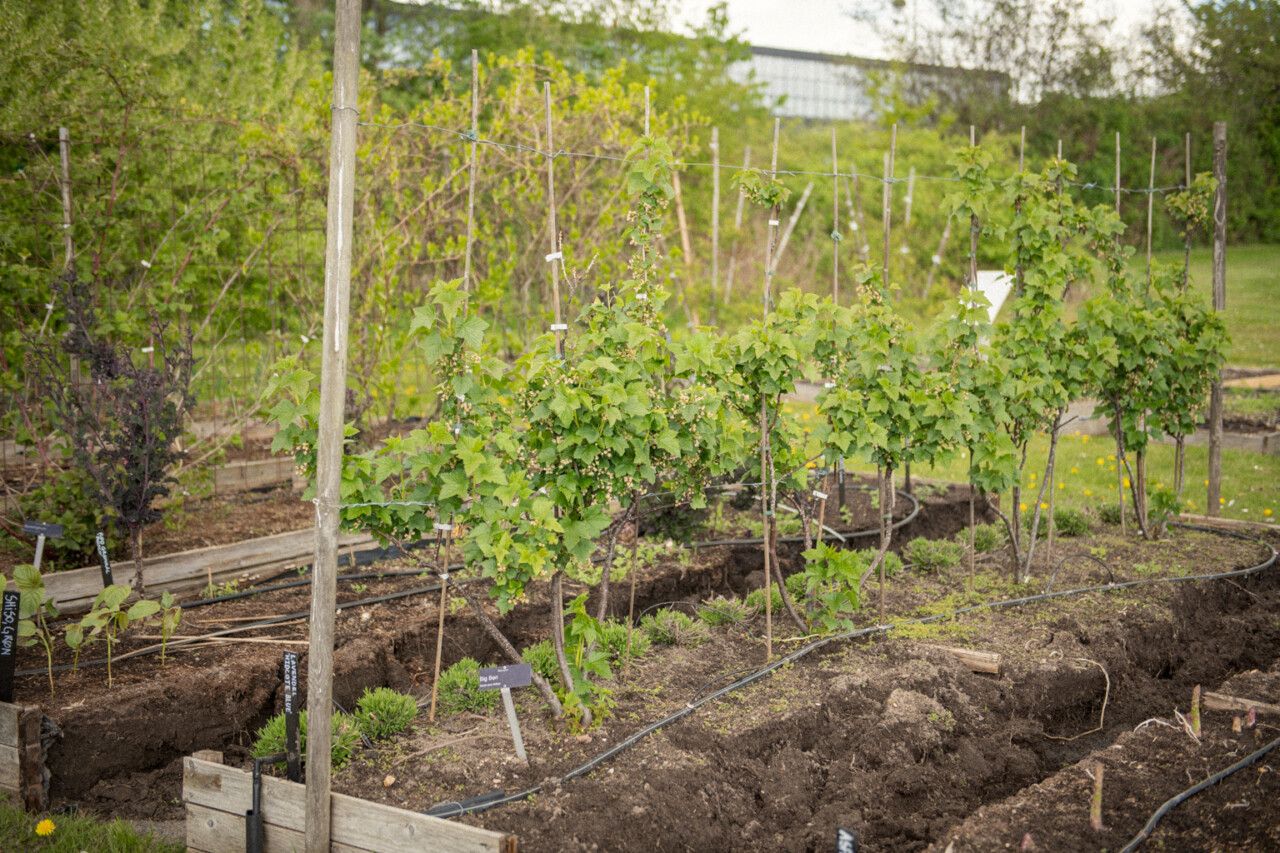
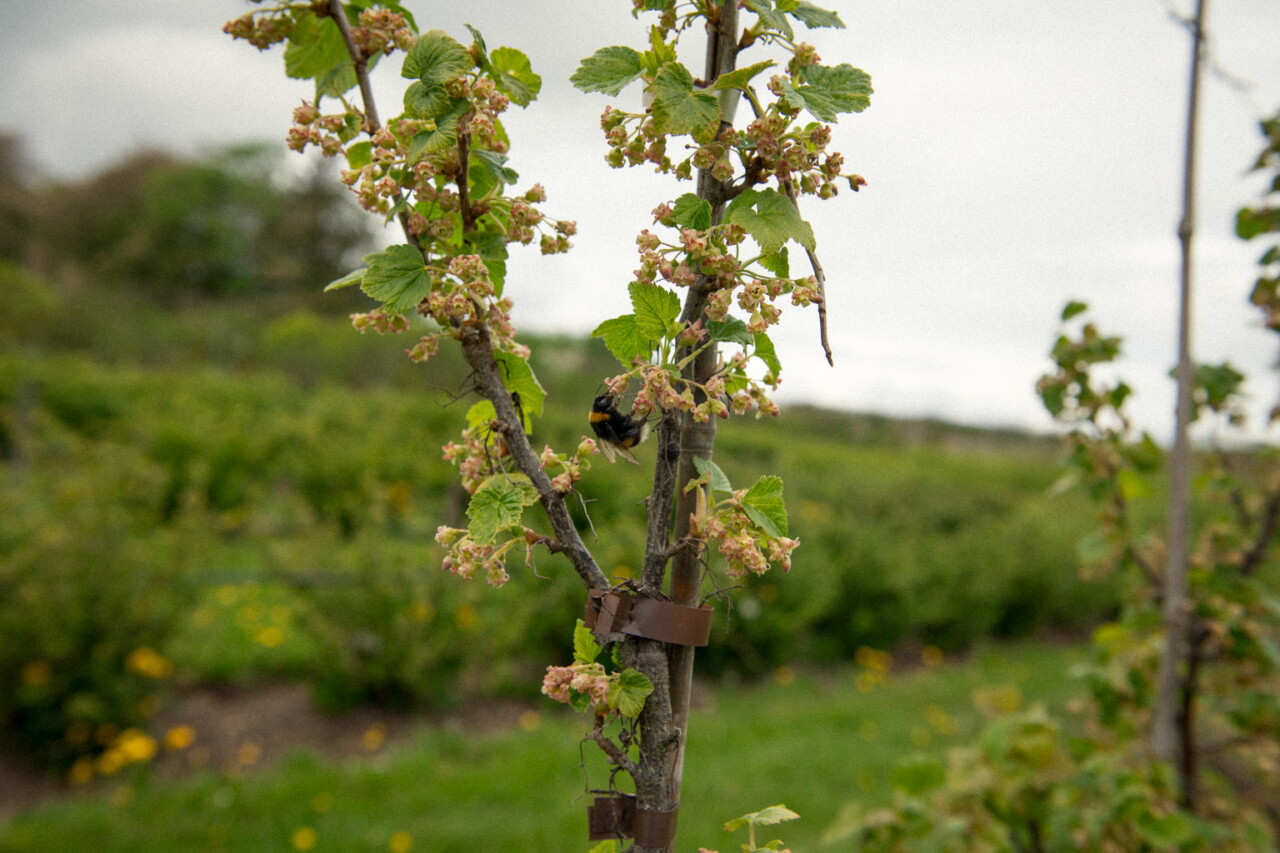
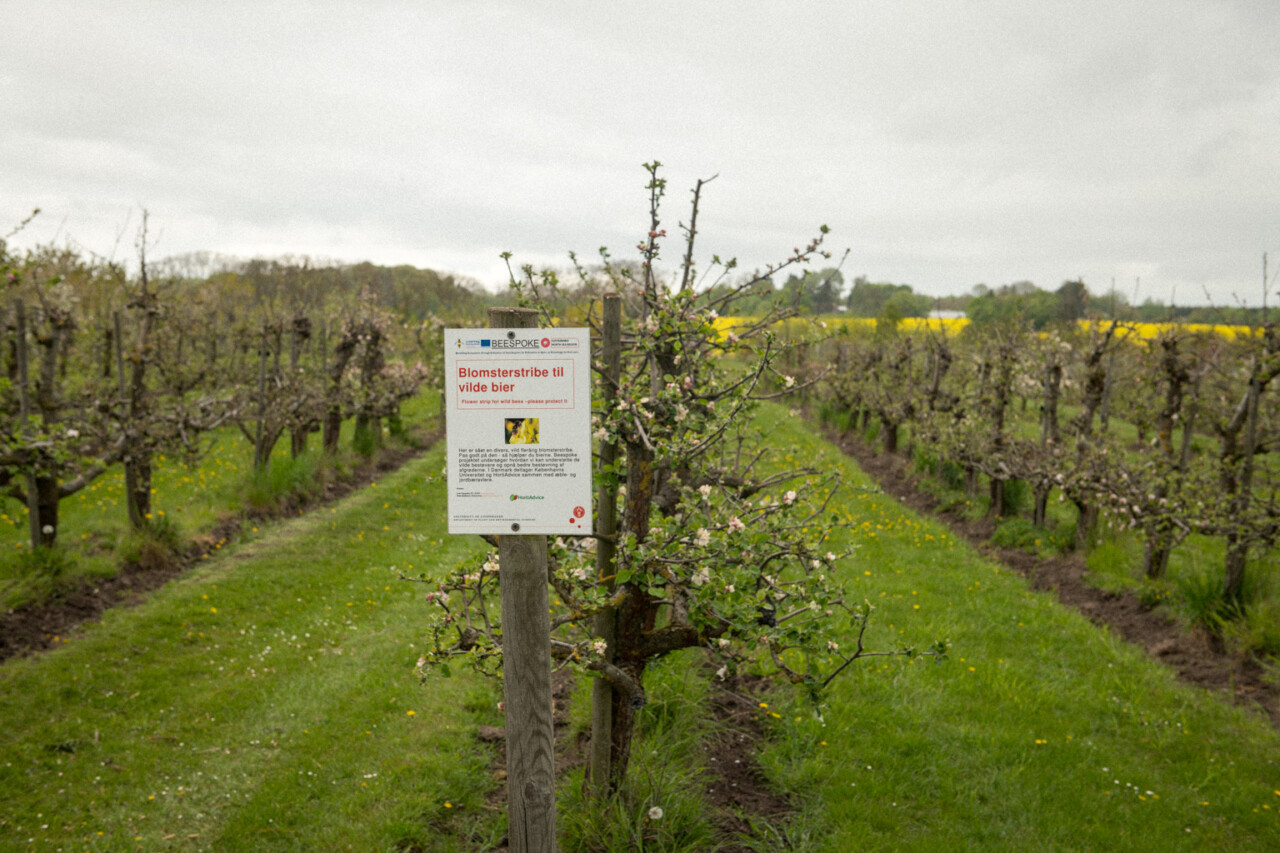
We move among the mature trees. Row after row of small apple trees stand covered in white and pink blossoms. If pollination succeeds, this will be a good fruit year. Apples, pears, stone fruits, cherries. Berry bushes with currants, blackcurrants and gooseberries.
Everywhere in the grass, bright yellow dandelions sway in the wind.
Lasse Lose is often asked why he lets them stay instead of mowing them down.
Yes, they spread quickly, he says. But the bees need something to feed on too. Once the fruit trees are in full bloom, the insects move on to them, and then the gardeners can cut the grass and dandelions.
It’s both-and, not either-or. That is why they also sow flower strips, so there is still something left in the pollinator buffet after the fruit trees finish flowering.
The trees stand in pairs — A and B. Clones. There must always be at least two versions of the same variety. In a few places, there are empty gaps in the rows.
»That’s sad,« says Lasse Lose. »Because it means a variety has died.«
Often, however, duplicates exist elsewhere in the nursery or collection.
We pass the elderberry collection: around 80 varieties, many of them bred back in the 1960s and 70s.
»People talk so much about all these superberries nowadays,« he says. »But elderberries are the healthiest thing you can get.«
Lasse Lose has been head gardener at Pometet for eight years. He trained as a gardener and grew up next door to a nursery.
He likes order. Straight rows. Plants and trees that look good.
There is not much »rewilding« under his leadership.
When you’re used to picking and tasting fruit when it’s perfectly ripe, buying apples in a supermarket becomes the dullest thing in the world.
But in Pometet’s forest garden, gardening students are allowed to experiment. Here everything grows denser and more unruly. There is no dedicated funding for the project, but when it rains and pruning is impossible, the students are allowed to continue working on it.
University students also come here to take soil samples and conduct analyses. There are no straight rows here — instead, different forms of cooperation are at play. One large tree towers above the others and binds nitrogen in the soil, benefiting the more shade-loving shrubs below.
»The idea is that you should be able to eat from every level of the garden. It’s a cultivation system that exists in reasonable harmony with itself and draws on the principles of permaculture.«
Lose says he was not particularly interested in fruit trees before he started working here. But this place made him picky.
»When you’re used to picking and tasting fruit when it’s perfectly ripe, buying apples in a supermarket becomes the dullest thing in the world. Working here has completely ruined me.«
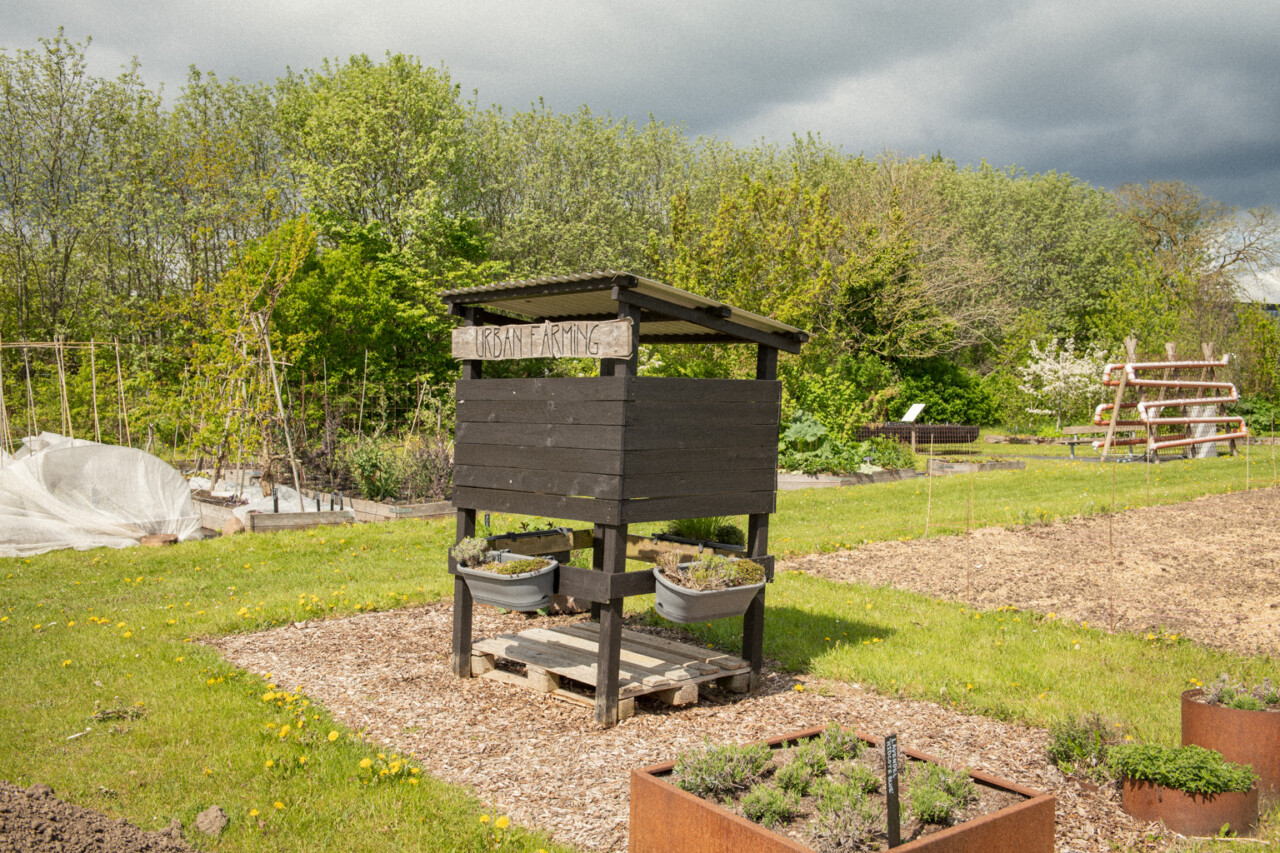
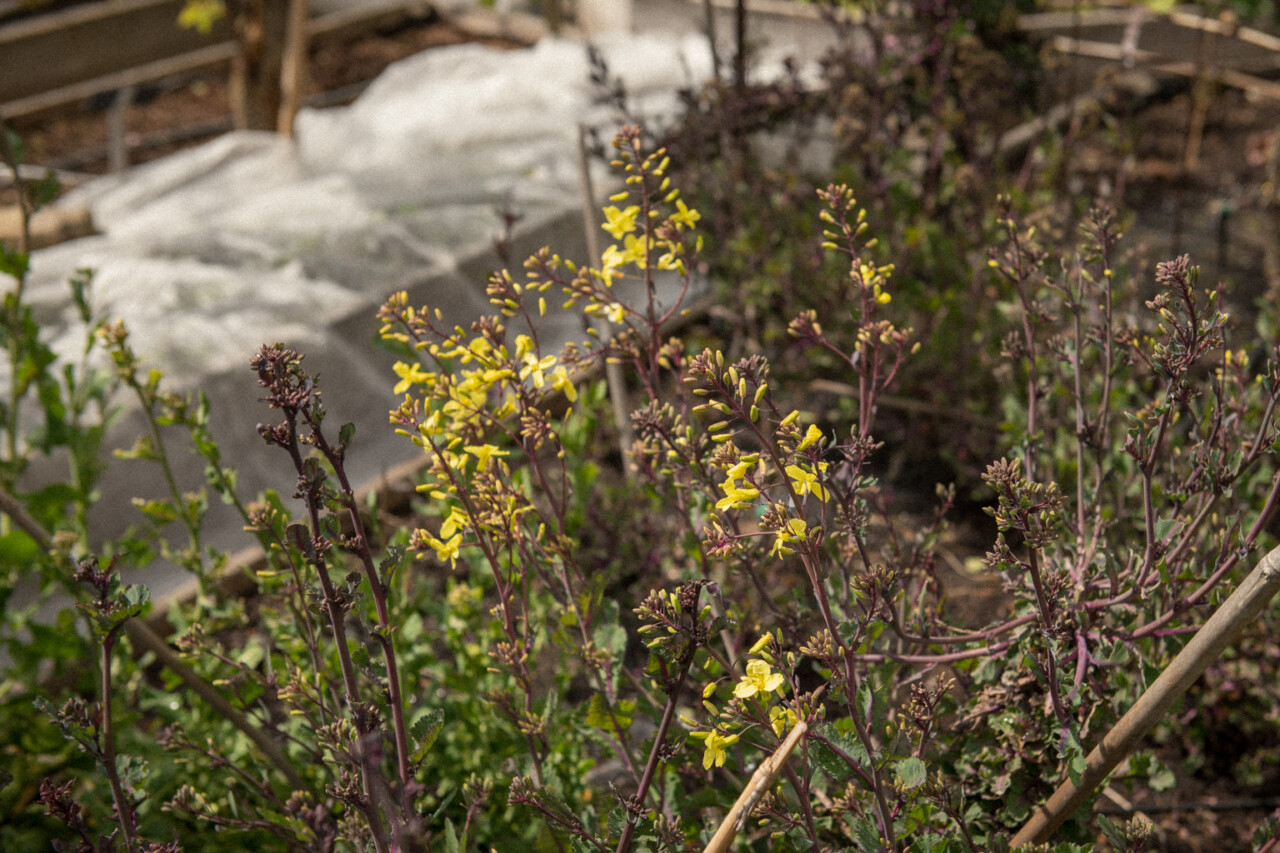
We continue towards a blue shipping container with the words URBAN FARMING painted on the side. Around it stands raised beds filled with thyme, strawberries, rhubarb and kale.
»When I was hired, it was written into my contract that I had to make sure Pometet got some urban farming,« he laughs.
Interest in self-sufficiency and growing your own food has increased significantly during his time here. Urban gardens, rooftop tomatoes and balcony farming are in vogue.
»There are two sides to it. One is about wanting to grow food and feed us. The other is the social aspect.«
In practical terms, a balcony planter or forest garden cannot compete with modern agriculture, he says. But it offers something else.
I tell him I recently got my first balcony and hung flower boxes there. That a butterfly visited for the first time the other day, fluttering among the carnations.
»There’s something about touching the soil,« he says. »It does something mentally.«
»Sometimes we have students who’ve been through a difficult period. Then they come out here, work with the plants, get their hands in the soil and experience success. It helps them move their thoughts elsewhere. There’s just something about it.«
Once a year, Pometet hosts an open house event. When the trees are heavy with fruit in September, visitors arrive from across the country.
They try to create activities that appeal to families with children, so that it does not become »just a pensioners’ rally going to get apple cake,« as Lasse Lose puts it.
One year they created a sunflower maze. It was a hit with children.
And Pometet must show the outside world why the place matters, says the head gardener.
»Historically, Denmark has been very good at forgetting to take care of places like this,« he says. “Then they disappear, and suddenly people realize they have to recreate them.«
Michelin restaurants like Noma and Alchemist have been regular visitors. Researchers from the University of Copenhagen are working with organic strawberries in the greenhouses. Food company Chr. Hansen — now Novonesis — has investigated whether some of Pometet’s old, nearly black strawberry varieties could be used as natural food colourings.
»I got tired of people seeing Pometet as an apple museum,« says Lasse Lose, who considers public outreach one of his core responsibilities. »It’s a treasure chamber out here.«
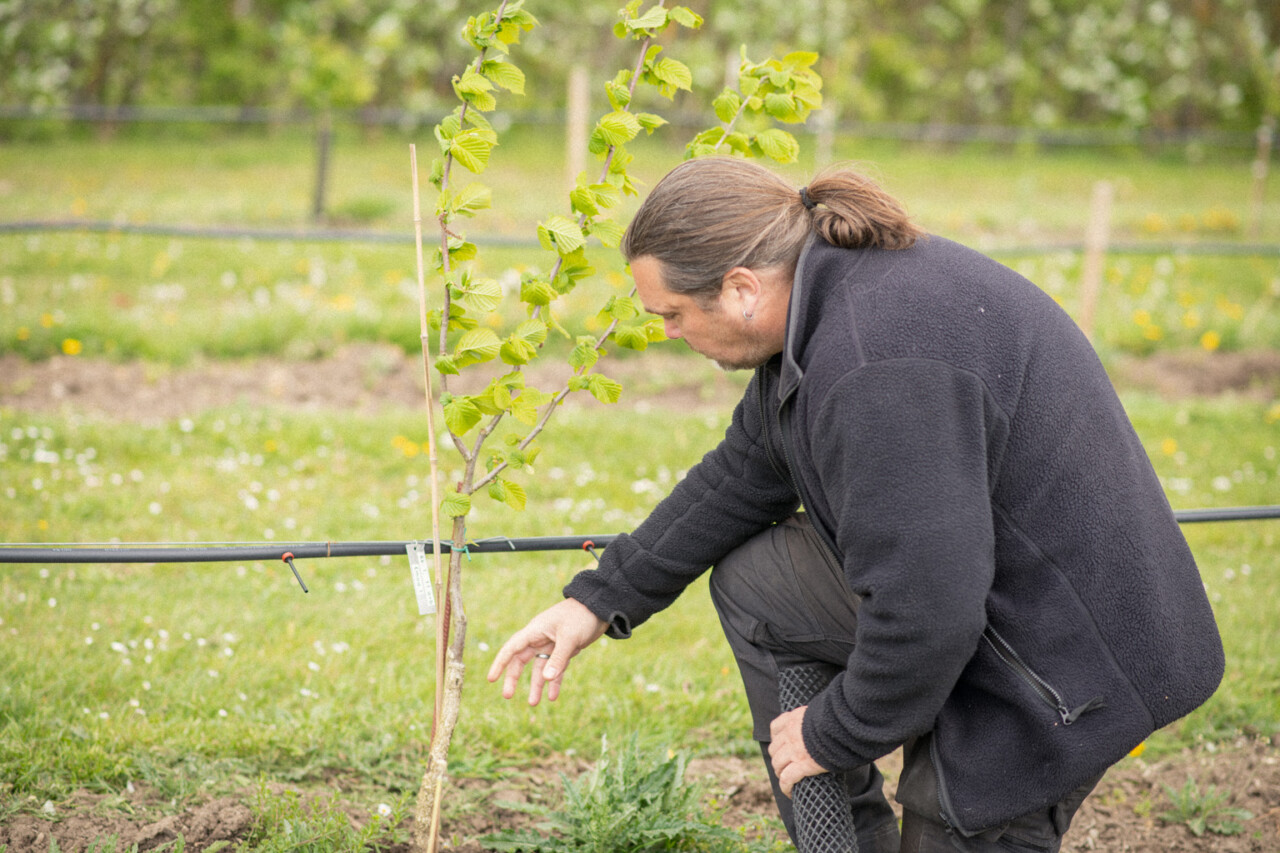
They experiment with Danish wine production, old fruit varieties and hazelnuts grown as small trees instead of bushes. Constantly trying to find new ways of using old varieties.
»We need to open the doors and let people come here and get ideas. Otherwise, you know what happens to places like this. If they’re not used, they slowly disappear.«
I got tired of people seeing Pometet as an apple museum. It’s a treasure chamber out here
The flowering rows, Iris the mouse-hunting cat, the nearly black strawberries and the old varieties grafted onto new rootstocks make the place feel like it is suspended somewhere between reality and fantasy. Sometimes, Lose and the gardeners push the limits of what is possible.
»We once made a tree that grew apples, pears, quince and medlar all at once.«
It survived for a while.
»But then the tree started favoring one and ignoring the others.«
The Frankenstein tree was not a success. But Lasse Lose still dreams of creating a family tree carrying many different apple varieties on the same trunk.
»But won’t the same thing happen?« I ask. »Won’t the trunk just favor whichever variety grows best?«
»Oh yes,« he laughs. »The trunk will always favor whatever grows best. But then you just have to manage it with the pruning shears.«
It’s a little bit wild and a little controlled. Crazy experiments and cultivated trees trying to remain relevant in a society rapidly changing because of climate change.
Some old varieties are hardier than newer ones and better suited for a future with more extreme weather. So Lasse Lose and his team experiment with grafting old apple varieties onto dwarf rootstocks to make them more attractive to homeowners. Or with growing hazelnuts — an old Danish hedgerow staple — on a single trunk to make them easier for Danish farmers to cultivate and harvest as green protein.
They have imported hazel trees from Oregon, where large-scale nut production is common, and now Lose and his gardeners are testing how they perform against old Danish varieties.
We have wandered through the orchard for an hour and a half, and to Lasse Lose’s irritation, it has started raining.
I spot Jytte Abildstrøm standing in her pot.
»So, does the apple actually taste good?« I ask.
»It tastes insanely good,« he says.
Shortly after actress Jytte Abildstrøm’s death, Pometet was contacted by a local journalist who told him that the actress and lifelong environmental activist had always dreamed of having an apple tree named after her.
And by coincidence, that was possible here.
For years, Pometet had been mapping old varieties together with Danish garden owners and now had several unnamed trees. Including the particularly delicious number 0005.
»The gardening students kept going down there to pick fruit from the same tree,« says Lasse Lose. »So I figured there had to be something special about it.«
This year, as Pometet celebrates its 70th anniversary, they have planted 70 apple trees of the Jytte Abildstrøm variety.
They will be ready for the open house in September.