



Universitetsavisen
Nørregade 10
1165 København K
Tlf: 35 32 28 98 (mon-thurs)
E-mail: uni-avis@adm.ku.dk
—
Education
End of agreement — After a year and a half of negotiations, the Royal Danish Library and Danish Universities have given up on reaching a new agreement with Oxford University Press. In the humanities, Associate Professor Christian Dahl fears that researchers and students will overlook important knowledge.
When Associate Professor of Comparative Literature Christian Dahl wants to examine the meaning or history of a word, he has for years used the Oxford English Dictionary — the enormous digital reference work that, for many literature and language scholars, is something like a bible.
But now it is out of reach.
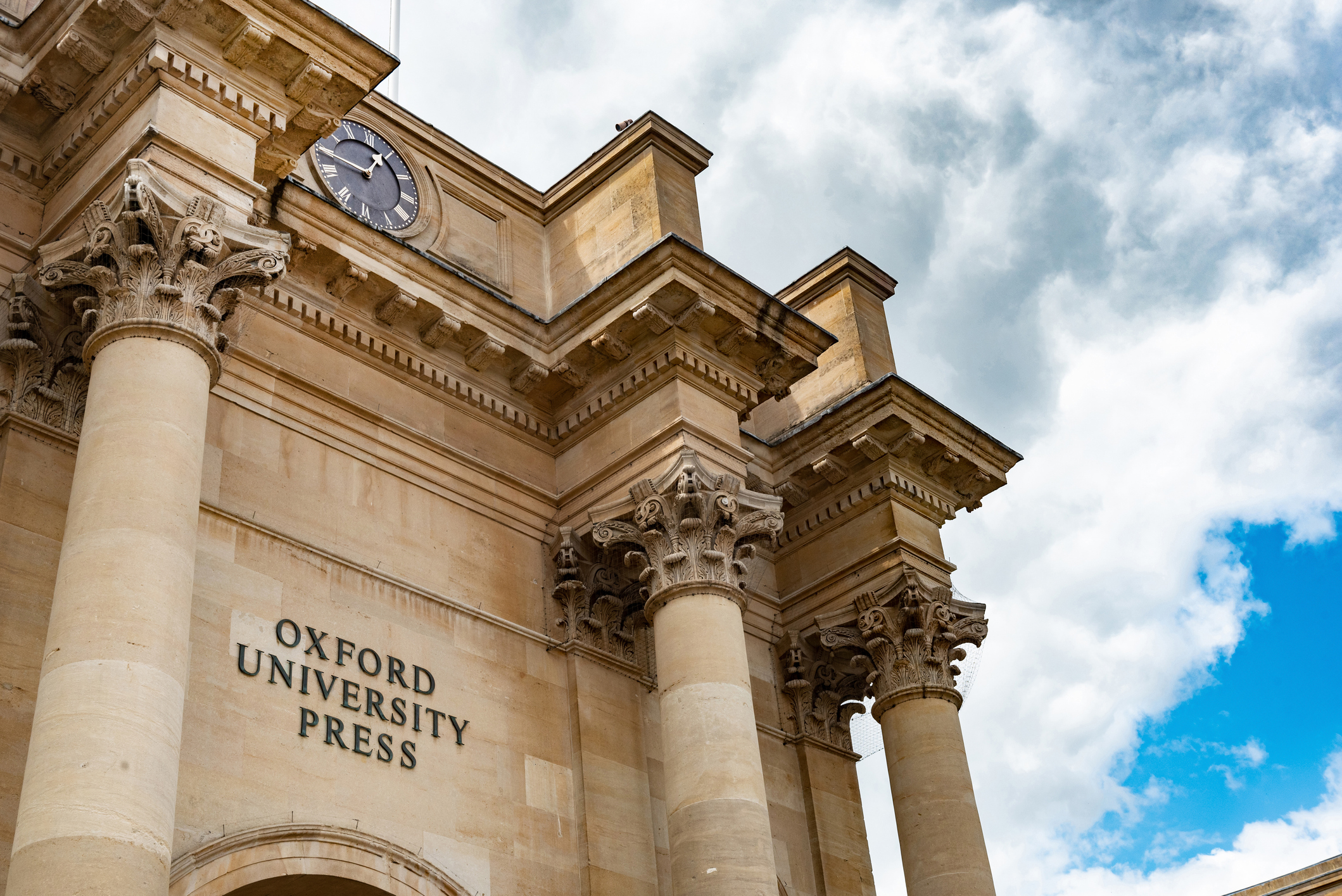
After a year and a half of negotiations, the Royal Danish Library and Danish Universities have failed to reach a new national agreement with Oxford University Press. This means that researchers and students in Denmark no longer have access to new material from the publisher, which is the largest university press in the world.
And even though older journals and books remain available, Christian Dahl says the consequences will be felt.
»Oxford University Press is probably the publisher I use the most myself as a researcher and lecturer,« he says.
I will certainly manage to put together a decent syllabus, but there are some things that are not available. My options have become a little more limited
Christian Dahl, Associate Professor at the Department of Arts and Cultural Studies
Christian Dahl is an associate professor at the Department of Arts and Cultural Studies and has conducted research and taught at the University of Copenhagen for around 20 years. He describes himself as a »seasoned, hardened user« of Oxford University Press’ many titles, reference works and digital resources.
»They have a pretty fantastic profile, where they publish both cutting-edge research and works you use when you have to teach and plan your teaching,« he says.
In his field, the publisher is, as he puts it, »indispensable«:
»What most humanities students will probably notice directly is that they no longer have access to the Oxford English Dictionary. It is the authoritative reference work. Many people use it daily or weekly. It is simply part of the craft,« he says.
At the same time, he will have to think of alternative routes when a new reading list has to be ready for the autumn semester.
»I will certainly manage to put together a decent syllabus, but there are some things that are not available. My options have become a little more limited,« says Christian Dahl.
The breakdown in the agreement does not mean that all material from Oxford University Press will disappear overnight.
Books, journals and other material that the libraries have already purchased access to can still be used by researchers and students. For this reason, Christian Dahl also believes that many people have not yet noticed what the end of the agreement means.
»It is a problem that many people probably do not really feel very much yet, but it will grow as more time passes,« he says.
He himself already misses, in particular, his access to dictionaries, reference works and encyclopaedias.
There are probably things I will not discover
Christian Dahl, Associate Professor at the Department of Arts and Cultural Studies
In his work with classical English literature, the Oxford Classical Dictionary has been a regular companion, and according to Christian Dahl, it is an example of the type of work that makes Oxford University Press so important to the humanities.
»They have always been good at producing works that introduce large fields of research with accessible articles and good reading lists. That is extremely useful both for researchers and students who need to cultivate a new field,« he says.
This is why he fears not only that the work will become more cumbersome. He also fears that something will be lost in the research process itself.
»There are probably things I will not discover,« says Christian Dahl.
When researchers have to delve into a new field, search for literature or get an overview of a topic, reference works and overview articles are often the first entry point, he explains. If some of them disappear, researchers may overlook new angles or central discussions:
»The risk of overlooking new developments in research is great. And that, I think, will become a problem.«
At the Royal Danish Library, they are fully aware that the breakdown in the agreement will have consequences.
This is according to Kira Stine Hansen, who is university librarian for Copenhagen University Library and deputy director at the Royal Danish Library.
As deputy director, she is responsible for the national licence negotiations, in which the Royal Danish Library negotiates on behalf of Danish educational and research institutions.
She stresses that the decision to break off negotiations with Oxford University Press was not made by the Royal Danish Library alone. The negotiating mandate was established in cooperation with Danish Universities and has been discussed by the university leaderships.
We are aware that we are creating a problem in the university sector. We would very much like to have the agreement, but not at any price
Kira Stine Hansen, deputy director at the Royal Danish Library
The end of the agreement does not affect researchers’ ability to publish articles with Oxford University Press, and researchers and students can still read articles published up to and including 2025. It only concerns access to content published in 2026, Kira Stine Hansen emphasises, but she understands the challenges caused by the end of the agreement:
»We are aware that we are creating a problem in the university sector. We would very much like to have the agreement, but not at any price,« says Kira Stine Hansen.
According to her, the negotiating mandate has for several years included a clear demand that the universities will not accept price increases, and that they want better conditions for Open Access publication of Danish research.
»A large share of Danish research is publicly funded, and therefore we also believe that Danish research publications should be openly accessible,« she says.
Kira Stine Hansen stresses that the Danish universities are willing to pay for access to research publications, but they will not accept the way several academic publishers are pushing up prices.
»The nature of research and education is that the money should remain in the system. And it is not the publishers who produce knowledge, but the research institutions. And then we have to hand over our knowledge and pay to get access to it again.«
Although Oxford University Press is the world’s largest university press, the agreement has not been among the largest in the overall Danish licence economy.
According to Kira Stine Hansen, Denmark negotiates licences worth more than DKK 250 million annually in total. The agreement with Oxford University Press was worth around DKK five million.
We hope that we can resume negotiations with the Royal Danish Library in the near future
Diana Clough, communications director at Oxford University Press
»By comparison, it may be a small financial agreement, but it is clear that its significance is important where it has an impact,« she says.
The Royal Danish Library has national agreements with more than 80 suppliers, and with several of the large publishers it has managed to conclude multi-year agreements without price increases.
»Oxford University Press was not willing to move far enough for an agreement to be reached — both in terms of finances and in terms of the degree of Open Access publishing. That is why we, together with Danish Universities, have decided to break off negotiations,« she says.
Oxford University Press declined to respond to the criticism in an interview, but in a written reply to Uniavisen, the publisher writes that it is disappointing that it was not possible to reach an agreement with the Royal Danish Library this year.
The publisher writes that it experienced the negotiations as productive and tried to present models and options that could meet the Danish demands.
Oxford University Press also writes that it respects the Royal Danish Library’s decision and is open to resuming negotiations. The publisher emphasises that it is part of the University of Oxford, and that its goal is to expand access to the research the university publishes.
»We hope that we can resume negotiations with the Royal Danish Library in the near future, and reestablish access to our content as soon as possible,« Diana Clough, communications director at Oxford University Press, writes to Uniavisen.
For researchers who need specific journal articles from Oxford University Press, there is still an alternative route.
The Royal Danish Library can purchase articles individually. This is more expensive than collective access to a journal, but according to Kira Stine Hansen, it can cover critical needs.
»It is clear that people will notice it, because it is a different workflow and there is no longer direct access. You place an order and receive the article as a PDF file,« she says.
The problem is greater when it comes to Oxford University Press’ dictionaries, reference works, encyclopaedias and databases, which cannot be ordered and received digitally.
According to Kira Stine Hansen, the break with Oxford University Press is not an isolated case, but part of a larger international conflict between universities and academic publishers over prices and access to research.
»It is a huge international agenda. All of Europe is working with this issue,« she says.
If the universities accept the publishers’ price trends, she says, libraries may risk having to cut their overall portfolios. And that will hit the smaller fields especially hard.
»Then you buy for the masses instead of for the niches, and that would be incredibly unfortunate for both education and research,« says the university librarian.
Christian Dahl understands the libraries’ dilemma. Even so, the loss is real, he says. For him, access is not only about convenience, but about the tools that help researchers and students enter new fields of research.
»It is not the end of the world. But it feels like a loss when you have been fond of these resources and have been used to using them and taking them for granted,« says Christian Dahl.