


Universitetsavisen
Nørregade 10
1165 København K
Tlf: 35 32 28 98 (mon-thurs)
E-mail: uni-avis@adm.ku.dk
—
Science
Antisemitism — A new DKK 11.9 million research project between UCPH and Roskilde University will examine antisemitism in Denmark. In three areas there is an »urgent need for new knowledge,« says the project leader.
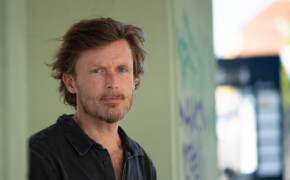
When Sofie Lene Bak and her colleagues inaugurated the National Forum for the Study of Antisemitism at South Campus on 30 September this year, they did so under police protection.
According to Sofie Lene Bak, an associate professor of history at the Saxo Institute and head of the project, the circumstances underline why a research forum dedicated to the study of antisemitism is needed:
»Jews are, after all, the only minority in Denmark who have to send their children to a school behind barbed wire and a three-metre-high fence. Even when you inaugurate a centre for antisemitism research at the University of Copenhagen, it has to happen under police protection,« she says.
The survey ‘Jewish Life in Denmark’
In a 2025 survey by the Danish Institute for Human Rights, 96 per cent of the Danish Jews surveyed said that within the past year they had experienced or witnessed antisemitism online or in public spaces.
39 per cent said they had been subjected to threats, harassment or violence.
The forum is a collaboration between the University of Copenhagen and Roskilde University. In december 2025, it received DKK 11.9 million from the Independent Research Fund Denmark.
The area has had political attention. The parties behind the 2026–2029 research reserve agreement wrote antisemitism research into the agreement as a separate item, agreeing to allocate DKK 12 million to research in the field in 2026.
The money will go to public outreach, networking, and investigating three areas with an »urgent need for new knowledge,« as Sofie Lene Bak puts it: historical continuity, opinion formation, and Danish Jews’ experiences of antisemitism.
What is already known is that antisemitism is on the move.
And it is moving fast, says Sofie Lene Bak.
»It has accelerated enormously since 2023. Certain ways of thinking and talking about Jews have become mainstream in a very short time,« she says.
The research field is politically fraught. According to Sofie Lene Bak, this is mainly due to the war in Gaza. But shying away from the subject helps no one, she says. And even if every instinct may resist, she has no intention of steering clear of the most heated areas.
»We have to take the bull by the horns and go where it hurts the most, and where it is most sensitive and politically fraught. Otherwise we lack courage as researchers,« she says.
One disagreement concerns the very concept itself. Not whether antisemitism exists, but what it means.
This is also why the project does not work from the IHRA definition of antisemitism, which several countries — including Denmark — have endorsed.
The IHRA definition
The International Holocaust Remembrance Alliance (IHRA) defines antisemitism as »a certain perception of Jews, which may be expressed as hatred toward Jews. Rhetorical and physical manifestations of antisemitism are directed toward Jewish or non-Jewish individuals and/or their property, toward Jewish community institutions and religious facilities.«
The definition has been criticised for including examples that equate criticism of Israel with antisemitism.
Instead, Sofie Lene Bak and her colleagues will use definitions that can distinguish between discourse and effect — something that »political definitions« fail to capture, according to the researcher.
»Discourse is one thing — that is, symbols and rhetoric. Another is the experience of antisemitism and its consequences — that is, the effect,« she says.
»If we decide in advance that something is antisemitic, we cut ourselves off from analysing why. The IHRA definition states, for example, that comparisons between Israel and Nazism can be antisemitic. If we as researchers accept that premise, we are deciding that something is antisemitism before we have even examined it. That’s of no interest, because what we are trying to do is explain why,« says Sofie Lene Bak.
Antisemitism is no longer confined to the dark corners of society, with clandestine pamphlets, jackboots and shaved heads.
It has spread, says Sofie Lene Bak, and one of the project’s tasks is to draw attention to precisely this.
»Many people think of antisemitism as something that belongs in neo-Nazi circles. But it has moved to the left wing and to Islamist circles, and it has become a mainstream phenomenon,« she says.
The finger points mainly at the internet.
One of the reasons why modern antisemitic memes work so well is that they draw on an antisemitic cultural heritage
In the pre-digital age, neo-Nazi movements in Denmark faced a built-in dilemma. They needed to spread their message, but they were also up against strong public condemnation. After a period of violent confrontations with the public in the 1990s, they settled for whispering in corners and slipping pamphlets through letterboxes.
The problem disappeared once they could gather online: Faces vanished behind made-up usernames, and their reach became global.
But this turned out to be a challenge for the neo-Nazi organisations, says Sofie Lene Bak:
»They did what they could to keep up with developments, with digital newsletters and websites. But the neo-Nazi movement in Denmark was an old-fashioned party with a strong hierarchical structure. It fell apart because of the internet.«
The communities became looser and less hierarchical, and they found new platforms. One of these new communities is aimed specifically at young people, and this makes Sofie Lene Bak »really worried«:
»Chatrooms in computer games and social media have become places where young people can be exposed to antisemitic content and be very heavily influenced by it.«
The researcher stresses, however, that it would be a mistake to reduce online radicalisation to a youth problem:
»You also see a lot of adults on the internet leaving their manners and judgement at the door — it just happens on Facebook instead of on Discord or TikTok.«
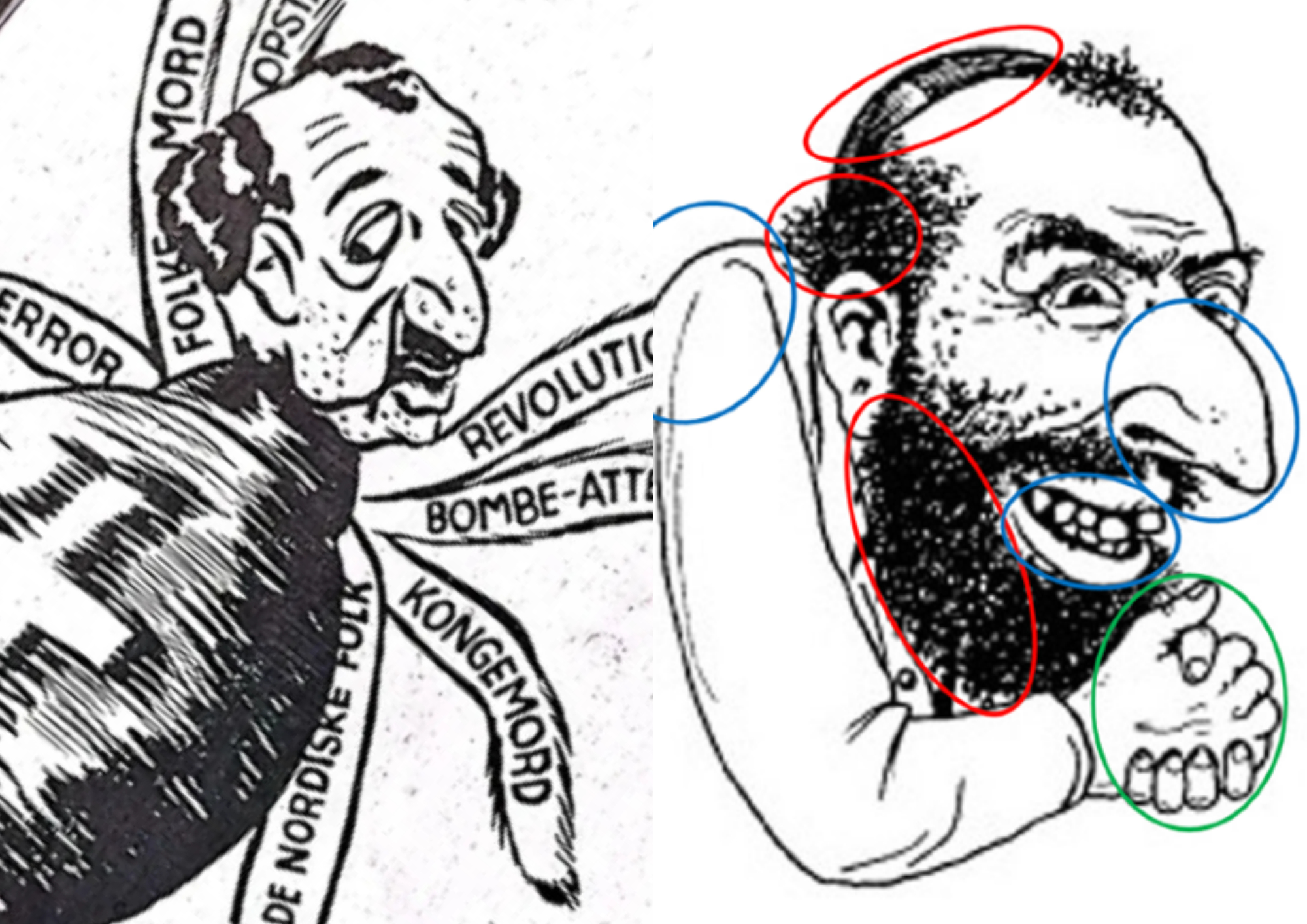
The antisemitism that thrives in chatrooms and on social media is often visual and subtle. But this is nothing new, says Sofie Lene Bak.
»Jews have been a stock figure ever since humour magazines first appeared. One of the reasons why modern antisemitic memes work so well is that they draw on an antisemitic cultural heritage,« she says.
One example is the caricature of Jews as having big noses, the researcher says.
»It’s not a trait that has any basis in reality. But it is meant to emphasise a foreignness and ugliness in Jews in order to create distance.«
The same goes for the association between Jews and money, she says.
In the past, this typically took the form of drawings of Jews with a money bag. Today it is expressed by linking the dollar sign with the Star of David.
For an antisemitism researcher, this is extremely frightening
Sofie Lene Bak
When the messages are subtle and wrapped in humour, we lower our guard. This contributes to a normalisation that can make antisemitic content mainstream.
On top of this comes a new and almost overwhelming challenge.
»Artificial intelligence was only mentioned in passing in our original application. But now — more than two years later — the picture is somewhat different,« says Sofie Lene Bak.
According to the researcher, the problem has several facets. Many people can now produce fake images and videos. At the same time, few people are able to tell when something is AI-generated, she says.
»For an antisemitism researcher, this is extremely frightening.«
Extremism research shows that exposure to large amounts of visual antisemitic content contributes to radicalisation processes, says Sofie Lene Bak.
»It’s hard to say for certain how far it is from thought to action, but emotional engagement and anger increase the risk of violent action.«
Sofie Lene Bak makes no secret of the fact that the field can be a tough one to work in.
»At times it’s difficult. There are a lot of emotions involved, and the debate on social media quickly becomes very harsh and very personal.«
Weekendavisen recently shared an article on social media in which Sofie Lene Bak was interviewed about her research into antisemitic stereotypes in Agatha Christie’s novels. The comments became so vicious that the newspaper had to moderate them heavily.
»They go after me very specifically and try to undermine my credibility as a researcher. It’s really unpleasant,« she says.
According to Sofie Lene Bak, this is linked to a widespread assumption about the political views of antisemitism researchers.
»People have preconceived ideas about what motivates me. That I’m pro-Israel and a Zionist because I research antisemitism.«
To counter misunderstandings and speculation about motives, the research project will also serve as a centre for public outreach, with public lectures, a podcast and publications in Danish aimed at a broad audience.
»When we try to reach a large audience, it is also to invite debate and self-reflection. We have to open up discussions, however difficult they may be,« says Sofie Lene Bak.
This article was translated with the assistance of artificial intelligence and subsequently reviewed by a member of the editorial staff.