



Universitetsavisen
Nørregade 10
1165 København K
Tlf: 35 32 28 98 (mon-thurs)
E-mail: uni-avis@adm.ku.dk
—
Science
Critique of profit — The experience of injustice can trigger anger and protest when people feel that their status, identity and recognition are under threat, Séamus Anthony Power argues in a new book.
It is not only economists who are interested in inequality in modern capitalist societies.
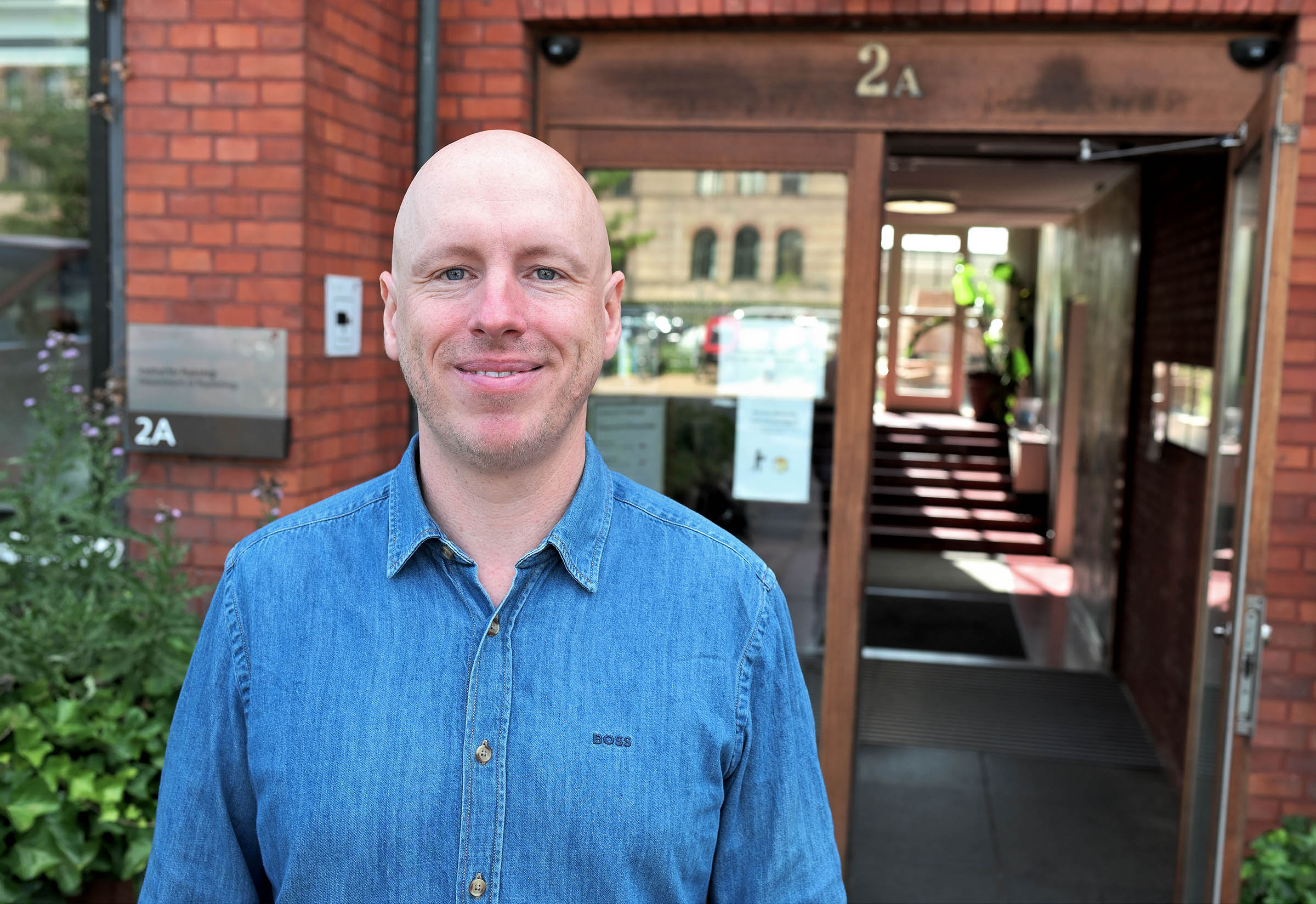
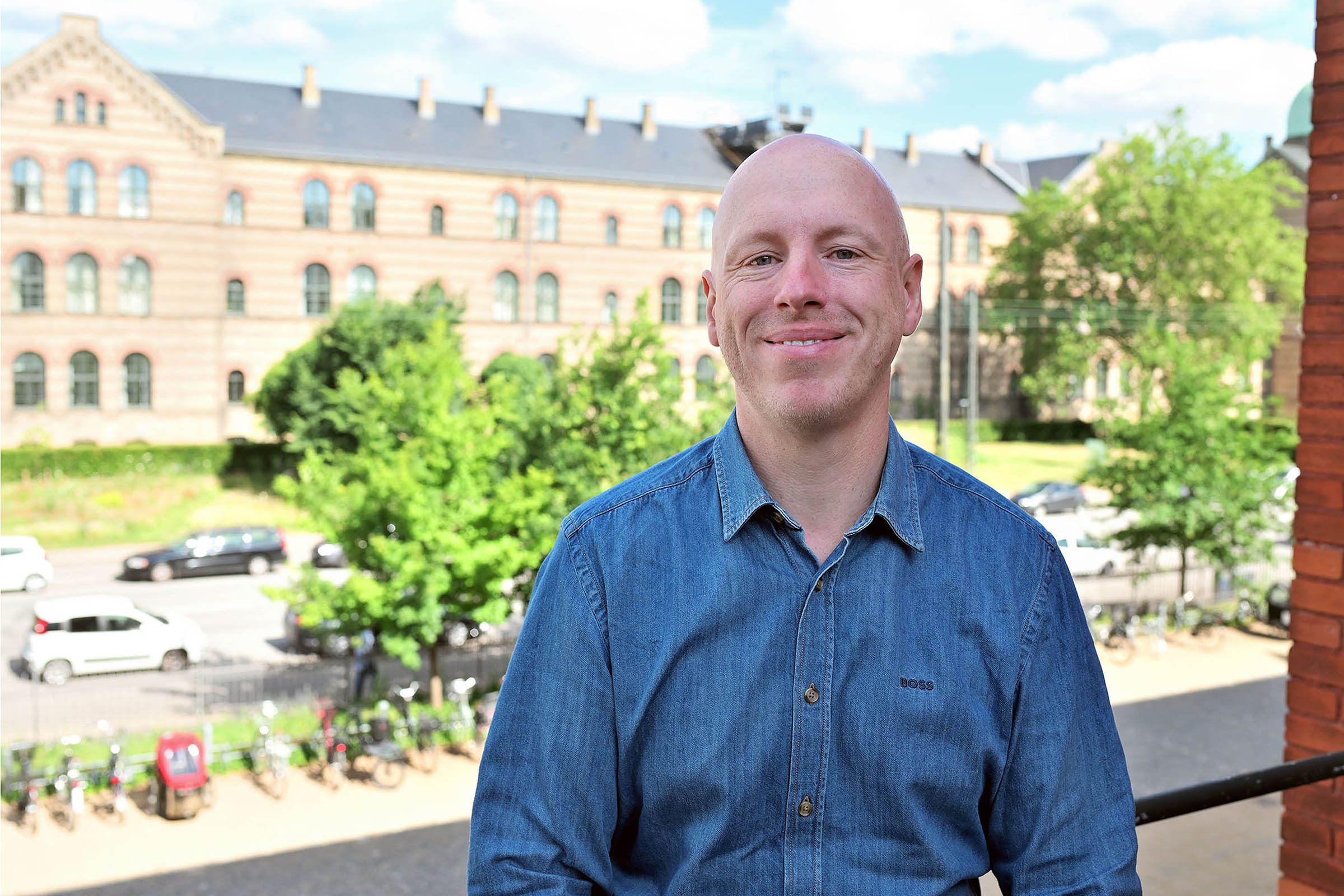
At a neighbouring department at the University of Copenhagen, Associate Professor of Psychology Séamus A. Power studies how ordinary people navigate growing economic inequality.
BOOKS FROM UCPH
Books are being written all across the University of Copenhagen – as part of research projects, during lunch breaks and late into the evening. Staff and students publish academic books, books for a general audience and works of fiction.
In this series, the University Post asks not only what is being written, but also why.
What inspires people to start writing, and what do the authors hope to achieve with their books?
He has now brought these ideas together in his book Inequality: The View from Manywheres, published by Cambridge University Press in August 2026. As the title suggests, Power takes a pluralistic approach to inequality, examining it through a combination of anthropology and cultural psychology.
Séamus A. Power, 41, grew up in Ireland and has been an associate professor at the University of Copenhagen since 2019. He has lived and worked in several countries that have helped shape his understanding of contemporary capitalism.
He left Ireland in 2007 to pursue a one-year master’s degree in psychology at the University of Cambridge, graduating in 2008. In 2012, he moved to the United States to attend the University of Chicago, where he completed his PhD in 2017 and a postdoctoral position in 2019.
READ ALSO: »UCPH researcher: The media make money from a false narrative of a divided US«
According to Power, his years in the United States gave him ample opportunity to discuss his ideas with others in an intellectually open and cosmopolitan environment, and his seven years at the University of Chicago became highly important to his academic development.
According to Séamus A. Power, one of capitalism’s strengths is that many people today enjoy greater material prosperity and a higher standard of living than was historically possible for the population at large.
The downside, he adds, is that both the media and academic research constantly remind us that today’s super-rich are becoming increasingly economically distant from the rest of society.
His book focuses in particular on the psychological tension that arises when people are told, on the one hand, that they have “never had it better”, while at the same time they see economic inequality continuing to grow.
Back in Ireland around 15 years ago, Séamus A. Power witnessed how people responded to the country’s economic crisis, which hit hard in 2008 and only gradually began to ease during the following decade. Ireland has a strong economy today, but not so many years ago life was difficult for many Irish people.
Power’s experience of the crisis in his twenties first gave him the idea of writing a book about capitalism and inequality, because he found the Irish response to the crisis difficult to explain.
»The Irish reacted very differently from the Greeks, Portuguese, Spanish and Italians during the economic crisis. In those countries, people were furious with their politicians and took to the streets because they believed what their governments were doing was unfair. In Ireland, we hardly protested at all, and we were not particularly angry with our politicians, even though our economic crisis also coincided with rising immigration and high unemployment. That was a very interesting observation for me,« says Séamus A. Power.
We should of course allow ourselves to feel sorrow over capitalism because of the inequality it creates, but we should also recognize its benefits
The differences he observed between populations within the European Union led him towards a variety of perspectives – hence the word Manywheres in the book’s title.
Western-developed measures such as GDP cannot provide a complete account of inequality, Power argues. Economic inequality may be experienced very differently in different parts of the world and depends on local, cultural and psychological understandings. We therefore also need to understand what people feel, experience and interpret through their families, memories and communities, he says. His book reflects the fact that human life does not take place in a spreadsheet.
»What do economists say about inequality, and what do psychologists, anthropologists, philosophers and sociologists say? My book draws on both large and small datasets, and even on individual people’s experiences. I have also drawn on everything I have learned from spending many years in Ireland, the United States and Denmark,« says Séamus A. Power.
Although Power had been thinking about the book’s subject for 15 years, he did not actually sit down to begin writing it until 2023. He wrote three pages every weekday and one page on Saturdays. Sundays were his day off.
His aim is to reform hypercapitalism through pluralism, humanism and ethics. Power credits Thomas Piketty with introducing him to the concept of hypercapitalism, which he believes is more useful than simply speaking of capitalism when describing the present economic system.
»Hypercapitalism is a contemporary form of capitalism characterised by extreme mobility, concentration and accumulation of capital, combined with fewer constraints on the owners of capital. As a result, developments move faster and faster, and unfortunately many people are unable to keep up. Those who do not have money to invest are left behind,« says Séamus A. Power.
But what about the Irish? Why did they not rebel during the crisis?
»It was only around ten years ago, when the economy had improved, that the Irish became genuinely angry and took to the streets to protest, because something happened at that point that made them feel they were being treated unfairly. But that was after the worst of the economic crisis was already over,« he says.
It is precisely this distinction between economic hardship and perceived injustice that interests Séamus A. Power. An economic crisis does not necessarily lead to anger and protest in itself. What matters is how people experience and interpret their own situation.
»Under hypercapitalism, the middle class constantly sees the rich becoming richer and inequality increasing, even though less wealthy people do not necessarily believe that the wealthy are more talented than they are. They see rich people buying several houses while they themselves cannot afford even one. People feel discriminated against, and that produces frustration and anger,« says Séamus A. Power.
Hypercapitalism means that market forces come to dominate almost every area of society and human life, bringing with them globalisation, high levels of inequality, weak trade unions, an emphasis on short-term profits and a relentless focus on rising share prices. But Power believes there is another source of anger as well.
»Hypercapitalism is associated with overconsumption and overproduction, generating CO2 emissions through the burning of fossil fuels to such an extent that we are now sitting here in Europe under a blanket of heat as a consequence of climate change,« he says.
Power believes that a variety of locally adapted forms of capitalism can combine prosperity, justice, poverty reduction and the development of human capabilities. These, he argues, are prerequisites if people are to flourish and live their lives with dignity.
»Of course, we should be able to feel sorrow about capitalism because of the inequality it creates, but we should also recognise its advantages. It has created prosperity and lifted hundreds of millions of people out of poverty, so dismantling capitalism altogether is completely unrealistic,« he says, adding:
»But it requires ethical reforms that make capitalism more humane and put the problem of global poverty firmly on the agenda. I believe that should be the moral imperative of our time.«