



Universitetsavisen
Nørregade 10
1165 København K
Tlf: 35 32 28 98 (mon-thurs)
E-mail: uni-avis@adm.ku.dk
—
International
Resistance — When Russia chose »the wrong side of history«, teaching associate professor Mads Büchert Eskildsen could no longer remain a spectator. He now spends his annual leave and his own money driving vehicles to Ukraine, where they help on the front lines – even though this means risking 15 years in prison in the country he has spent his entire working life studying.
It was Mads Büchert Eskildsen’s sixth trip to Kyiv, Ukraine.
By then, he had experienced the air raid sirens many times: the loud, wailing sound designed to make people react immediately, ringing out across the city up to 20 times a day.
And although it was not the first time the sound had jolted him awake in terror in the middle of the night, this time would be different.
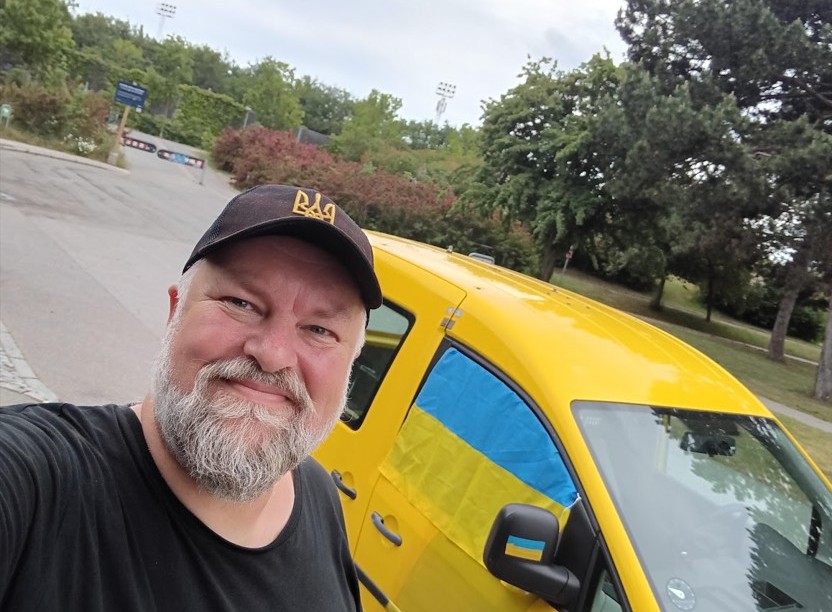
Mads Büchert Eskildsen had once again set aside part of his summer holiday to drive a used van from Denmark to Ukraine. He had dropped it off at a meeting point near the city and would spend the next few days in Kyiv before returning to Denmark.
He had checked into a hotel in the city only a few hours earlier when the air raid siren woke him at one in the morning. He jumped up to do what you always do when the siren sounds: check various Telegram channels for information about where the attack is heading and how severe it is.
There are drones – these trigger a ‘yellow alert’. And then there is everything from glide bombs, cruise missiles and ballistic missiles. These weapons can destroy entire buildings and more, and when they are on their way, they trigger a ‘red alert’.
That night, the alert was red, and ballistic missiles could have been heading straight for his hotel. He rushed down to the street to seek shelter underground at the nearest metro station, 200 metres from the hotel.
He sheltered there until the all-clear sounded. It turned out that the attack had struck a little further away.
»It was really frightening. I’m 51 years old, big and strong, but when I heard the dull thuds of missiles hitting in the summer night, I was scared,« he says.
Mads Büchert Eskildsen is a teaching associate professor at UCPH. He has taught Russian for the past 25 years and held a permanent, full-time position for the past ten.
He has followed Russia since the early 1990s, when everything was »in flux« and there was a belief that the country had a great future ahead of it.
»I first went to Russia in 1993. It was just after the collapse of the Soviet Union. The 1990s were a chaotic time of hyperinflation, mafias and internal power struggles, but there was still a sense of optimism and faith in the future,« he says.
The country I have spent so many years studying, my object of study, has chosen the wrong side of history
Mads Büchert Eskildsen, teaching associate professor, Department of Cross-Cultural and Regional Studies
It was equal parts fascination and awe that drew him to Russia’s language and culture in the 1990s. But after following the country for decades, his fascination has faded.
»Vladimir Putin became president in 2000, and he has essentially been president ever since, apart from a brief period when he had a stand-in. The constitution was changed so he could remain president for life,« he says, adding:
»Since then, Russia has gone from being a country that may have had positive aspirations to one that today might more accurately be described as an outright dictatorship.«
Mads Büchert Eskildsen teaches Russian at all levels, often using newspaper clippings or other current material from the Russian media.
This has allowed him, as he puts it, to »watch a country’s dramatic decline unfold on camera« – a decline that began when Russia occupied the Crimean peninsula in 2014 and escalated with the full-scale invasion of Ukraine in 2022.
When that happened, it »triggered« something in Mads Büchert Eskildsen.
»I feel that the country I have spent so many years studying, my object of study, has chosen the wrong side of history. I had never been particularly involved in voluntary organisations before, but here I felt I had to do something,« he says.
He continues:
»I can’t change Russia’s foolish decisions, but I can do something to help those who have been attacked without any provocation by a major military power.«
So he decided to join an organisation where he could do something very tangible: drive used cars the roughly 2,000 kilometres from Zealand to Kyiv, so they could be used on the front lines to evacuate the wounded or transport personnel and equipment.
The organisation is called Biler til Ukraine (Cars for Ukraine, ed.) and over the past three years, Mads Büchert Eskildsen has driven six vehicles to the country.
»My first trip was during the Easter holidays in 2023. I got into an old Suzuki Vitara and set off with a handful of other Danes. We always drive through Europe in a convoy of six or seven cars,« he says.
According to the organisation, each vehicle saves 30–40 lives, and almost 1,000 vehicles have been delivered to the country so far. Biler til Ukraine works with the Ukrainian organisation Initiative E+, and each time a vehicle is handed over, a report is drawn up to ensure it does not end up on the black market instead of helping on the front lines, the teaching associate professor says.
Sometimes the vehicles have to be delivered to secret locations, where drivers must switch off all mobile data and location services. When driving in Ukraine, they always stay in touch with one another by walkie-talkie.
»We are driving into a country at war, after all, so you never know what might happen,« says Mads Büchert Eskildsen.
The journey from Denmark through Europe usually goes smoothly, but problems can arise at the Polish-Ukrainian border.
»Crossing the border can be a bureaucratic nightmare. Sometimes it takes two or three hours; other times, up to 20. There is a lot of paperwork to complete, and Polish border control is not known for providing top-notch service,« he says.
Once the vehicles have been handed over to the right people, Mads Büchert Eskildsen usually stays in Kyiv for a day or two before heading home.
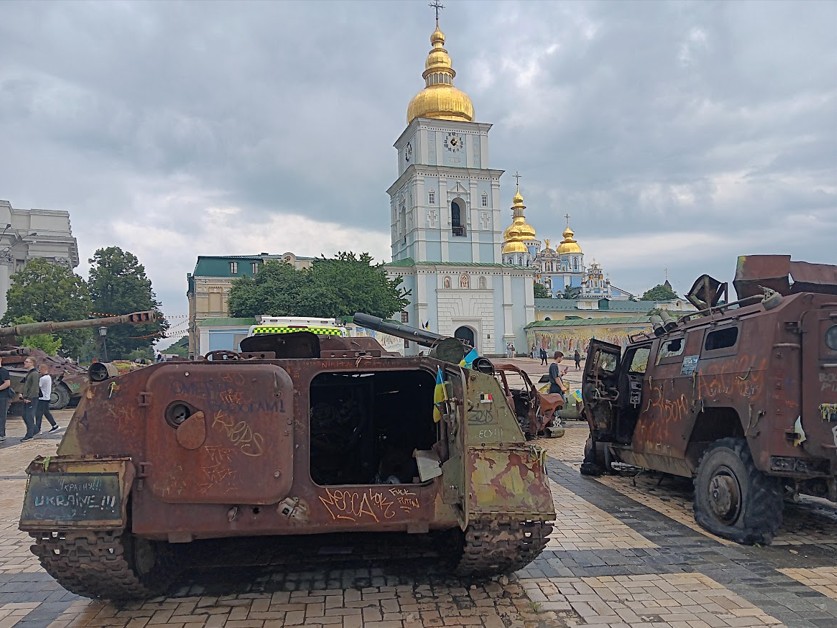
And that brings us back to where we started, because in Kyiv, Mads Büchert Eskildsen experiences first-hand what it means to live in a constant state of alert.
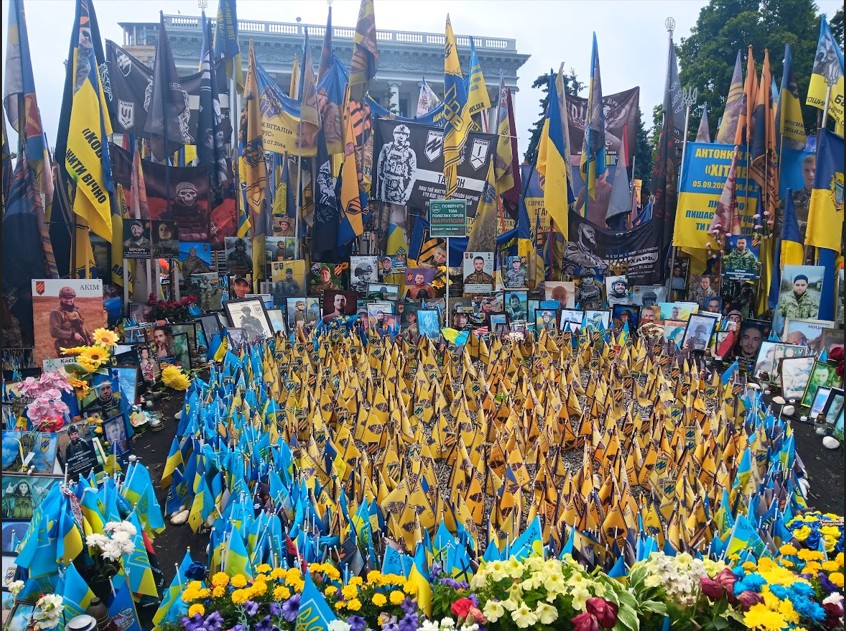
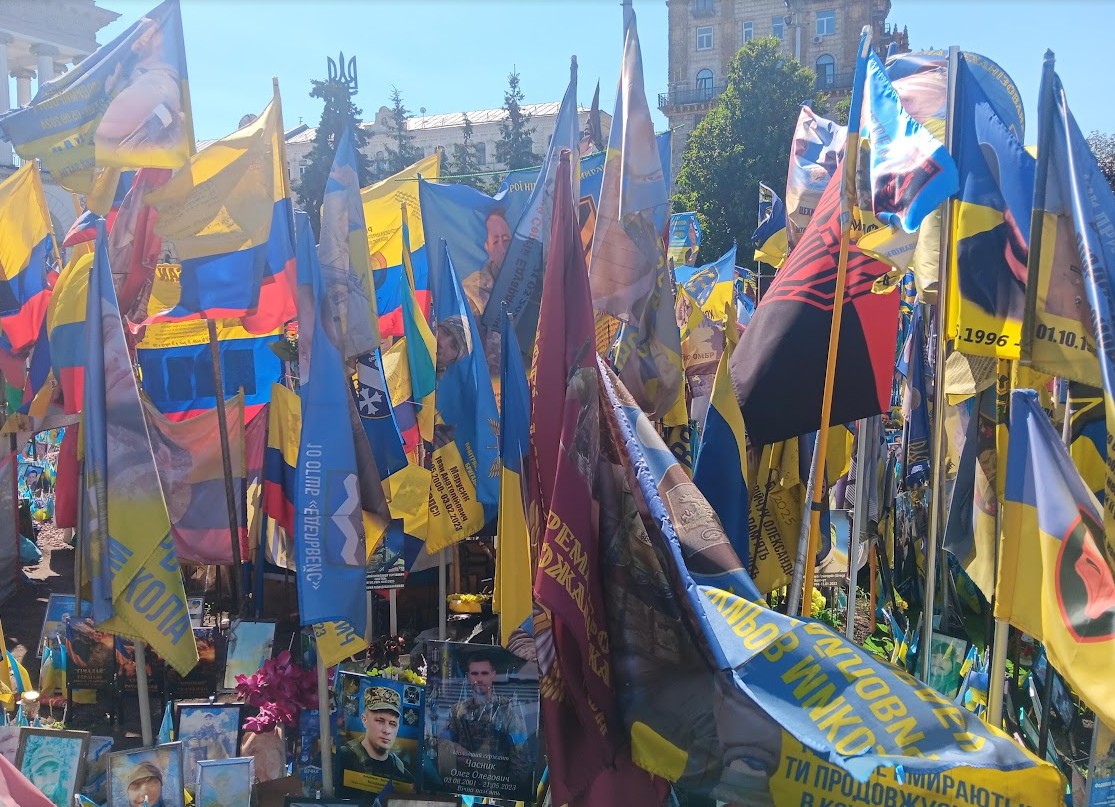
He has experienced the air raid sirens often enough for them mostly to have become »business as usual« – even though he knows that people continue to die in drone or missile attacks in the city every day.
Perhaps they have put the children in the bathtub to give them a little protection. That is the reality people live in
Mads Büchert Eskildsen, teaching associate professor, Department of Cross-Cultural and Regional Studies
»We were once having breakfast at a pavement café when the air raid siren sounded. We checked the Telegram channels and could see that the attack wasn’t heading for where we were. But you can never be completely sure. Some new drivers had joined us, and they hurried towards the metro to be on the safe side, but several of us stayed where we were,« he says, adding:
»I’ve started following the rule that if the Ukrainians run, I run too.«
You never become immune to the sound of an air raid siren and the constant threat of a bombing, but for many Ukrainians living in the city, life goes on, says Mads Büchert Eskildsen.
»The air raid sirens sound so often that I think many Ukrainians now wake up, roll over and go back to sleep. You can’t go down to a shelter that many times a day,« he says, continuing:
»Perhaps they have started sleeping in the hallway so they aren’t right next to a window if a drone attack hits. And perhaps they have put the children in the bathtub to give them a little protection. That is the reality people live in.«
Before the war broke out, Mads Büchert Eskildsen regularly visited Russia, where he has an extensive professional network.
But since becoming actively involved in helping Ukraine and publicly expressing his views on the war and Russia, his prospects of entering the country have changed dramatically.
»Today, I face around 15 years in prison if I enter Russia. A couple of years ago, a law was passed under which providing material, financial or other support to Ukraine’s defence carries a sentence in that range.«
You could compare it to walking around speaking German in Denmark in 1945. That wouldn’t have gone down well either
Mads Büchert Eskildsen, teaching associate professor, Department of Cross-Cultural and Regional Studies
Mads Büchert Eskildsen remains in touch with those of his Russian acquaintances who do not necessarily support the war their country has started – and, crucially, who can access Facebook through a VPN, as the platform is banned in Russia.
»We wish each other happy birthday and merry Christmas, and that way we know we’re still around. But we don’t openly discuss much else, because it could have unintended consequences for those who are in Russia.«
Some former Russian friends, however, have now cut off contact with Mads Büchert Eskildsen.
»Some have hurled abuse at me and called me the worst names in the Russian language on social media because I said I thought it was wrong for Russia to invade its neighbouring country,« he says, adding:
»And not everyone necessarily agrees with that.«
The last time Mads Büchert Eskildsen travelled to Ukraine to deliver another vehicle, he used two days of annual leave and a weekend. That was in August 2026.
In June 2025, he turned 50 and threw a big party. Instead of gifts, he asked his guests to donate to Biler til Ukraine. The fundraiser raised DKK 27,000, which was used to buy more used vehicles.
He has not made his last trip, he says. He has even started learning Ukrainian with a teacher who lives in Kyiv and whom he meets when he is in the country.
»Last time, I went to her mother’s birthday party,« he says, showing me photographs from the celebration.
Previously, he could get by in the country speaking Russian, but that is not particularly well received, he says.
»It’s a great advantage that I’m beginning to be able to get by in Ukrainian. It’s easier when you aren’t automatically seen as a representative of Russia,« he says, adding:
»Historically, the language has been an instrument of power used by the Russian Empire or the Soviet Union when they brought new territories under their control. A process of Russification would begin, forcing people to speak Russian.«
Most Ukrainians can understand and speak Russian, but many choose not to use it at all, he says.
»You could compare it to walking around speaking German in Denmark in 1945. That wouldn’t have gone down well either.«
This article was translated with the assistance of artificial intelligence and subsequently reviewed by a member of the editorial staff.