




Universitetsavisen
Nørregade 10
1165 København K
Tlf: 35 32 28 98 (mon-thurs)
E-mail: uni-avis@adm.ku.dk
—
Science
New reality — Former University of Copenhagen professor Hans Bonde was found to have committed research misconduct after inserting AI-generated fictitious passages and references into a research manuscript. The ruling is the first of its kind and could influence how similar AI-related errors are assessed in the research community in the future.
In just a few years, artificial intelligence has made its way into universities and become an important tool in the work of many researchers. Among other things, the technology can help researchers sift through vast amounts of literature and carry out tasks much faster than humans have previously been able to.
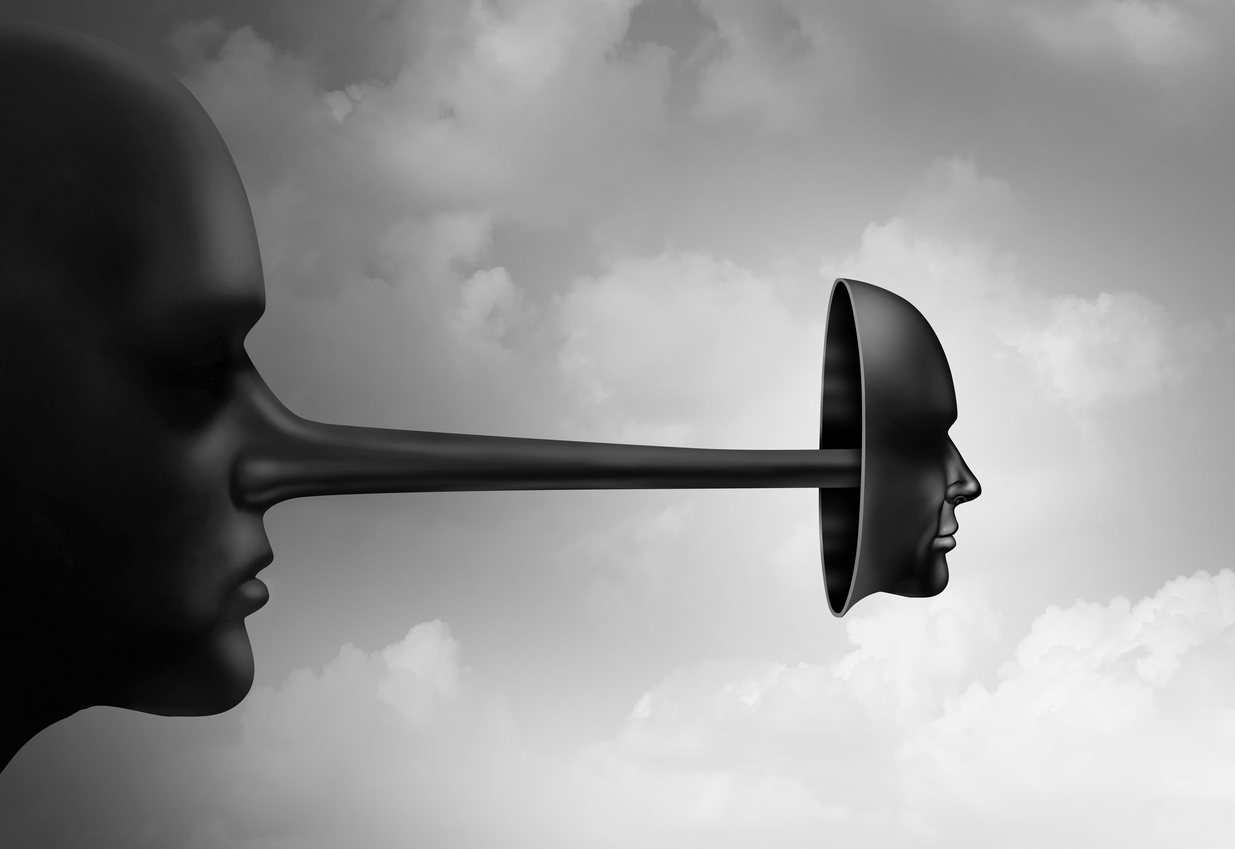
But it can also invent sources and struggle to distinguish between accurate and false information.
This raises new dilemmas. What happens when fabricated AI-generated information ends up in a research article? Is it simply a mistake, or could the author have committed research misconduct?
These questions are no longer hypothetical. In May 2025, the Danish Board on Research Misconduct ruled that Hans Bonde, a former professor at the Department of Nutrition, Exercise and Sports at the University of Copenhagen, had committed research misconduct after using generative AI to insert fictitious passages and references into a research manuscript.
The case was recently revealed by Kristeligt Dagblad, and it is the first time the board has found a researcher to have committed research misconduct in a case involving AI. The decision could therefore have implications for how similar cases are assessed at Danish research institutions in the future.
Hans Bonde disputes the decision and has declined to be interviewed. But as the University Post can reveal, the former University of Copenhagen professor, together with his lawyer, has asked the Danish Board on Research Misconduct to reopen the case.
READ ALSO: Embattled Hans Bonde seeks to reopen landmark AI ruling
The University Post has asked Thomas Riis and Morten Rosenmeier, both professors at the University of Copenhagen’s Faculty of Law, how the existing rules should be applied to the new technology and what broader issues the case raises about the use of AI. They agree that, ultimately, responsibility lies with the researcher.
In its decision, the board found that the fictitious information in Hans Bonde’s manuscript constituted fabrication. Along with falsification and plagiarism, fabrication is one of the three types of conduct that can constitute research misconduct under Danish law.
The law defines fabrication as the »undisclosed construction of data or substitution with fictitious data«.
Hans Bonde had submitted the manuscript to an academic journal with a view to publication.
The introduction contained ten fictitious passages and references. Among them was an invented work by an author named John Doe. In English, the name is used for a person whose identity is unknown — roughly equivalent to »NN« in Danish. The journal’s editor discovered the errors, after which Hans Bonde withdrew the manuscript.
I find it difficult to see why fictitious sources should not constitute data within the meaning of the law
In connection with the case, Hans Bonde asked Rasmus Grønved Nielsen, a professor at the University of Copenhagen’s Faculty of Law, to prepare a legal opinion on the case. The opinion has now been completed and provided to the University Post.
In it, he argues that, as a general rule, the concept of data under the law covers primary sources rather than literature references used solely as background material. Rasmus Grønved Nielsen has declined to be interviewed because he believes the legal opinion speaks for itself.
Thomas Riis, however, disagrees with Rasmus Grønved Nielsen’s interpretation. For several years, Riis chaired the University of Copenhagen’s Practice Committee, which deals with cases of questionable research practices.
»If you read the preparatory works to the Research Misconduct Act, they state that data should be interpreted broadly and include all instances of undisclosed construction. So I find it difficult to see why fictitious sources should not constitute data within the meaning of the law,« he tells the University Post.
Morten Rosenmeier, who is among other things chair of the Committee for the Protection of Scientific Work under the Danish Confederation of Professional Associations, does not wish to comment on Hans Bonde’s specific case, but says that fictitious information can constitute fabricated data. What matters is not whether the information was written by a human or generated by a machine.
»When AI hallucinates and produces something that is not true, a very serious problem can arise: As a researcher, you may end up committing data fabrication if you present it as genuine data in an article,« he says.
Data fabrication alone, however, is not enough to constitute research misconduct.
For data fabrication to actually qualify as research misconduct, the researcher must have acted intentionally or with gross negligence. The error must also have been of material importance to the research. Less serious cases may instead be dealt with by the university’s Practice Committee as questionable research practices.
»There can certainly be cases where AI-related data fabrication does not constitute research misconduct. For example, if the false data appear in a section that is not particularly important,« Morten Rosenmeier says.
AI is a fantastic tool, but it has this strange built-in feature that it sometimes lies. That is where things can go wrong
The board has in fact already made this distinction. In another AI case from February 2025, the board found that fictitious AI-generated references in a research application constituted fabrication. Nevertheless, it concluded that there had been no research misconduct because the researchers concerned had not acted intentionally or with gross negligence.
Among other things, the board noted that the researchers had not themselves written the sections containing the false references and that they had followed their institution’s guidelines for reviewing the application.
In Hans Bonde’s case, the board reached the opposite conclusion. Here, it placed weight on, among other things, the number of fictitious pieces of information and Hans Bonde’s experience as a researcher.
Thomas Riis has read the decision and describes the interpretation of the concept of fabrication as »very sensible at first glance«. Nor does he believe that a researcher is absolved of responsibility simply because a hallucination is so absurd that others would quickly be able to spot it.
»That is not a valid argument,« he says.
Generative AI systems make it easier to make mistakes that look convincing.
This is because AI can express itself with such confidence that users may come to regard it as a credible source, even though the system does not know whether the information is correct, says Morten Rosenmeier.
»AI is a fantastic tool, but it has this strange built-in feature that it sometimes lies. That is where things can go wrong,« he says.
Even so, responsibility remains with the researcher behind the screen.
Thomas Riis compares it to receiving a reference from a colleague. A researcher cannot simply insert that into an article either, but has to go back to the original source and check whether the information is correct.
»If you do not do that, you have a problem,« he says.
The use of artificial intelligence itself is not problematic from a research ethics perspective, Thomas Riis stresses. AI can, for example, be used for proofreading, as a sounding board or to suggest a different structure. But its use must be disclosed when required, and the output must be checked.
Artificial intelligence is not mentioned in the current Research Misconduct Act, which was adopted in 2017.
AI has, however, been incorporated into the Danish Code of Conduct for Research Integrity, which was updated in January 2026. It states, among other things, that the use of AI in research articles »should be disclosed in accordance with recognised national and international guidelines«.
The code is not legally binding, but sets out common standards for responsible conduct of research.
Nevertheless, neither Thomas Riis nor Morten Rosenmeier believes there is a need for new provisions in the Research Misconduct Act.
According to Thomas Riis, the threshold for research misconduct has never been something that could be defined precisely in advance. Even in cases of traditional plagiarism, it is not possible to specify a particular number of copied words that automatically results in a finding of research misconduct. The extent of the plagiarism and where it appears also matter.
»We have never had clear-cut boundaries, and the rules are not suited to that either. Instead, a body of decisions develops over time and helps show where the boundary lies,« he says.
The increase in efficiency that AI can create for researchers may be accompanied by undesirable increases in publication pressure. And if that happens, it could lead to more breaches of good research practice as a result of the use of AI
Practice may, however, develop differently across Denmark’s universities. The most serious cases are decided by the national board, while less serious breaches are handled by the institutions’ own practice committees. According to Thomas Riis, this creates a risk that researchers’ use of AI will not always be assessed consistently across universities.
»That is a problem if it happens. But I also think they talk to each other,« he says.
Both he and Morten Rosenmeier expect more similar cases as AI becomes a bigger part of researchers’ work.
Morten Rosenmeier also fears that, over time, the technology’s potential to make research more efficient could lead to expectations that researchers should also publish more.
»The increase in efficiency that AI can create for researchers may be accompanied by undesirable increases in publication pressure. And if that happens, it could lead to more breaches of good research practice as a result of the use of AI,« he says.
This article was translated with the assistance of artificial intelligence and subsequently reviewed by a member of the editorial staff.