


Universitetsavisen
Nørregade 10
1165 København K
Tlf: 35 32 28 98 (mon-thurs)
E-mail: uni-avis@adm.ku.dk
—
Science
(Mis)conduct — A new legal opinion concludes that the Danish Board on Research Misconduct’s decision against the former University of Copenhagen professor is invalid. Hans Bonde’s lawyer now wants the board to reconsider the case.
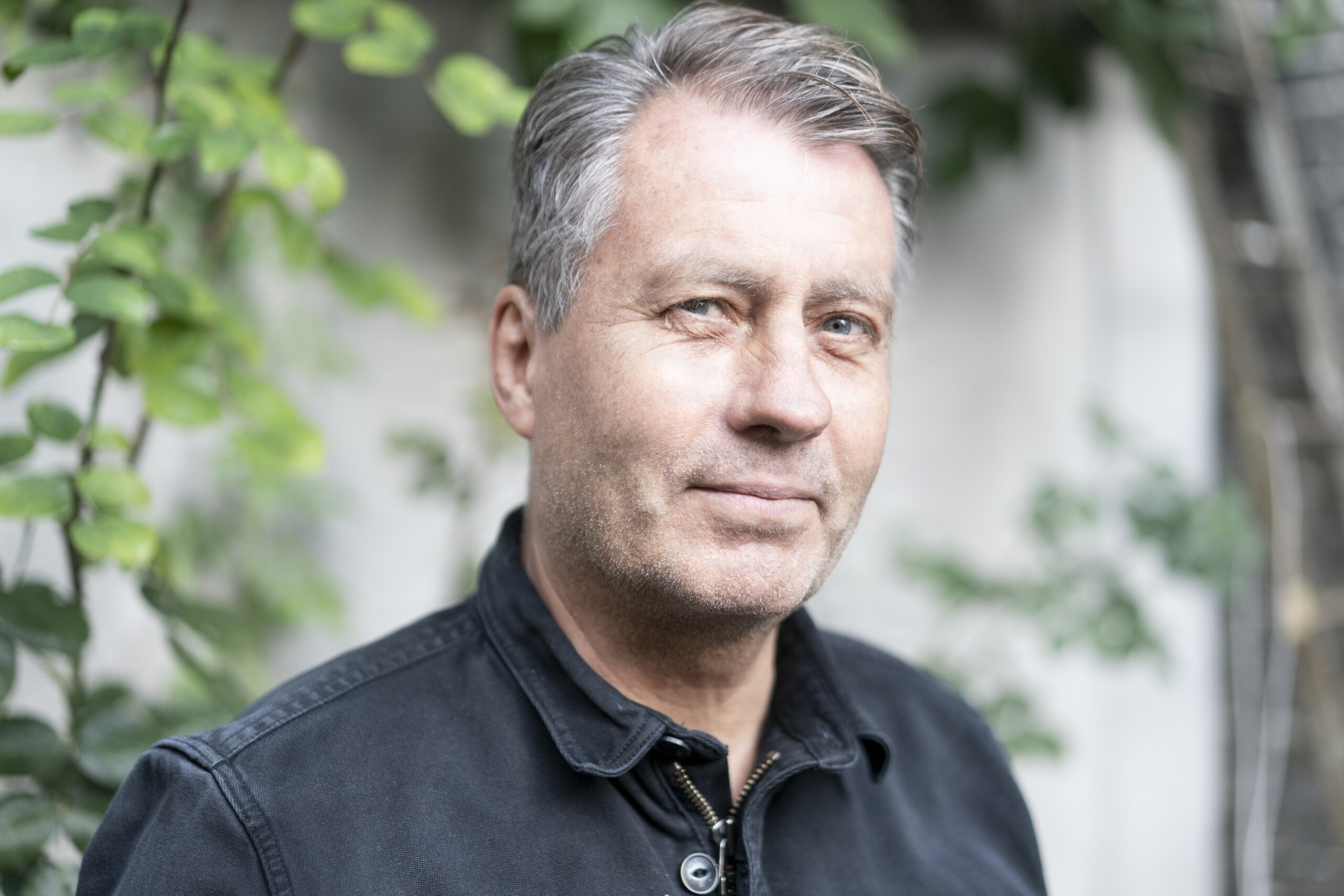
Former University of Copenhagen professor Hans Bonde is now seeking to overturn the decision that found him guilty of research misconduct last year over his use of artificial intelligence.
The University Post can now reveal this after speaking to Hans Bonde’s lawyer, Jonas Christoffersen, who has submitted a request to the The Danish Board on Research Misconduct to reopen the case. The request is based on a 36-page legal opinion written by Rasmus Grønved Nielsen, a professor at the Faculty of Law at the University of Copenhagen.
The legal opinion concludes that the board’s decision is »affected by a number of significant legal errors and deficiencies« and is therefore invalid.
»We hope the board will reopen the case and look at it again with fresh eyes in light of what we are now arguing, and then consider whether it stands by its decision or chooses to reverse it,« Jonas Christoffersen tells the University Post.
The aim is for the case to be sent back to the University of Copenhagen’s Practice Committee, where it can be assessed whether Hans Bonde’s mistakes should instead be classified as questionable research practice rather than research misconduct.
»We want them to send it back to the Practice Committee, and then we will take it from there,« Jonas Christoffersen says.
The University Post has seen both the request and the legal opinion.
Rasmus Grønved Nielsen prepared the legal opinion at Hans Bonde’s request, but without payment. He has declined to be interviewed because he believes the document speaks for itself. Jonas Christoffersen also says he is working on Bonde’s case without payment.
»I read Rasmus’ opinion and thought he was right that the decision was too harsh. So I told Hans I would be willing to help him. I think the decision is disproportionate,« he says.
In May 2025, the The Danish Board on Research Misconduct concluded that Hans Bonde, who was a professor at the Department of Nutrition, Exercise and Sports at the University of Copenhagen until January 2025, had committed research misconduct through his use of AI while working on a research manuscript.
The Danish newspaper Kristeligt Dagblad recently revealed that the anonymised decision concerned Hans Bonde.
If you are going to determine how seriously negligent his conduct was, you have to take into account how he was doing at the time. You cannot simply say that you are not going to consider it at all
The introduction to the manuscript contained ten fictitious passages and references generated with the help of AI. Among them was a non-existent work by an author named John Doe, a name used in English for a person whose identity is unknown.
Hans Bonde had submitted the manuscript to an academic journal. The errors were discovered by the journal’s editor, after which Bonde withdrew the manuscript.
The former University of Copenhagen professor has repeatedly acknowledged that he made a mistake, while maintaining that it was not serious enough to constitute research misconduct. The University Post has been in contact with Hans Bonde in connection with this article, but he declined to be interviewed.
The request to reopen the case is based on four main arguments.
The first is that a finding of research misconduct is such a serious and far-reaching decision that the board must have a very solid basis for making it. According to Jonas Christoffersen, it did not have such a basis in Hans Bonde’s case.
The second argument concerns what can be classified as data.
According to the legal opinion, data within the meaning of the law generally refers to the material that is the subject of the research. This could, for example, consist of measurements or historical sources. The fictitious references in the introduction to Hans Bonde’s manuscript, by contrast, were supplementary literature and had no bearing on the research findings, the argument goes.
»Data concerns the object of the research. It is what you are researching. Here, we are talking about supplementary literature references. We do not believe these are covered by the concept of data under the law,« Jonas Christoffersen says.
REAL ALSO: When does an AI error become research misconduct?
The third argument concerns whether Hans Bonde acted intentionally or with gross negligence.
At the time he submitted the manuscript, he was, according to his lawyer, in »an entirely exceptional and difficult personal situation«. Christoffersen does not wish to go into further detail, but the board’s decision states that the circumstances were documented by statements from both a doctor and a psychologist.
It is a fundamental flaw under administrative law not to take account of something that you are required to take into account
The board also refers to the personal circumstances in its decision, but writes that »personal pressure and stress-related reactions« should, as a general rule, »not be given weight«. In the board’s assessment, Hans Bonde’s specific personal circumstances did not alter its conclusion.
But Jonas Christoffersen argues that this was not a sufficiently specific assessment.
»If you are going to determine how seriously negligent his conduct was, you have to take into account how he was doing at the time. You cannot simply say that you are not going to consider it at all,« the lawyer says.
He also points out that the case was handled entirely in writing, meaning that the board did not hear Hans Bonde’s own account.
»It is a fundamental flaw under administrative law not to take account of something that you are required to take into account,« he says.
Does that mean Hans Bonde could not be held responsible for his actions at the time?
»I would not go that far,« Jonas Christoffersen says, but stresses that Hans Bonde’s condition should have formed part of the overall assessment of how serious his conduct was.
At the same time, the board also placed weight on the fact that Hans Bonde was a highly experienced researcher. Jonas Christoffersen understands the argument, but does not believe his experience can be decisive:
»I understand why they say that. But does that mean you should be judged more harshly when you are older than when you are younger? You still have to assess the overall seriousness of what happened.«
The fourth argument is that the mistake was not serious enough to constitute research misconduct.
The manuscript was an English-language adaptation of an article that Hans Bonde had previously published in Danish. The fictitious information appeared in the introduction and, according to the legal opinion, did not alter either the research analysis or its conclusions. The manuscript was also never published.
We believe the board set the bar too low in Hans Bonde’s case
Jonas Christoffersen acknowledges that Hans Bonde should have spotted the obvious errors before submitting the manuscript.
But precisely because the references were so obviously nonsensical, he argues that they could never have made it through peer review or affected the published research.
But should the obvious errors not also have been easy for Hans Bonde himself to spot?
»Yes, and that is precisely why the mistake was so stupid,« Jonas Christoffersen says.
For him, the dispute also concerns the dividing line between cases that should be dealt with locally and the most serious cases that end up before the national board.
»There has to be a certain level of seriousness before a case moves from the local practice committees to the national board. We believe the board set the bar too low in Hans Bonde’s case,« Jonas Christoffersen says.
In the request to reopen the case, Bonde’s case is compared with a decision from December 2025. In that case, the board found 38 instances of plagiarism in a PhD thesis, but nevertheless concluded that they did not amount to research misconduct. Among other things, the board placed weight on the fact that the plagiarism appeared primarily in a background chapter rather than in the parts of the thesis containing the researcher’s own analyses.
According to the legal opinion, it is inconsistent for Hans Bonde’s case to have resulted in a different outcome.
The two cases are not identical. The other case concerned plagiarism, but Jonas Christoffersen nevertheless considers it relevant because, in both cases, the board had to assess the significance for the research of errors appearing in an introductory section.
»In my view, plagiarism would be worse,« he says.
This is not the first time Hans Bonde has tried to have the case reopened. In September 2025, he asked the board to reconsider its decision, but the request was rejected in November because he had not presented any new information.
There is no new factual information this time either, Jonas Christoffersen acknowledges. What is new, he says, is the more extensive legal analysis of the case.
He cannot say why the new request has only been submitted now. Hans Bonde himself contacted him a couple of weeks ago. Christoffersen therefore does not know whether the public disclosure of Bonde’s name in connection with the case played a role in the decision.
If the board again refuses to reopen the case, Hans Bonde can take the matter to court. In his legal opinion, Rasmus Grønved Nielsen assesses that, in that event, »the decision will be set aside« – in other words, that Hans Bonde would succeed in his challenge.
Jonas Christoffersen is more cautious.
»That is of course possible (to have the case reviewed by a court, ed.), but we hope that will not be necessary, so we have not given it any further thought,« he says.
The secretariat of the The Danish Board on Research Misconduct confirms to the University Post that it has received the request to reopen the case.
The University Post has presented the arguments in the request to the board’s chair, High Court judge Mikael Friis Rasmussen, but he was unable to comment on the case before deadline.
This article was translated with the assistance of artificial intelligence and subsequently reviewed by a member of the editorial staff.