




Universitetsavisen
Nørregade 10
1165 København K
Tlf: 35 32 28 98 (mon-thurs)
E-mail: uni-avis@adm.ku.dk
—
Politics
Science in the election — The Liberal Party wants to double the number of young conscripts to 13,000 by 2035. But according to a University of Copenhagen researcher, the impact depends entirely on what the soldiers will be used for — and whether the armed forces can handle them.
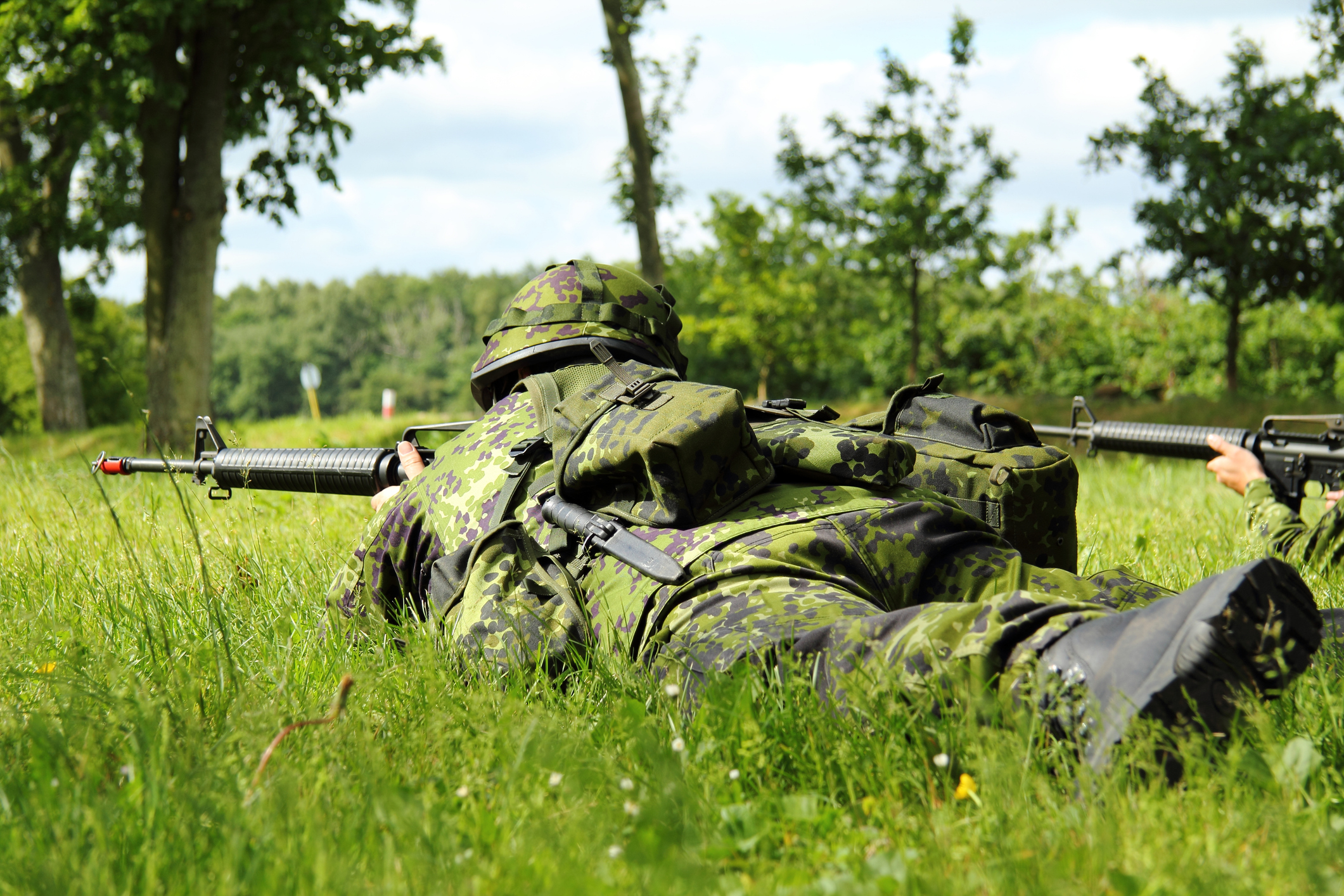
Before lectures, exams, or anything student-related, many young Danish people put on their uniforms and do military service.
And more of them may get a taste of life as a soldier in the Danish armed forces in the future: Military conscription has become one of the new battlegrounds in the ongoing election campaign.
Danish voters are going to the polls on 24 March.
Science in the election campaign
The election campaign is full of figures, claims, and political promises. In the run-up to the Danish general election on 24 March, the University Post is asking researchers from the University of Copenhagen (UCPH) to bring their expertise to bear on the issues.
Read also the first article in the series:
Political fight over pesticides in Danish drinking water — what the research shows
Liberal Party leader Troels Lund Poulsen said in a prime ministerial debate on national TV broadcaster DR that the party wants to increase the number of conscripts to 13,000 by 2035.
At the same time, the party wants to bring forward an already agreed expansion to 6,500 conscripts in the armed forces (out of a total of up to 7,500 across the armed forces and the Danish Emergency Management Agency), so that it is reached in 2030 instead of 2033.
Prime Minister Mette Frederiksen (Social Democrats) was quick to back the proposal, saying that it was actually something that the two parties had already reached agreement on — although this has not yet been announced publicly.
But what is really at stake in this debate? Do more conscripts in themselves make Denmark safer? And can the present armed forces even cope with such an expansion of manpower?
The University Post spoke to Alexander Høgsberg Tetzlaff, a military analyst at the Centre for Military Studies at the University of Copenhagen (UCPH) and an army major.
According to him, it is by no means certain that a higher number of conscripts automatically improves Denmark’s security.
»Doubling the numbers does not in itself make Denmark safer. It depends entirely on what you want to use the conscripts for,« he says.
The first challenge is practical, according to Alexander Høgsberg Tetzlaff.
»Problems with recruitment and retention need to be solved before military service can be scaled up«
Alexander Høgsberg Tetzlaff, military analyst at the Centre for Military Studies and army major
The armed forces are still in the process of adjusting to an already adopted expansion to 6,500 young conscripts a year from 2033. And this is far from complete.
The problem is not just space and equipment, but also a shortage of permanent staff.
»The armed forces simply cannot take in that many young people today. There are neither the instructors, the equipment, nor the facilities for it,« he says.
A larger conscription system requires more professional soldiers to train and lead the conscripts.
»There’s no getting around the fact that the armed forces need to hire more soldiers first. Problems with recruitment and retention need to be solved before military service can be scaled up,« he says.
As part of its proposal, the Liberal Party wants to build at least three new barracks, one on the island of Funen, another near Tirstrup in eastern Jutland, with the location of the third barracks yet to be decided. But even if the decision were made now, projects of that kind would take years to complete.
»It is a huge task to double conscription,« says Alexander Høgsberg Tetzlaff.
Political proposals to increase conscript numbers are not new. In recent years several parties have argued for expanding conscription to strengthen Denmark’s defence.
Just since February, the period of service has been extended from four to 11 months, and women are now also included.
The vast majority of conscripts signed up voluntarily. In fact, in the three most recently recorded years there have been only volunteers in the Danish conscription system.
But a doubling in numbers would mean that more young people will be called up through a lottery system.
According to Alexander Høgsberg Tetzlaff, this is is linked to a wider restructuring of the Danish armed forces.
After the Cold War, Denmark spent decades focusing on international missions and on a smaller, more professional and specialised, military. But with Russia’s invasion of Ukraine, there is now a new focus on being able to defend national territory and have a wider defence capacity.
That does not mean that Denmark needs to be able to defend itself on its own.
»The military part is conceived as part of a NATO setup. There are no plans for us to be able to fight anyone on our own,« he says.
According to the researcher, the fundamental flaw in the current political debate is that politicians often argue as if a higher number of conscripts in itself makes Denmark safer.
But it is not that simple.
According to Alexander Høgsberg Tetzlaff, the crucial question is what the soldiers are actually going to be used for.
In Finland, conscripts remain connected to units after their service and continue to train together. This is something that Denmark has not really managed to put into place
Should conscription primarily be used to recruit more professional soldiers for the armed forces? Should conscripts be part of a reserve to be mobilised in times of crisis? Or is the purpose to strengthen society’s resilience in the event of war or disasters?
»It would make more sense to first define the task and then figure out how many soldiers are needed,« he says.
If you begin by setting a specific number, the researcher says, you may end up discussing the solution before the problem.
An expansion of conscription will require significant investment, he emphasises.
»It will involve considerable costs, and it is crucial we get the most value for the money,« he says.
Even if the armed forces gain the capacity to train more conscripts, this leads to questions about what should then happen.
As it is now, conscripts complete their training and return to civilian life, for example by beginning their studies. Formally, they then become part of the so-called total defence force for five years, during which time they can, in principle, be called up again.
But in practice, according to Alexander Høgsberg Tetzlaff, there is only limited planning on how former conscripts are to be used.
»If you simply give them lengthy training and then send them home again, the effect is rather limited,« he says.
»Increasing conscription can be both a good and a bad idea. It entirely depends on the plan for how they will be used«
Alexander Høgsberg Tetzlaff, military analyst at the Centre for Military Studies and major in the army
If conscription is to have real military significance, he says, it requires a more long-term plan in which conscripts, even after completing their service, become part of a structure where their skills are maintained.
In other Nordic countries, conscription is more closely integrated into a broader defence system.
One of the places where this has been developed further is in Finland. Former conscripts are attached to specific units and are called up for exercises so that they can continue to function as a reserve if the country faces a crisis or war.
This makes mobilisation far more effective.
»In Finland, conscripts remain connected to units after their service and continue to train together. This is something that Denmark has not really managed to put into place,« says Alexander Høgsberg Tetzlaff.
Alexander Høgsberg Tetzlaff does not dismiss the idea offhand that increasing conscript numbers in Denmark could make sense.
But it requires that politicians are clear at the same time about what role conscription should play in the overall defence system, he says. This goes for the capacity of the armed forces, the financing, and a strategy for how trained soldiers can later be used.
»Increasing conscription can be both a good and a bad idea. It entirely depends on the plan for how they will be used,« he says.
If conscripts become part of an overall strategy for Denmark’s defence and preparedness, an expansion can make sense, he believes.
But if the numbers are simply increased without addressing the rest of the system, Denmark could end up with more soldiers — but without the country being safer.