




Universitetsavisen
Nørregade 10
1165 København K
Tlf: 35 32 28 98 (mon-thurs)
E-mail: uni-avis@adm.ku.dk
—
Working environment
Uprising — Life on short-term contracts, marked by constant uncertainty, demands superhuman strength, say Jaime Caballer Revenga and Salvatore Paolo De Rosa. Through the network We Are The University, they want to bring colleagues together, put pressure on the unions and rediscover the strike as a tool.
Salvatore Paolo De Rosa wanted to stay at the University of Copenhagen, and his research group wanted to keep him.
But after three years as a postdoc at the Center for Applied Ecological Thinking, part of the Department of Cross-Cultural and Regional Studies, the project’s funding ran out.
There were no vacancies within his research area, and with a rule limiting postdoctoral employment at the same university to four years, his options for staying at UCPH were limited.
He is now unemployed and looking for a position at another Danish university or a university in a neighbouring country. If he finds work abroad, he hopes to negotiate an arrangement that would allow him to continue living in Denmark, where he has settled with his wife and their two children.
»The postdoc rule is intended to ensure that researchers progress in their careers rather than remain stuck in low-paid, fixed-term positions. But in reality, there simply aren’t enough permanent positions to go around, so in practice the rule becomes a mechanism for excluding people,« says Salvatore Paolo De Rosa, adding:
»Once you’ve used up your four years as a postdoc, many people are effectively forced to leave academia.«
Salvatore Paolo De Rosa helped establish the network We Are The University, which at the time of writing consists of around 15 researchers from different universities. Its mission is to draw attention to — and build a united front against — insecure working conditions and the lack of democratic self-management by the staff.
Ten of the network’s members recently published an opinion piece in Information under the headline University workers in precarious employment are being let down by their unions. Now we must take matters into our own hands.
We have forgotten that we are workers and that we should have collective negotiation power
Jaime Caballer Revenga, postdoc, UCPH
In it, they criticised both insecure employment conditions and the unions for failing to take sufficient responsibility for improving them.
»If our current unions cannot do this, we must organise through initiatives that fight for collective interests and change,« the signatories wrote, also calling on university workers in precarious employment to strike.
Janne Gleerup, chair of the Danish Association of Masters and PhDs, DM, responded to the criticism in a reply:
»The labour market has changed. The challenges are varied, and our tools must reflect that. We achieve results through collective agreements, political advocacy, union representatives, legal assistance and workplace organising. A strike is a tool. Not an end in itself.«
READ ALSO: Top professor decries state of Danish research: »20 years we will never get back«
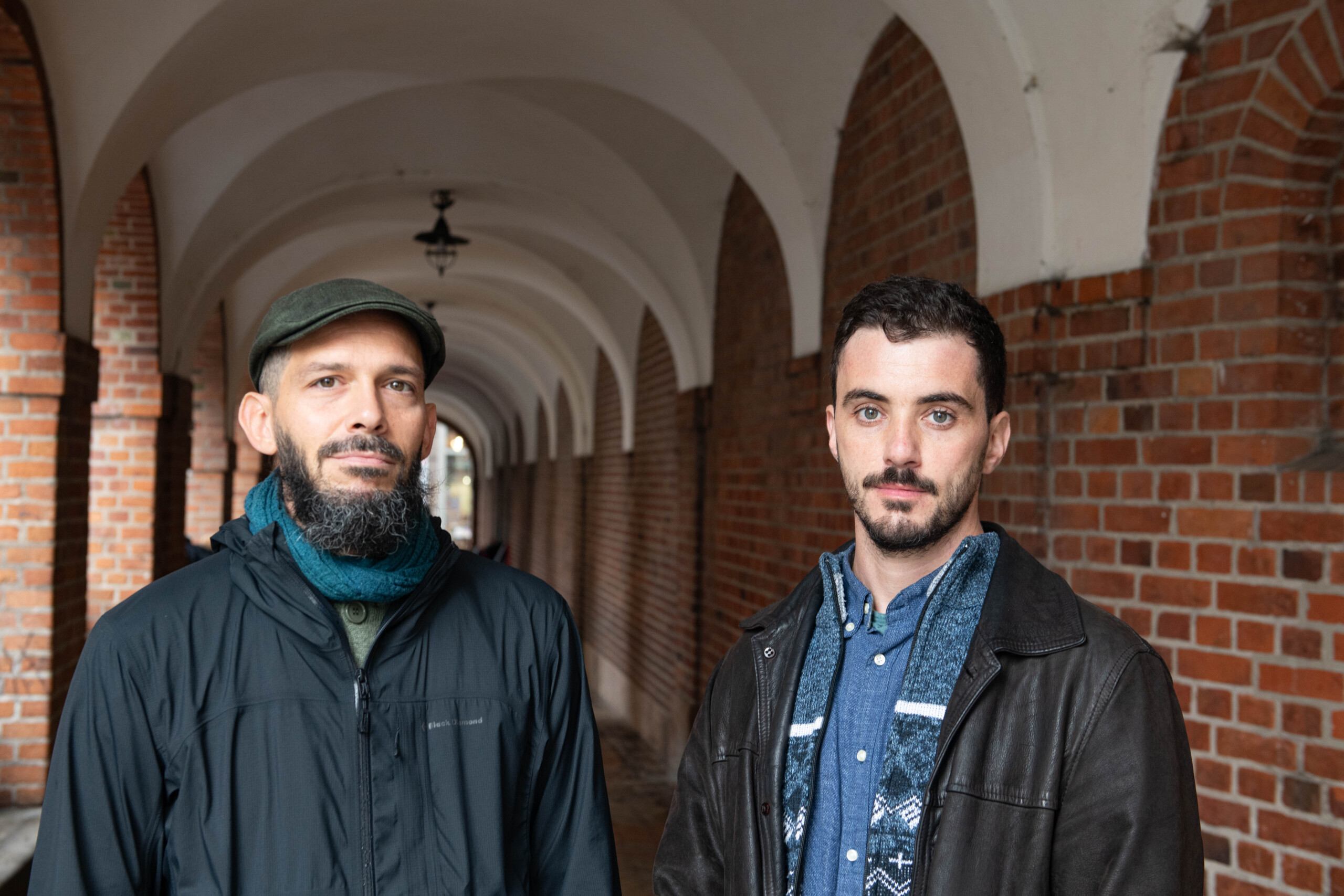
Salvatore Paolo De Rosa and Jaime Caballer Revenga, a postdoc at the Department of Mathematical Sciences and a member of the network, were two of the authors of the opinion piece in Information. They have agreed to elaborate on their criticism in an interview with Uniavisen.
»It really started with a group of friends talking about the frustrations we face in our working lives. And when the conversation turned to job opportunities and freedom in academia, it became clear that the unions were missing from the discussion. Where are they when employees have serious concerns about their working conditions and working environment?« says Salvatore Paolo De Rosa.
The network was initially called We Are UCPH, but when it quickly became clear that these frustrations were shared across universities, they changed its name to We Are The University.
I risk being blacklisted in the research community in future
Jaime Caballer Revenga, postdoc, UCPH
The network has yet to take on a definite structure, and it is not intended to replace the unions, they explain. Among their sources of inspiration is Forskerbevægelsen, a researchers’ movement founded in 2024 that now brings together researchers across universities in the fight for greater academic freedom.
READ ALSO: They want to start a movement: Bring back the joy in research
»We will try to put pressure on the unions to once again become a voice for university workers in precarious employment, who we currently feel are not adequately represented. And we will try to rediscover some of the labour movement’s traditional tools, especially the strike,« says Salvatore Paolo De Rosa.
Jaime Caballer Revenga adds:
»We have forgotten that we are workers and that we should have collective negotiation power. But the current working culture pushes us in the opposite direction: We are forced to work in isolation in a culture characterised by fear and silence.«
Both repeatedly stress that they are speaking on behalf of many people, and that speaking out publicly is not without consequences.
»People are very afraid to say anything. And when this interview comes out, many will ask, why are you doing this? My boss will ask, and I will have to answer. I risk being blacklisted in the research community in future,« says Jaime Caballer Revenga.
In their view, this fear largely stems from the way the research community is structured. As a temporary employee, you depend on research leaders who can secure funding and help you move on to your next position.
They therefore feel that speaking out as an individual and criticising the system can damage your career.
»Being so dependent on limited external funding creates enormous uncertainty. It makes it very difficult to push back,« says Salvatore Paolo De Rosa.
They also point out that it can be unclear what determines whether you get the opportunity to stay when a fixed-term position ends.
»You can write really good papers, be extremely good at your job and run excellent courses that students enjoy. But at the same time, you have to think about whether you can provide a key skill that makes you indispensable,« says Jaime Caballer Revenga, adding:
»Perhaps you need to be the person who can operate a particular instrument in the lab, so that you are needed when your contract expires. It creates enormous insecurity, because there is no formal definition of what it takes to remain in your field.«
Jaime Caballer Revenga is six months into his current two-year postdoc position. In other words, he feels what he calls »a postdoc’s constantly ticking clock«.
»I recently had to tell my senior collaborators that I will have to leave UCPH and our research project when my contract ends if I cannot secure an assistant professorship afterwards. They weren’t aware of that,« he says, continuing:
»These rules don’t apply anywhere else in the Danish labour market. It doesn’t seem fair — PhD students and postdocs add enormous value to universities. In many places, we are the ones keeping things running.«
Those of us who keep the university running have no real influence
Salvatore Paolo De Rosa, former postdoc, UCPH
In practice, they say, postdocs often carry out most of the day-to-day supervision, teaching and research.
»The higher professors rise in the hierarchy, the more their work becomes about administration and securing research funding,« says Jaime Caballer Revenga, continuing:
»So it is typically individual research leaders who receive large grants, which they can then use to hire PhD students and postdocs on temporary contracts. We do most of the research and teaching before being ‘discarded’.«
When a postdoc position ends with no new job in sight, you may therefore have to reinvent yourself, says Jaime Caballer Revenga:
»Imagine spending years developing your expertise and immersing yourself in a very specific research area, only to find that you cannot continue working in it. You have to find something else to do — or use your skills in a completely different way,« he says, adding:
»These working conditions almost demand superhumans. I am highly educated, I have been trained and worked at seven universities in Europe, and I have earned personal research grants. I really do believe that I know my shit, and I create real value. So why do I constantly have to be on my toes, worrying about what will happen in six months?«
READ ALSO: Controversial Danish university law now 20 years old. The man who crafted it only regrets one thing
When Jaime Caballer Revenga and Salvatore Paolo De Rosa are asked to identify the root of the problem, they have no doubts: the University Act of 2003.
The act replaced the existing system of collegial university governance with boards on which external members held the majority of seats and the chair. Democratically elected staff and student representatives were consequently left in the minority.
Representatives of the research community have criticised the University Act for concentrating power in the hands of management, weakening employee participation in decision-making and resource allocation, and putting academic freedom under pressure.
»I feel that the university is being run as a business rather than an institution of knowledge. The focus is on cost-cutting, efficiency and an organisation that runs without too much debate or democratic exchange. Meanwhile, those of us who keep the university running have no real influence,« says Salvatore Paolo De Rosa, adding:
»At the same time, we are becoming more isolated, and individuals are left to take sole responsibility for their own careers. I have attended several ‘postdoc coffee meetings’ where we could share our frustrations. But there was no follow-up or help with organising or making collective demands.«
The network’s ultimate ambition is to have the University Act rewritten. But before — or if — that ever happens, they believe there are several other measures that could improve conditions for temporary employees here and now.
»The rule limiting postdoctoral employment at the same university to four years should be changed, and we should work towards abolishing the postdoc category altogether,« says Jaime Caballer Revenga, continuing:
»A postdoc position is fundamentally insecure, and ultimately we want these extremely short contracts to end, because they represent an inhumane and unsustainable way of working.«
The university should create more permanent positions and take greater responsibility for the people it employs
Salvatore Paolo De Rosa, former postdoc, UCPH
Have you tried raising any of these issues internally at UCPH?
»I have raised the issues with both my union representative and the head of the Department of Cross-Cultural and Regional Studies. The answer was that it wasn’t up to them — that’s what the law says,« says Salvatore Paolo De Rosa.
He nevertheless believes that the university could already devote more time and resources to creating greater stability for its temporary employees.
»I needed support when my contract expired. Although I was allowed to retain my formal affiliation with UCPH — without pay, mind you — I felt completely left to fend for myself. Right now, I am working for free to finish the papers I was working on as part of the project, and the university could offer some form of support here,« says Salvatore Paolo De Rosa.
Jaime Caballer Revenga adds:
»Both PhD and postdoc contracts should state more clearly that the research environment has a duty to provide guidance and ensure professional development throughout the period of employment. Departments should be bound by a clause in the employment contract setting out mutual obligations — those of the employee towards the department and vice versa,« says Jaime Caballer Revenga, adding that he will discuss with the network precisely what they believe this clause should say.
Both also believe that universities should create better opportunities for continued employment when a postdoc position ends.
»The university should create more permanent positions and take greater responsibility for the people it employs,« says Salvatore Paolo De Rosa.
We Are The University wants to grow and involve as many employees as possible in the conversation. The network is therefore inviting anyone interested in the issue to an open meeting.
It will take place on 28 October, from 3 to 6 pm, in room 14.1.67 on South Campus.
»There will also be a workshop with experienced labour organisers affiliated with the Industrial Workers of the World, focusing on how to map and organise your own workplace,« says Salvatore Paolo De Rosa.
Anyone who wants to share their experiences and learn more about the network is welcome to attend, the two say.
»Clearly, something isn’t working. No one is going to come along and say: Here are your rights. So now we have to do it ourselves. We have to build and protect our collective negotiation power,« says Jaime Caballer Revenga, adding:
»We have to remind ourselves that we are workers, with everything that entails. It is up to us to protect our rights in the workplace.«
This article was translated with the assistance of artificial intelligence and subsequently reviewed by a member of the editorial staff.