

Universitetsavisen
Nørregade 10
1165 København K
Tlf: 35 32 28 98 (mon-thurs)
E-mail: uni-avis@adm.ku.dk
—
Working environment
Parallel languages — According to the organisers of a language policy hearing, Danish is being sidelined at university despite an official parallel language policy. But the rector does not share their concerns.
Students, researchers, and staff switch between Danish and English in teaching, in research, and at the lunch table.
And this was the theme of a University of Copenhagen (UCPH) language policy hearing on South Campus 18 March.
Is the university sliding too far into English, and thereby becoming an English-speaking bubble in a Danish-speaking society? This is certainly the concern of the organisers of the hearing, UCPH Senior Forum, a group for researchers at the University of Copenhagen who are at the end of their careers.
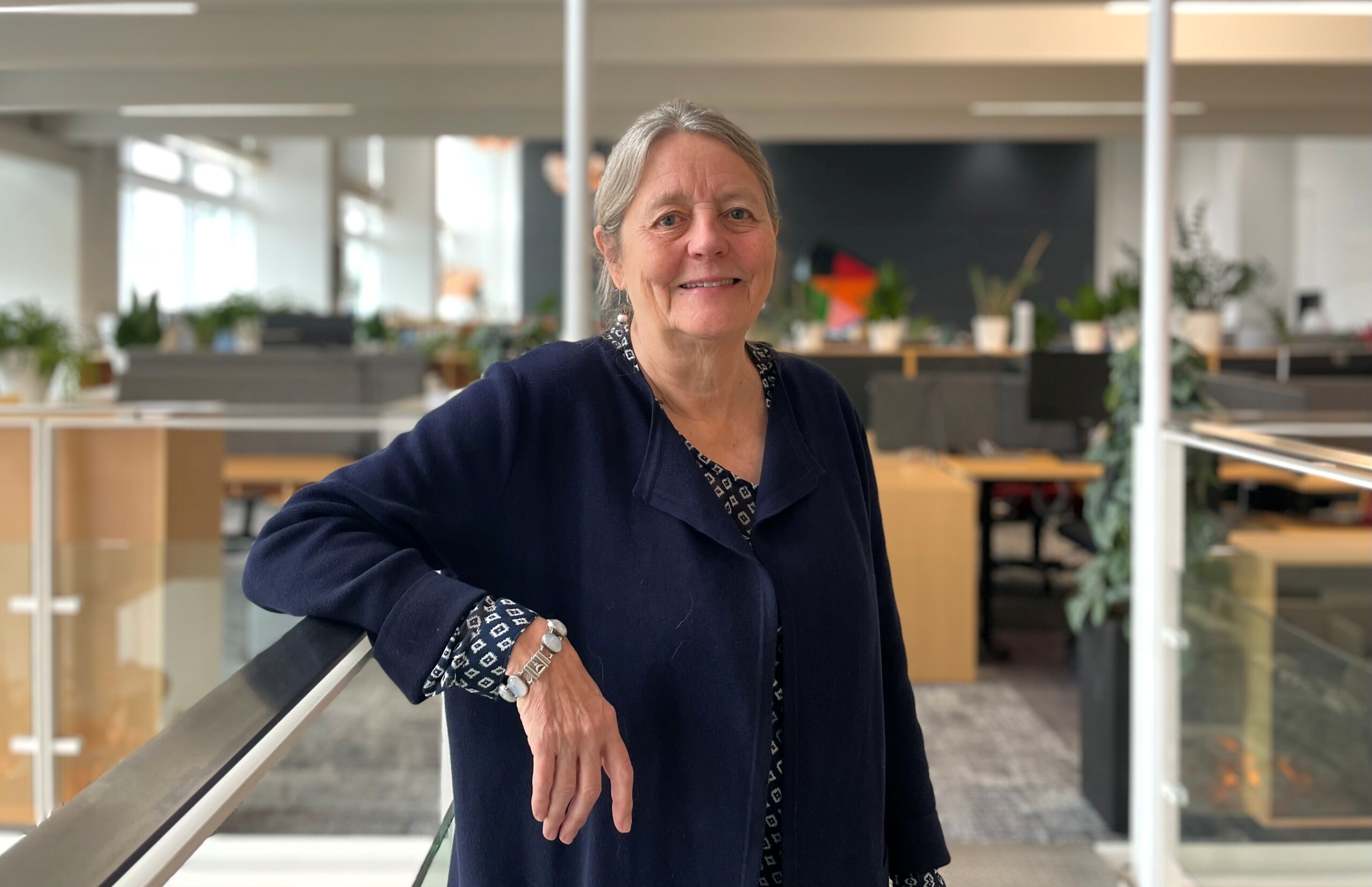
»We should not just be an international university that happens to be located in Copenhagen. We should be a Danish university that also functions in English,« says Professor Emeritus Anne Holmen of the Department of English, Germanic and Romance Studies who is a member of UCPH Senior Forum.
She emphasises that English is an important language for UCPH as an international research institution which aspires to be — according to its motto — the best place for the best ideas.
But according to her, public dissemination, and specifically, the teaching, may suffer if Danish is pushed too far into the background.
We hope that the university will take its language policy seriously
Anne Holmen, professor emeritus and UCPH Senior Forum member
»If researchers cannot share their knowledge in Danish, it becomes more difficult to reach the media and take part in public debate,« says Anne Holmen.
She calls on UCPH to better live up to its own language policy.
»We hope that the university will take its language policy seriously. At every level,« she says.
According to her, the problem is not due to a lack of rules. UCPH already has a parallel language policy, where Danish and English are meant to function side by side. The problem is rather that the policy is not consistently applied.
According to the language policy, international staff should, as a rule, be able to teach and supervise in Danish after three to six years. In practice, the requirement is not enforced.
Rector David Dreyer Lassen also attended the hearing.
He believes that Danish should continue to play an important role at the university — particularly in subjects with close ties to Danish society such as law, social sciences, and the humanities.
He therefore also welcomes the hearing and discussion.
UCPH is — and should be — an international workplace and research institution, he emphasises. This will inevitably involve English. But he does not share the concern that English will push Danish into the background.
He points instead to what he calls »local pragmatism«, where the choice of language is adapted to the situation.
»In some places people speak Danish, in others people speak English. People do actually manage to understand each other,« the rector says to the University Post.
Several international researchers were also invited to the hearing, and they shared their own experience with how language policy works in UCPH daily life.
One of them was Silvia Adamo, an associate professor at the Faculty of Law who is originally from Italy. She was hired as a PhD at UCPH back in 2004, and has learned Danish. She now lectures in both Danish and English.
She still has the experience of being caught between two worlds, however.
We need of course to offer the opportunity, and in principle also the time, for people to study Danish
David Dreyer Lassen, rector at UCPH
»At times, even after 20 years at UCPH, I feel that my Danish colleagues see me as a foreigner. My international colleagues also see me as a foreigner, but as someone who has been allowed into the Danes’ inner circle because I have a permanent position,« Silvia Adamo said during her presentation.
She agrees with the ambition that international researchers at UCPH should learn Danish, but points out that it can be more difficult than the language policy suggests.
It takes a long time to learn the language — up to 600 hours of instruction — and this is on top of building a research career.
At the same time, Danish colleagues unintentionally stand in the way.
»The worst thing when you are learning Danish is that you are not allowed to practise, because Danes don’t understand you if you speak with an accent,« she said. Conversations therefore often end up in English, with international staff ending up speaking less Danish on a daily basis.
Different languages make for imbalances in workload, Silvia Adamo points out.
Teaching in Danish requires significantly more preparation for international staff, yet teaching hours are calculated the same as for Danish colleagues.
Anne Holmen thinks that UCPH management should do more to support international staff in acquiring Danish language skills — for example by making sure that time for language training is designated as work time.
David Dreyer Lassen acknowledges that it is a management responsibility that there is language training for staff so they can live up to the language policy ambitions.
»We need of course to offer the opportunity, and in principle also the time, for people to study Danish,« the rector says.
Although he does not worry that UCPH will become exclusively English-speaking, he believes that the issue is important.
»It requires our ongoing attention. We need to ensure that what happens inside the university is not in a different world than outside the university.«
This article was first written in Danish and published on 20 March 2026. It has been translated into English and post-edited by Mike Young.