

Universitetsavisen
Nørregade 10
1165 København K
Tlf: 35 32 28 98 (mon-thurs)
E-mail: uni-avis@adm.ku.dk
—
Education
Master's degree reform — Faculty drops idea of short versions of traditional subjects and launches a series of new, more specialised degrees. At the same time, it is working »flat out« to get companies to take on students for business master’s degrees.
The Danish reform of master’s degrees into actual study programmes at the University of Copenhagen (UCPH) is now one step closer to becoming a reality.
When the University Post spoke to UCPH Prorector for Education Kristian Lauta in January, individual faculties had yet to submit their own proposals to management.
Now the proposals have arrived. At the Faculty of Science, the process has led to an about-turn.
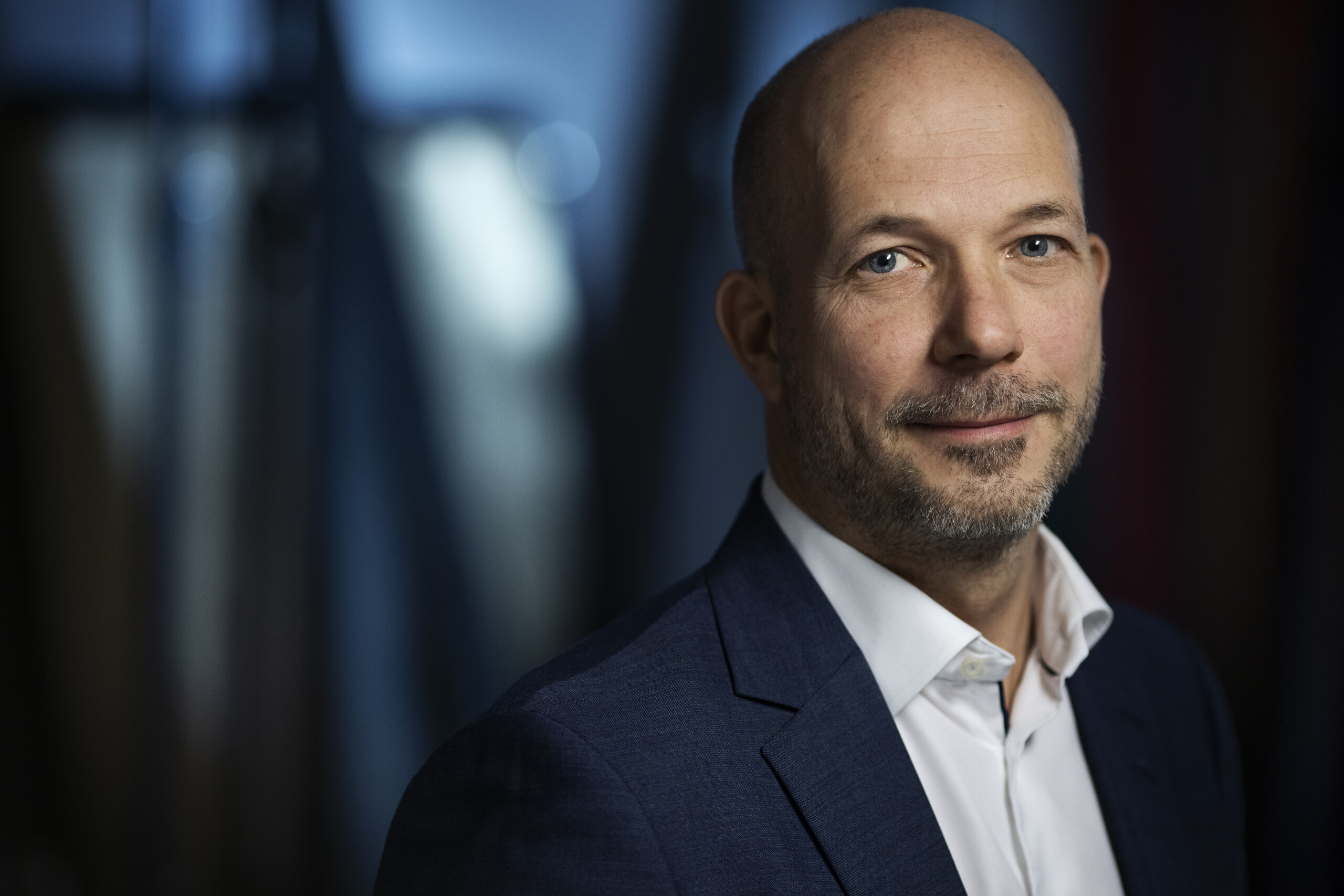
»We have completely changed strategy on this,« says the Faculty of Science’s associate dean for education Andreas de Neergaard.
The master’s reform
By 2032, 10 per cent of master’s students must be admitted to a reduced 75-ECTS master’s programme and 20 per cent to an industry master’s programme. This was agreed in June 2023 between the government, the Socialist People’s Party, the Denmark Democrats, the Liberal Alliance, and the Conservatives, and is to be phased in from 2028.
In the original 2025 plan they proposed a partial restructuring of subjects like mathematics and physics, so they were reduced from 120 to 75-ECTS master’s programmes. Students on the programmes would then only be guaranteed a one-year master’s degree.
This idea has now been dropped in favour of a series of new specialised one-year master’s programmes that are aimed more directly at the labour market.
The Faculty of Science had originally wanted students to choose between a one-year and two-year master’s degree after spending half a year on the programme, and had suggested to a government-advisory master’s committee that it should incorporate this idea into its report, which was completed in November 2024.
But the idea did not make it into the final recommendations. So the faculty had to quickly draft a new proposal.
There are certain logics that exist at the university, and then there are other logics that exist out in business. And they are not the same
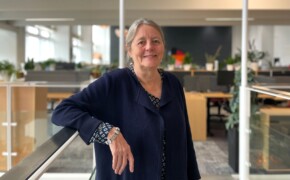
Andreas de Neergaard, Associate Dean for Education at the Faculty of Science
Faculty management asked heads of studies at the faculty to draw up shortened versions of their traditional 120-ECTS master’s programmes.
The heads of studies at the Faculty of Science, however, countered by keeping the traditional subjects in the 120-ECTS format and instead proposed making a series of reduced sector-specialised 75-ECTS master’s degrees.
The faculty has therefore now proposed something called applied analytical chemistry rather than a shortened version of chemistry, and bio data science as well as biotechnology rather than a shorter biology master’s.
The idea of offering both short and long master’s degrees in the exact same subject has been abandoned.
»The 75-ECTS programme will be a narrower, but also a deeper, course of study,« says Andreas de Neergaard.
New 75-ECTS master’s programmes at the Faculty of Science
Data stewardship
Applied analytical chemistry
Bio data science
Biotechnology
Computer science-economics
Geoinformatics
Nature management
Machine learning and artificial intelligence
»I’ve been saying this for two years now: These 75-ECTS master’s programmes are going to be a ‘banger’. When people can see that graduates from 75-ECTS programmes are just as capable as those from 120-ECTS ones, I think we’ll see a big shift towards the 75-ECTS master’s programmes.«
What happens if the new one-year master’s programmes are so popular that there is intense competition for places?
»The 10 per cent of study places on 75-ECTS master’s programmes is a minimum, so we are allowed to expand admissions,« says Andreas de Neergaard.
A frequently raised concern in the debate over shortened Danish master’s degree programmes is that students will be forced to specialise early in their studies. If you go straight from upper secondary school to university, you may already have to channel yourself into a narrowly defined field by the age of 21.
Andreas de Neergaard does not see this as a problem.
»You don’t know what you want to do for the rest of your life if you take a five-year degree either. And I think the 75-ECTS programme is a good value proposition, because you can return to the university later and take supplementary ECTS credits. Besides, there are many fields where you encounter a labour market reality that is different from what you expected.«
Another part of the reform is the business master’s programmes, where students combine master’s studies with a part-time job in a private sector company.
Unlike the one-year master’s degrees, which take place on campus, this model is entirely dependent on companies’ actually wanting to employ the students.
»We are completely dependent on business and industry,« explains Andreas de Neergaard.
Politicians cannot force companies to hire students, and in practice the reform therefore depends on companies choosing to set up part-time positions.
»It requires that these 25-hour a week positions are set up, which students can then be employed in. And of course they hire the people they want to hire,« says Andreas de Neergaard.
To make the scheme work, the university has therefore launched extensive efforts to approach companies and industry organisations, and is currently working »flat out« to prepare business and industry to take in the many students in the future.
The Faculty of Science has already held meetings with banking lobby Finance Denmark, the life science industry, and consultancies in an attempt to build a network of employers who are able to offer part-time positions to students.
»We’re trying to put the right mechanisms in place so that we support this,« he says.
At the same time, de Neergaard acknowledges that it is a complex task to make the logics of the university and the logic of companies fit together.
»There are certain logics that exist at the university, and then there are other logics that exist out in business. And they are not the same,« says Andreas de Neergaard. But he stresses that he remains optimistic on behalf of the students.