

Universitetsavisen
Nørregade 10
1165 København K
Tlf: 35 32 28 98 (mon-thurs)
E-mail: uni-avis@adm.ku.dk
—
International
Humans and nature — The University of Greenland in Nuuk has set up a bachelor’s degree in biology that has hunting, sled dogs, and local narratives as its organising principle.
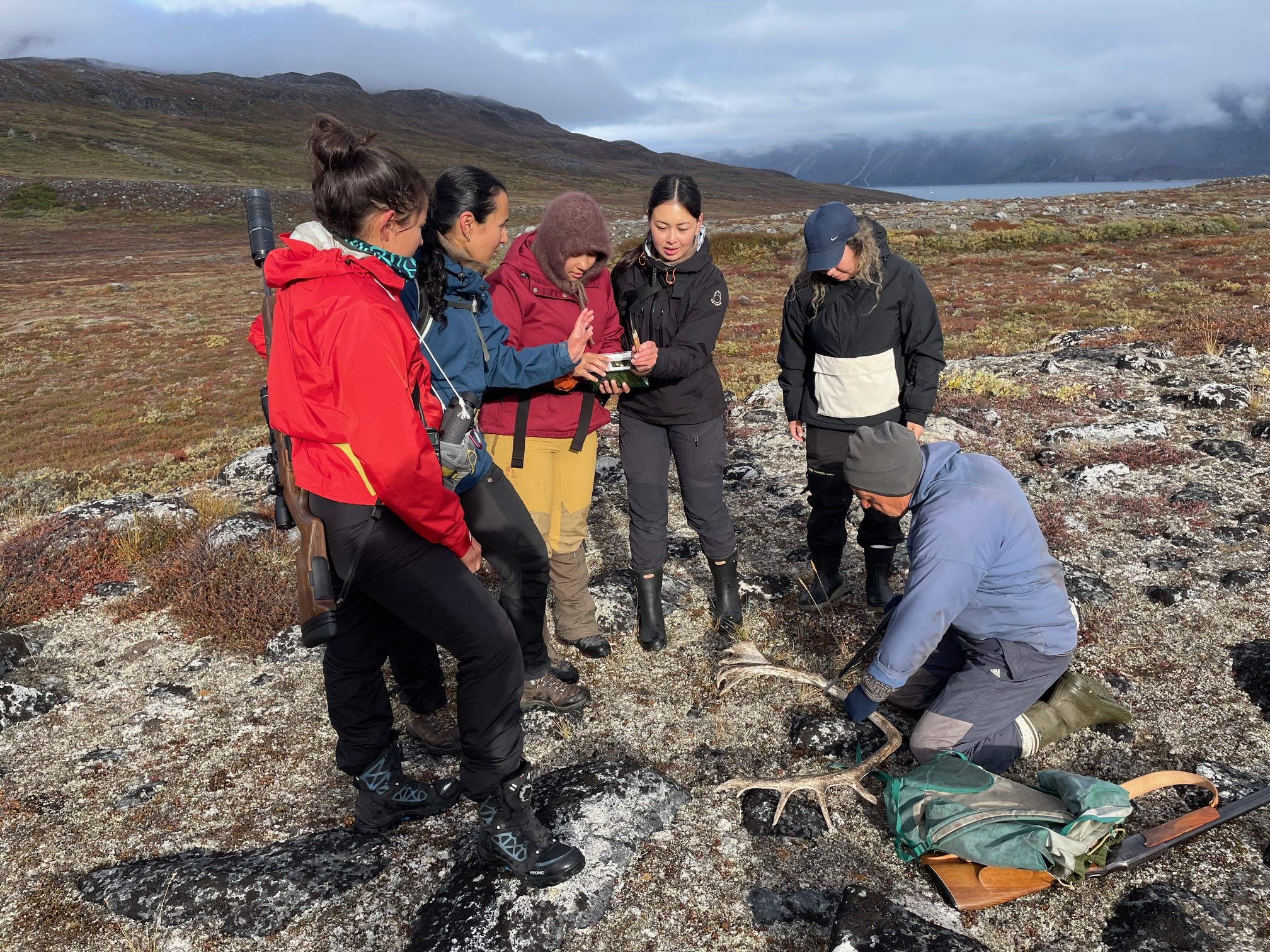
It is out on the Greenlandic tundra. A group of university students are standing there with their knives and notebooks with a dead reindeer in front of them. They measure, record, and discuss the anatomy and its layers of fat.
They are not doing a field course as a supplement to their classroom teaching. This is the actual ‘classroom’.
When the University of Greenland, Ilisimatusarfik, opened up a new bachelor’s degree programme in biology a year ago, it was not structured around classical academic disciplines like ecology, genetics, and chemistry. In Nuuk, the courses are called tuttut (reindeer), imaq (sea), siku (ice), and qimmeq (sled dog).
I do not believe we are compromising on biological knowledge. On the contrary, our students develop a more personal and motivated relationship with it
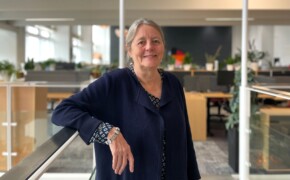
Aviâja Lyberth Hauptmann, associate professor and head of department at Ilisimatusarfik
This was a carefully made decision, according to Aviâja Lyberth Hauptmann, who is associate professor and head of department for the new SILA bachelor’s degree in biology at Ilisimatusarfik.
»Instead of putting knowledge into subject silos, we connect biology to something specific and relevant to Greenland,« she says.
Aviâja Lyberth Hauptmann is from Greenland herself, but is trained as a biologist at the University of Copenhagen (UCPH) and has a PhD from the Technical University of Denmark (DTU). She has had the idea of a biology programme rooted in Greenland for more than ten years.
»It had to be prioritised and relevant in a Greenlandic context. We are educating biologists who are going to work in Greenland,« she says.
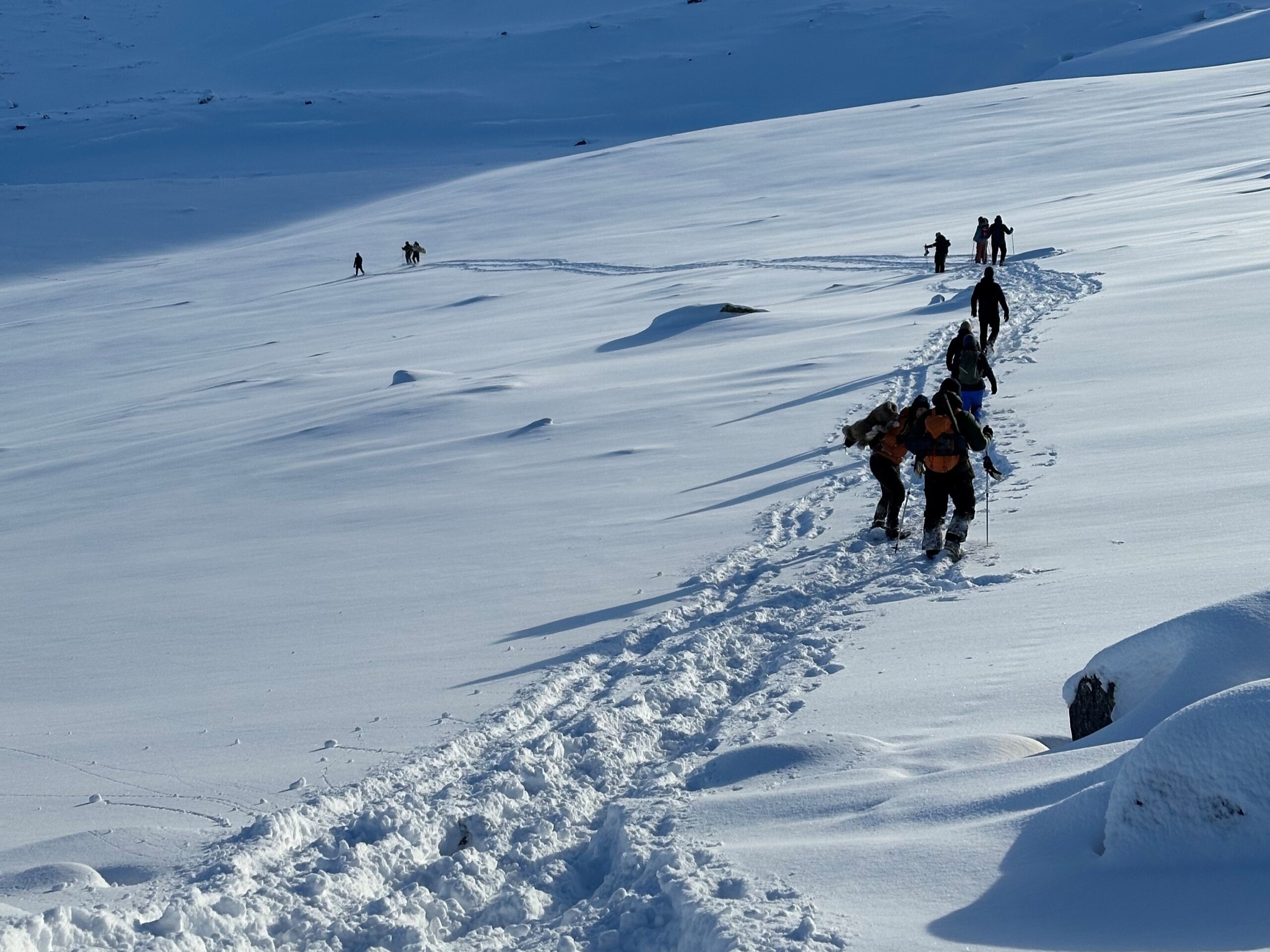
The teaching does not only take place in lecture halls, but to a large extent out in the Greenlandic landscape, where students spend one week hunting reindeer, and another week going hunting for ptarmigans.
This is not just to learn hunting as a craft, but to have a solid foundation in the biology.
»If we can give students a personal relationship to anatomy and physiology because they themselves are in a hunting situation, I think they learn better than if their only relationship is via a textbook,« says Aviâja Lyberth Hauptmann.
READ ALSO: Greenlandic Studies caught up in geopolitical tensions: »It makes me anxious«
The name of the programme, SILA, is Greenlandic for both ‘weather’ and ‘consciousness’ — and, in a wider sense — the world or the universe. According to Aviâja Lyberth Hauptmann, the concept reflects an understanding that human behaviour and the state of nature are interconnected.
This way of thinking stands alongside classical natural science teaching, which is combined with culture and old Inuit narratives.
»I do not believe we are compromising on biological knowledge. On the contrary, our students develop a more personal and motivated relationship to it,« she says.
Ilisimatusarfik has around 1,000 students in total. The new biology programme admits 12 students each year, who have four permanent members of staff as instructors.
»Four permanent staff members for three full years of a bachelor’s degree is simply not enough. And we cannot have one professor specialising in genetics, one in chemistry, one in ecology, and so on. We simply cannot afford it,« says Aviâja Lyberth Hauptmann.
We started from our own point of departure and then invited others in. That leads to more respectful and meaningful collaborations.
Collaboration partners are therefore necessary.
Enter the Globe Institute at University of Copenhagen (UCPH), which also works across disciplines that span natural sciences, medical sciences, and the humanities. This includes teaching a genetics-focussed qimmeq (sled dog) course by the researchers from the institute, inspired by a larger project affiliated with the Globe Institute.
»It has developed organically, but it is a huge help to us, because we would not be able to run it on our own,« says Aviâja Lyberth Hauptmann.
There is intense debate about the future of Greenland and its relationship with Denmark, and she sees the SILA programme as an example of collaboration that takes place on Greenlandic terms.
READ ALSO: As Trump tears up the rulebook, academics use a new concept
»We have set up this collaboration differently. We started from our own point of departure and then invited others in. That leads to more respectful and meaningful collaborations,« says Aviâja Lyberth Hauptmann.
This was the approach that shaped their collaboration with the Globe Institute.
»If we had simply made a mini version of a Danish biology programme, it would not have been interesting to anyone. It is because we ourselves started, that it makes sense for others to collaborate.«
One key priority for the new programme was that the entire bachelor’s degree should be completed in Greenland.
»Those who want to go to Copenhagen to study biology can do so. But the programme is designed for those who want to stay here. In this respect we are fortunate, because there are many people in Greenland who have an interest in nature, and a relationship to it,« says Aviâja Lyberth Hauptmann.
The programme began in February 2024. There is no master’s degree in biology in Greenland yet. But work is underway to set one up, and students have access to the master’s degree programme in biology at Aalborg University in Denmark.
According to Aviâja Lyberth Hauptmann, the outside interest has been significant.
»It is not because we have to look for people who want to collaborate with us. Quite the contrary. It is a big job for us to just sort through all the enquiries and assess what makes sense for us«.
READ ALSO: University of Copenhagen to boost Arctic Station co-operation with Greenland
This article was first written in Danish and published on 24 February. It has been translated into English and post-edited by Mike Young.