

Universitetsavisen
Nørregade 10
1165 København K
Tlf: 35 32 28 98 (mon-thurs)
E-mail: uni-avis@adm.ku.dk
—
Working environment
Cuts at the Faculty of Science — Sergey Rosbakh left the Faculty of Science in December 2025 and now says that the credibility of UCPH as an employer has been undermined. According to the dean at the faculty the risk of reputational damage is a »genuine concern«.
When Sergey Rosbakh’s contract at the Faculty of Science at the University of Copenhagen (UCPH) expired in December 2025, it coincided with a massive round of layoffs that saw the faculty lose 124 employees in total.
For Sergey Rosbakh, who joined the University of Copenhagen in 2022 as a tenure track researcher in plant ecology, this was a defining moment in his perception of UCPH.
»I’m almost ashamed to admit it, but I felt relieved to be on my way out,« he says.
The relief was not because his colleagues were being let go. On the contrary, the layoffs were deeply disturbing to him. But the way the process was handled, he says, has undermined his trust in the university. It has led him to warn younger and international researchers against taking jobs at the faculty.
»The reputation of UCPH as a reliable employer has been compromised,« he says.
In the layoff round that has just been concluded, the Faculty of Science dismissed 66 employees directly. On top of this, 26 signed voluntary resignation agreements and 32 entered into senior schemes, bringing the total up to 124.
READ ALSO: 124 jobs lost at Faculty of Science — academics fear lasting damage
According to management, the layoffs were necessary due to an ongoing budgetary deficit of approximately DKK 100 million, linked in particular to increased operating costs on new large-scale construction projects — the Niels Bohr Building and the new Natural History Museum of Denmark.
I miss my colleagues and the people at the university. But I don’t miss the system
Sergey Rosbakh, former employee at the Faculty of Science
According to Sergey Rosbakh, uncertainty is an inherent part of academia. Many researchers spend years on fixed-term contracts and repeatedly move between countries and institutions.
But the system is still built on one core assumption, he believes.
»There’s a kind of tacit understanding: If you deliver — publish, teach, secure funding — then there’s a long-term possibility of stability. Not a guarantee, but a realistic chance,« he says.
This understanding, he feels, has been undermined by the Faculty of Science layoffs.
»To outsiders it sounds like you could just find another job. But many researchers build their entire lives around this expectation. Family, housing, personal choices — all of it is based on that,« says Sergey Rosbakh.
In the days around the layoffs, according to Sergey Rosbakh, the atmosphere among staff was characterised by confusion and disbelief.
»It was as if the light had gone out in people,« he says.
The layoffs not only affected those who were dismissed, but also those who could look on from the sidelines — especially younger researchers and postdocs.
»They saw that even highly skilled and successful researchers could be dismissed. This raises a fundamental question about what you can actually count on,« says Sergey Rosbakh.
READ ALSO: Rector on cuts to Faculty of Science: There’s no way around it
The consequences may not be immediately visible, but the long-term effects could emerge through researchers’ networks.
»If someone asks me whether they should apply for a job at the University of Copenhagen, I’ll be honest and say: It’s a great place in many ways, but be aware: This can happen again,« says Sergey Rosbakh.
During the layoff process, staff representatives at the Faculty of Science warned that the episode would damage the international reputation of the faculty and of UCPH.
Speaking to the University Post, Peter Waaben Thulstrup, joint union representative for academic staff at the Faculty of Science, has previously explained that research careers face a fundamental challenge. The university requires a high degree of specialisation. But this, in turn, makes employees less flexible in the wider job market. If job security is perceived as unpredictable, this will discourage researchers from choosing UCPH.
This harms us — our reputation and our ability to recruit
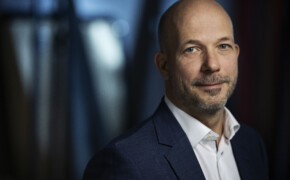
Bo Jellesmark Thorsen, Dean of the Faculty of Science
»When, time and again, we have major layoffs that also cut core skills and expertise, people lose faith in this being the right place to build a career,« he told the University Post shortly after the layoffs.
Dean of the Faculty of Science Bo Jellesmark Thorsen shares the concern that the rounds of layoffs negatively affect the faculty’s image and make recruitment more difficult.
»I genuinely think it does, because it is bad publicity. It hurts our reputation and our recruitment potential,« he says.
He emphasises, at the same time, that he does not know how big the impact will be, or how long it will last.
»I don’t have any empirical basis to say how much this layoff round will ultimately affect us. But I can say that we had plenty of international applicants before, and we also had plenty after the previous rounds of layoffs,« he says.
As a consequence of the cuts, Bo Jellesmark Thorsen says that financial oversight of departments will be tightened. This means that the Faculty of Science will advertise fewer positions and be slower to open up new ones.
»We will be opening fewer positions in the future to avoid further cuts. So yes, I believe there will be an effect, at least in the short term,« he says.
Sergey Rosbakh is now employed as a researcher at Leibniz University in Hannover, Germany, where he says there is significantly better job security.
The systems are not directly comparable, he points out. Denmark has strengths in many areas — like flatter workplace hierarchies and a stronger emphasis on well-being and the working environment.
But as an employer, the University of Copenhagen has lost his trust.
»I miss my colleagues and the people at the university. But I don’t miss the system,« he says.
This article was first written in Danish and published on 22 January 2026. It has been translated into English and post-edited by Mike Young.