


Universitetsavisen
Nørregade 10
1165 København K
Tlf: 35 32 28 98 (mon-thurs)
E-mail: uni-avis@adm.ku.dk
—
Student life
Budget experiment — The experiment in which I have to live on less than DKK 1,500 for a month is finally drawing to a close. I think back to my school trip to Austria, and I reflect on our social and personal relationship with money with a behavioural economist and a savings expert.
We were under the midday sun. The morning dew was starting to evaporate, and a warm spring breeze was following us up the mountain. We had reached a plateau on the Austrian mountain ridge, a resting place for hikers who needed a lunch break with a view across the picturesque Alpine landscape. The brisk footsteps and whistling from my seventh grade classmates had gradually fallen silent. They were tired. Irritable. And hungry.
We stopped by a stream, and I slipped out of my rucksack that hit the ground beneath me with a dull thud. I felt the blood flow back into my aching shoulders. God! That bag was seriously heavy. But it didn’t matter. I had a plan.
THE STUDY
Danish trade union DM published in August 2025 a survey of students’ financial circumstances among its own members. 26 per cent of respondents said that they have less than DKK 1,500 at their disposal each month.
Expenses for rent, water, heating, electricity, internet, phone, and insurance are not included, as these are considered fixed expenses in DM’s survey.
A small group had slumped down by a tree trunk near the water. They looked on with a mixture of longing and envy at the classmates who had been farsighted enough to pack a lunch for the trip back at our hostel. There they sat. Too cool for both school and packed lunches, and completely drained of energy. One of them tipped his water bottle upside down. Another frantically rummaged through his bag in search of a muesli bar.
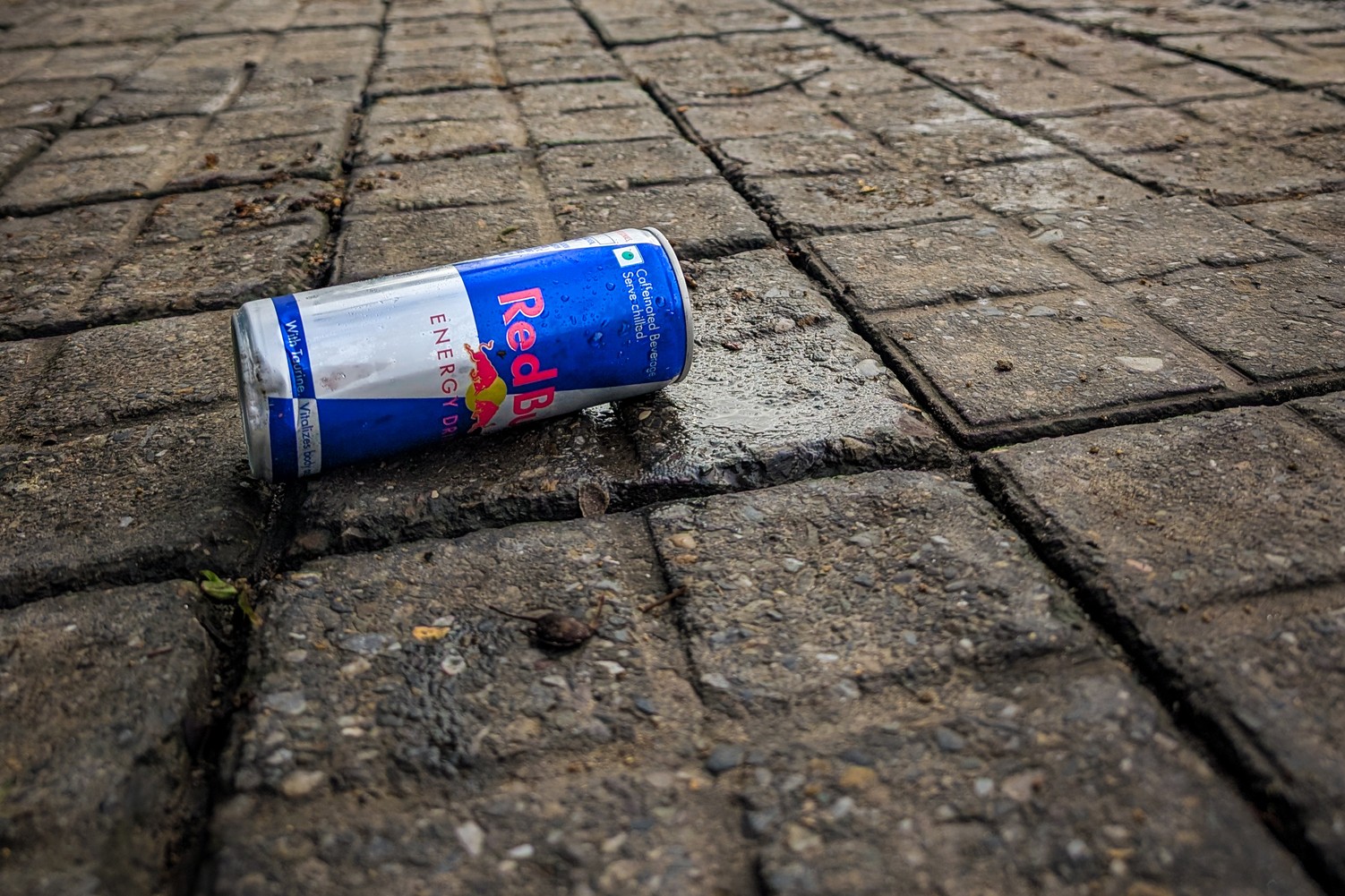
I unzipped my bag and pulled out a couple of cold, dew-covered, cans of Red Bull. I approached the group by the tree trunk. They were exhausted — and ready to buy. I could set the price myself.
»Just look what I’ve got for you, chums!«
READ ALSO: Can you live on DKK 50 a day in Copenhagen? A student experiment
I am more than three weeks into my experiment. For one whole month I am living the way 26 per cent of students say they do in a recent survey by the Danish trade union DM. I am living on less than DKK 1,500 a month — and I am beginning to sense the finish line.
My relationship with money has taken up quite a lot of space during this experiment. Not just the question of how I spend it, but also how I relate to money psychologically. That is, in a rather peculiar way.
My relationship with money is conflicted
My relationship with money is conflicted, I discovered.
On the one hand, I hate dealing with money — or at least much of what comes with it: The MobilePay requests, the nitpicking over every krone, the mental bookkeeping, the status. I would prefer neither to think about nor talk about money. In fact, I would rather pretend it doesn’t exist.
On the other hand, I am obsessed with money. And this has been made clear to me when I don’t have any. At the beginning of the experiment, I realised that the lack of money activated a kind of hyperfocus within me. Saving became a sport, and things just couldn’t be more cheap and basic. I had budgeted DKK 50 a day for the entire month, but ended up spending half of that. I was perfectly happy to eat porridge for lunch if it meant I could put more aside. I didn’t know what I was saving up for, but I hoarded the money and enjoyed the feeling of being in control.
READ ALSO: Living on DKK 50 a day: My unexpected obsession with savings
But why do I feel this way?
Christina Gravert, associate professor in behavioural economics at the University of Copenhagen, introduces me to the concept of ‘the pain of paying’. It is the discomfort we experience when we spend money.
She explains that people can be placed on a spectrum with two extremes. At one end is the tightwad, or miser. For the tightwad, spending money hurts so much that they sit on their money purse like a brooding hen. The tightwad knows that they would be happier if they spent more. But they simply cannot bring themselves to do it. The pain is just too much.
At the other end is the spendthrift, for whom the pain of paying is entirely absent. Even though the spendthrift knows they would gain more joy from spending less and saving up, the psychological resistance is simply not there.
The optimal place to be is somewhere in between, says Christina Gravert.
»You need to spend enough money to live well in the here and now. But not so much that you don’t have money in the future,« she says.
My pain of paying is split between the two extremes. When I feel financially secure, I splurge, even though I know I could live cheaper with no major sacrifice.
If you have gone through a natural disaster, you are more likely to buy insurance
Christina Gravert, associate professor in behavioural economics
But when I feel poor, I become a tightfisted miser. I find comfort in having a large money bank, become obsessed with saving, and come up with strange ways to make money.
I ask Christina Gravert why I am both a tightwad and a spendthrift, and she tells me something that I find really interesting.
If you have gone through a natural disaster, you are more likely to buy insurance, and if you have lost money during the financial crisis, you are inclined to be more cautious with your spending.
I was alive during the 2008 financial crash I grant you. But I was not old enough to be in crisis. What I do remember, however, is that we didn’t have much in my childhood home. It was not that we were going without, but I sensed that we were not rolling in money. Perhaps that is part of the explanation?
Thwap-thwap-thwap. The sound of the helicopter is waking up the residents as it circles over a small Alpine town just outside Salzburg. It has flown from the town’s hospital to the hiking hostel where a Danish seventh-grade class has been staying for a week. Pupils are complaining of dizziness and sore muscles. Teachers suspect that mould at the hostel is making the pupils ill.
The helicopter lands on a nearby lawn, our hostel is evacuated, and some of my classmates are carried out on stretchers.
I watched from a distance, backpack on my shoulders stuffed with Red Bulls.
A few days into the trip, I noticed that several of my classmates neither ate their breakfast nor made packed lunches for our daily hikes in the mountains. A surefire way to end up with low blood sugar and a poor salt balance.
Thanks to thorough lobbying by Red Bull, energy drinks are cheap in Austria, so I spotted a business opportunity.
Every morning before we set off, I had packed my rucksack with cheap energy drinks, hauled it up the mountain, and struck when the inevitable happened.
I spent the 50 euros that I had been given as pocket money on buying Red Bull, which I could then resell at outrageous prices. And it worked. When the trip was over, I had 150 euros in my pocket.
My plan did not save my exhausted classmates in the long run. But that is another story. The helicopter paramedics quickly discovered that the problem was not mould, but a lack of nutrition.
When I returned home to Denmark, I put the 150 euros into my savings account. I did not spend any of it on myself.
For many years, the school trip was just a funny story about a greedy, enterprising, teenager who knew how to exploit the situation. But as my savings experiment has progressed, I have begun to see the story in a new light. Even back then, my pain of paying was really strong. I could easily refrain from spending money on myself as long as it meant I was filling up the money bank.
The biggest challenge that I have wrestled with during the experiment has been how to make my social life fit in to my tight budget.
It costs money to see your friends, and in the long run it just does not work to sponge your way through every night out, or to keep on having a free date night with your partner at the local library.
READ ALSO: Living on DKK 50 a day: My spreadsheet is disappointed. I’m not
I find myself at a kind of crossroads, because I can easily economise with myself, but I don’t want to economise with my friends.
»There are two sides to it,« says Sune Bjørn Andersen when I call him up. He has been my savings guru and mentor throughout the experiment.
In big cities, in particular, the social sphere has become commercialised
Savings expert Sune Bjørn Andersen
»When you’re a student and part of a study environment, there is an enormous focus on the social side of things. And today, being social often means spending money. It has become transactional.«
He says that in big cities, in particular, the social sphere has become commercialised.
»The library is almost the only place you can go without there being an expectation that you spend money. It’s absurd. The starting point for spending time together nowadays is that it costs money.«
Sune Andersen himself is now 39. He looks back to his time as a young student in Aarhus, where he and his friends would move from one Friday bar to the next when they hung out. Because he volunteered at a student Friday bar, he could get a beer for five kroner.
»This meant that it was not associated with any financial anxiety. And because it was so cheap, we could easily buy rounds for each other. That’s just what you did, and no one kept track of whether someone had bought more than the others. It was a completely different way of going out compared to going to bars in Copenhagen,« he says.
The question, then, is whether I, as a student in Copenhagen, have to choose between living cheaply and having a social life.
It depends on the culture you are a part of, says Sune Bjørn Andersen. And particularly in Copenhagen where you will likely feel constrained without money.
»We tend to assess our lives by comparing ourselves to the person next to us. If you live somewhere where there is a culture of meeting up at cafés, this is not an option if you are living really cheaply, and that can mean a great deal for your well-being.«
There will be social costs if I continue to live cheaply once the experiment is over
I also discuss my dilemma with behavioural economist Christina Gravert. She has worked with nudging — that is, how to steer people towards certain behaviours. According to her, the environment you are in is a decisive factor:
»If you live close to a gym or have friends who are very physically active, you are more likely to exercise.«
In other words: If you are to live cheaply and well, the cheap and good choice has to be obvious. Too much friction — social tension — makes it harder to live cheaply, because the choices become that much more difficult.
»When I was on exchange in Oslo, my social circle consisted of poor international students,« she says.
»Unlike the Norwegian students, we internationals had no money, and that meant we spent time together in a completely different way. Instead of going out, we had pasta evenings at home, and the expensive decisions were simply not on the table.«
After speaking with both Sune Bjørn Andersen and Christina Gravert, I reach the stark conclusion that there will be social costs if I continue to live cheaply once the experiment is over.
Is it worth the price? And does there even have to be a price?
Who says I cannot find a way to be social that is not outrageously expensive? Do I actually enjoy what I get out of going to a bar with my friends more than I would enjoy making pasta with them on a Friday evening?
This article was first written in Danish and published on 27 February. It has been translated into English and post-edited by Mike Young.