

Universitetsavisen
Nørregade 10
1165 København K
Tlf: 35 32 28 98 (mon-thurs)
E-mail: uni-avis@adm.ku.dk
Section
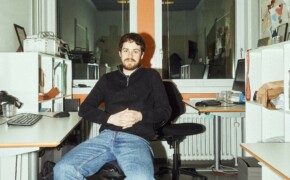
Nicklas Brendborg is a bestselling author with two books on how we can live longer. The inspiration comes from the animal kingdom, and from experiments on his own body. We visited him in the laboratory where he is a PhD student.
Medical doctor and postdoc Amani Meaidi spends all her waking hours working against one particular imbalance: The amount of research into men's and women's diseases. She is so obsessed with women-specific genes that she sometimes gets a stress rash on her hands.

One younger research activist, and one established professor. They come from two different places. But they both reach the same conclusion: Research is in big trouble. Maria Toft and Ole Wæver want to set up a free Nordic research movement with the space for creative, playful, and experimental research.

Researchers can now spot behaviour showing who is at risk after building an algorithm and a huge data set. »We hope that our study can be used to predict and prevent a young person from ending up being in risk of suicide,« says associate professor of psychology.

Female students have a harder time being perceived as talented than their male classmates by male instructors. Researchers stumble upon a subconcious bias in teaching settings at one faculty.

Magnus Pharao Hansen read Tolkien at the age of ten and fell for it. As a teenager, he wrote a dictionary of Old Norse. Today he deciphers ancient Mesoamerican languages and has just got an EU grant of DKK 11 million.

Raining again?! You've probably asked yourself this question in Copenhagen, and you're not the only one. Two scientists set out to find out exactly how much it actually rains – and the answer will surprise you: In the Greater Copenhagen area, you have dry weather 94 per cent of the time.

Danish research used to be among the world's most influential in terms of citation numbers. This is no longer the case.

A new 'code of conduct' at the University of Copenhagen (UCPH) is a new series of guidelines for good scientific practice. The purpose: To clear up ambiguity and uncertainty.

It's in his head constantly. When he sleeps, when he goes for a walk, or when he leads a conversation. Maths professor Søren Fournais has got DKK 15 million to solve Schrödinger's equation riddle.
