





Universitetsavisen
Nørregade 10
1165 København K
Tlf: 35 32 28 98 (mon-thurs)
E-mail: uni-avis@adm.ku.dk
—
Science
Art history — We talk about the era of colonialism as something that is over. But we forget to ask — over for whom? In a new book, Professor Mathias Danbolt dwells on some of the most iconic and familiar images from the colonial period, and he asks us stay with the discomfort.
When did you last give any thought to Denmark’s colonial history? Or spot any trace of it?
You are likely to come across colonial history without thinking about it in Denmark. In the supermarket. On coffee packages. In images that you may know so well that you stop actually seeing them.
But what if the very idea of the colonial era as something finished is itself the result of images, aesthetics, and conscious choices? And what happens if we begin to question the images that have taught us to associate colonial history with cosiness, quality, and something familiar?
Authors at work
Books are written throughout the University of Copenhagen — both in connection with research projects, during lunch breaks, and late into the evening. Staff, researchers and students publish fiction and non-fiction books, some of them academic, some of them not.
In this series, the University Post asks the authors not only what it is they are writing, but why.
What set off the writing process, and what do the authors want to achieve with their books?
These are the questions raised by professor of art history Mathias Danbolt in his new book Tropaganda – kunst, kolonialisme og kampe om historien [Tropaganda — art, colonialism and struggles over history]. In it, he dwells on iconic — and in Denmark familiar — images from the colonial era. Not to moralise about them, but to understand how they work. And to investigate why colonial history seems to be absent from art collections packed with works from the 17th and 18th centuries, the great age of the colonial powers.
»If you stroll through the National Gallery of Denmark (SMK) and look at portraits from the 19th century, you will typically see people with birdcages containing parrots or ostrich feathers in their hats. Where do the ostrich feathers come from? Where do the parrots come from? They come from places like Africa. There are lots of traces of global contact in art, but we don’t have the conceptual tools to describe it and have not asked the right questions,« says the art historian.
Tropaganda is the culmination of more than a decade of research. The idea emerged when Mathias Danbolt saw a contemporary art exhibition in 2014 by the Danish-Trinidadian artist Jeanette Ehlers about the role of Denmark-Norway in the transatlantic slave trade. It left a lasting impression on him, and he realised that he knew nothing about colonial history.
Danbolt had completed his PhD, worked closely with museums, and taught art history for years. But colonial history was almost entirely absent from the art history subject.
There are traces of global contact in many places in art.
Mathias Danbolt
»This led me to ask myself an uncomfortable question: Why do I know nothing about this? Is it my fault?«
»You can’t get through an art history degree without learning about historical events like the Second World War or the Holocaust. But Danish-Norwegian colonial history did not appear to be a necessary part of the curriculum. It was just not there,« he says.
When he did start looking, he could find no answers in the archives of art museums. They were elsewhere. In ethnographic collections and museums of cultural history there were vast quantities of historical books, archives, sketches, watercolours, and images made by soldiers, sailors, and officials. They were just often categorised as something other than art.
In Tropaganda, Danbolt describes how many of Denmark’s major museums have their roots in the Kongelige Kunstkammer or Royal Cabinet of Curiosities — a collection of artefacts set up by Frederik III in the 17th century, where works and objects from throughout the world in every possible category were all mixed together. At the beginning of the 19th century, the collection was divided up into specialist museums.
»When this division happened, a large part of the art that was made by white men and depicting typical Europeans and European culture went to the Royal Picture Collection, which later became SMK,« he says.
»All the objects and images that were made by, or depicted, colonised peoples from the Caribbean, Kalaallit Nunaat (Greenland), and Sámi areas ended up in the ethnographic collections. They were not seen as art made by civilised peoples or peoples of culture, but as ‘ethnographica’ created by primitive peoples or peoples of nature.«
The works that conveyed colonial history were not seen as having aesthetic value, but as »instrumental images« — windows into other cultures. This is why the material ended up in collections held by archaeologists, historians, and ethnologists.
»Much of the colonial image archive has quite literally been placed in the hands of other disciplines. We art historians have for many years been able to say: We simply have nothing in our collections. And that has been very comfortable. But it has also made our understanding of both art history and colonial history significantly poorer.«
Danbolt decided to immerse himself in the art and visual culture of a period that he himself had never been introduced to during his studies. The more he worked with colonial-era imagery, the more clearly colonialism emerged — even in places where you don’t look for it.
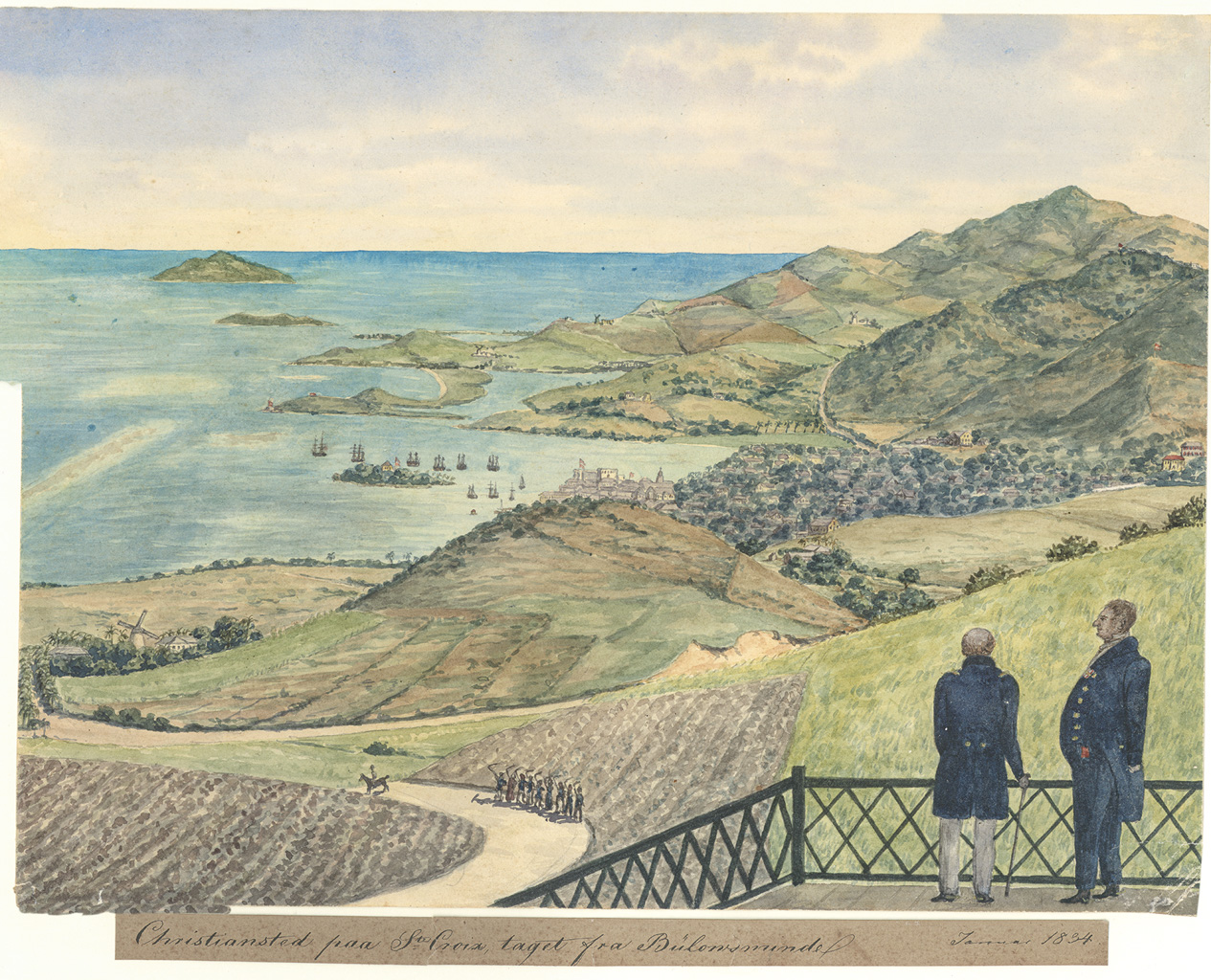
One of the the book’s central arguments is that colonial history is often understood as a finished chapter: An era that was brought to a close in 1917 with the sale of the Danish West Indies. In Denmark, it is widely believed that »we sold off« early, before decolonisation became a moral and political issue in the period after the Second World War. But together with a number of Caribbean artists, Danbolt asks the question in his book: Finished for whom?
ABOUT THE AUTHOR
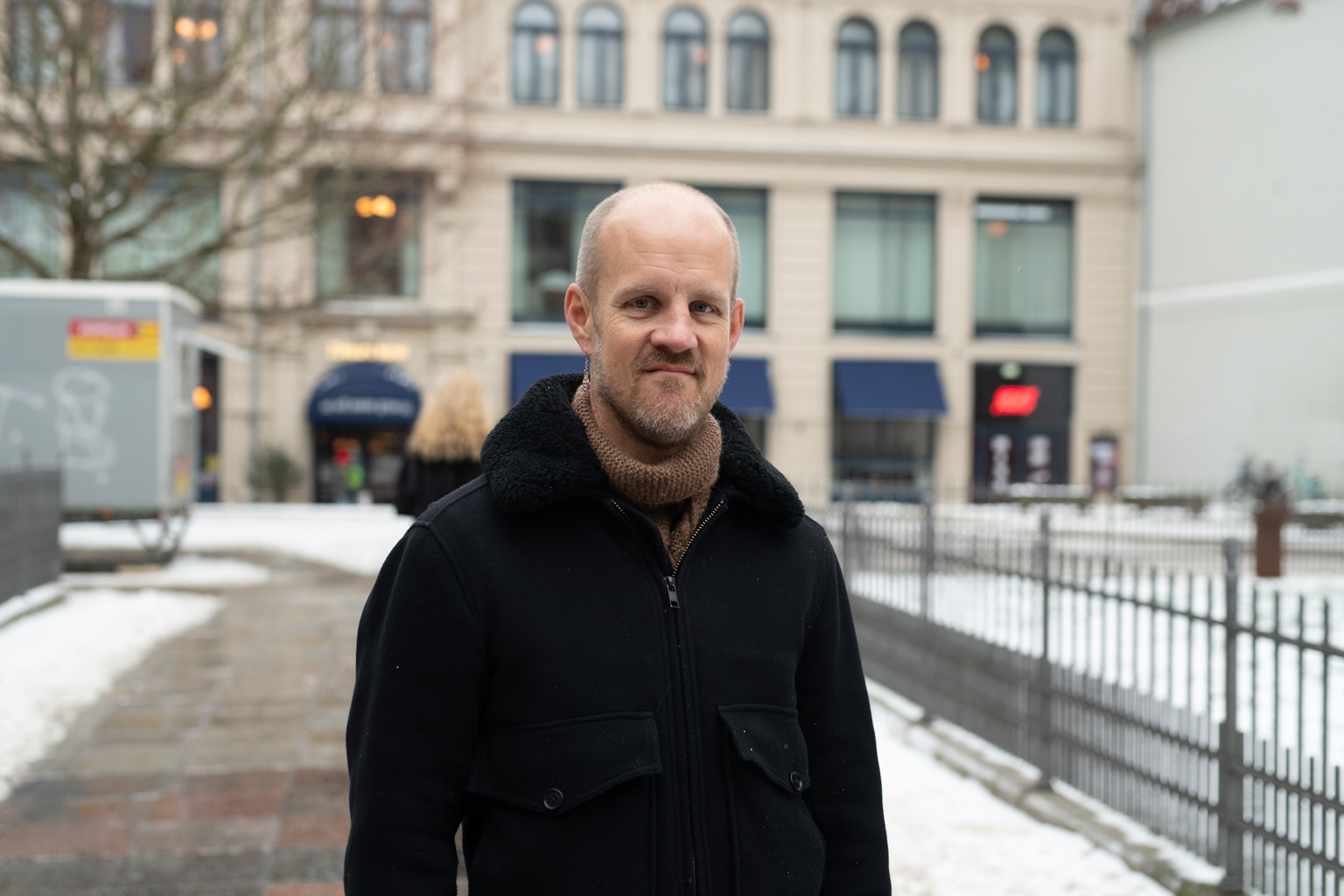
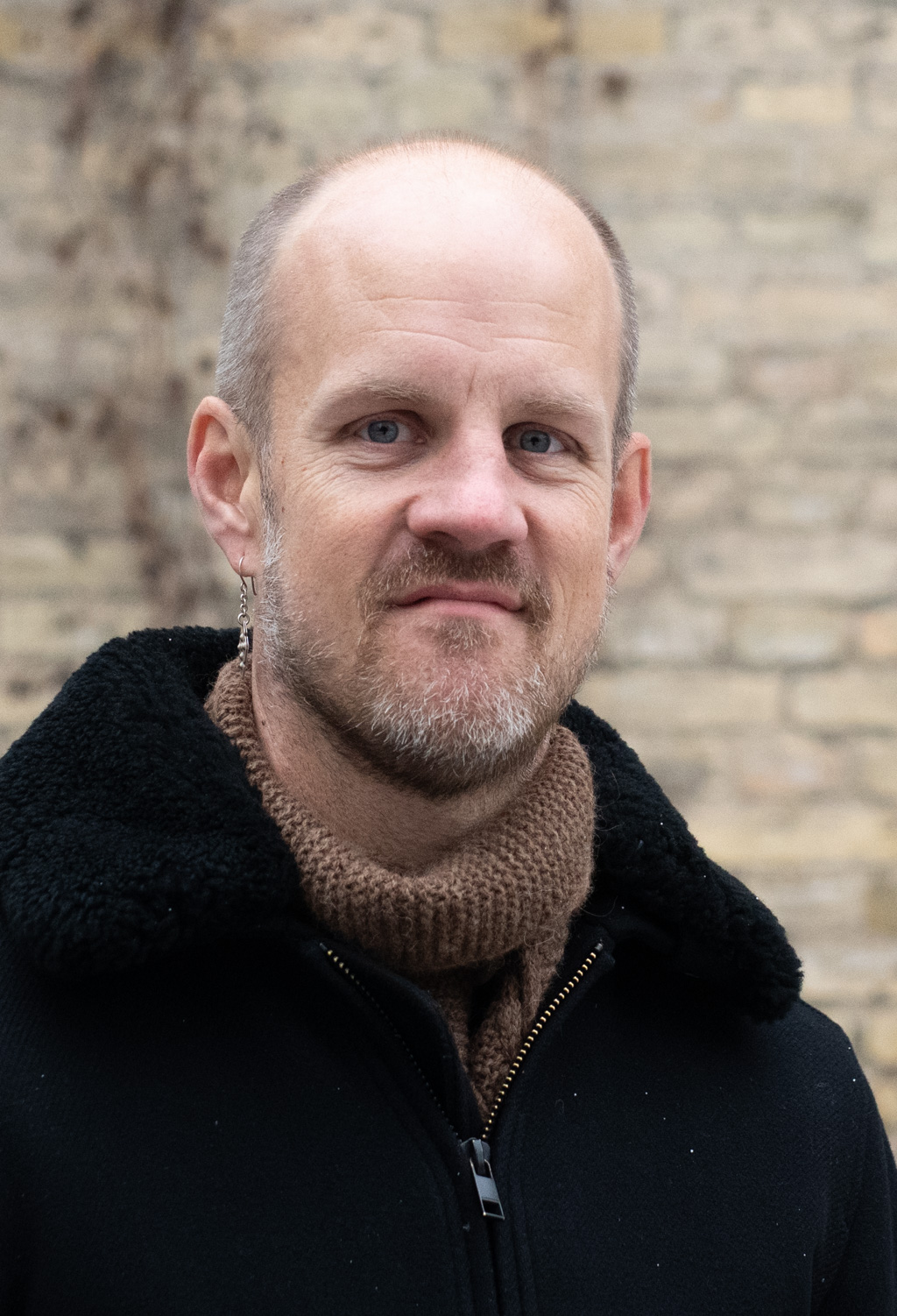
Mathias Danbolt is a professor of art history at the University of Copenhagen, born in 1983, and lives in Copenhagen with his husband and two children.
Tropaganda: Kunst, kolonialisme og kampe om historien [Tropaganda — art, colonialism and struggles over history] was published by Strandberg Publishing in December 2025.
For the populace of what is now the US Virgin Islands, one colonial power was simply replaced by another. And Danish economic interests were maintained for a long time after 1917.
»When you call colonialism a ‘chapter’, you imply that it has a clear beginning and end. But who is it over for? Danish companies owned the harbour on the island of St Thomas right up until the 1990s. And Danish interests were involved in developing tourism in the Virgin Islands during the interwar period. So the connections did not just disappear,« he says.
The book does not attempt to claim that colonial history has been forgotten: Rather that it has been told in specific, often nostalgic, ways in film, advertising, and popular culture. This has supported the narrative of a finished chapter, and of a small and relatively innocent colonial power.
Mathias Danbolt takes a sip of his coffee. So do I. They serve good coffee in Copenhagen’s central library. It has a warm, homely, feel about it, he says — coffee is something we associate with family, breaks, something safe.
Let us linger a bit on this coffee.
You can imagine this image without seeing it, as the University Post doesn’t have the rights for it. But you, dear reader, are also welcome to google it: the Cirkelpigen. A Black woman in profile on a white background. She has a neutral, perhaps slightly worried expression. Her braids, cornrows, are styled close to her scalp. She wears white hair ribbons. A large, round, white earring. Pearl necklaces around her neck.
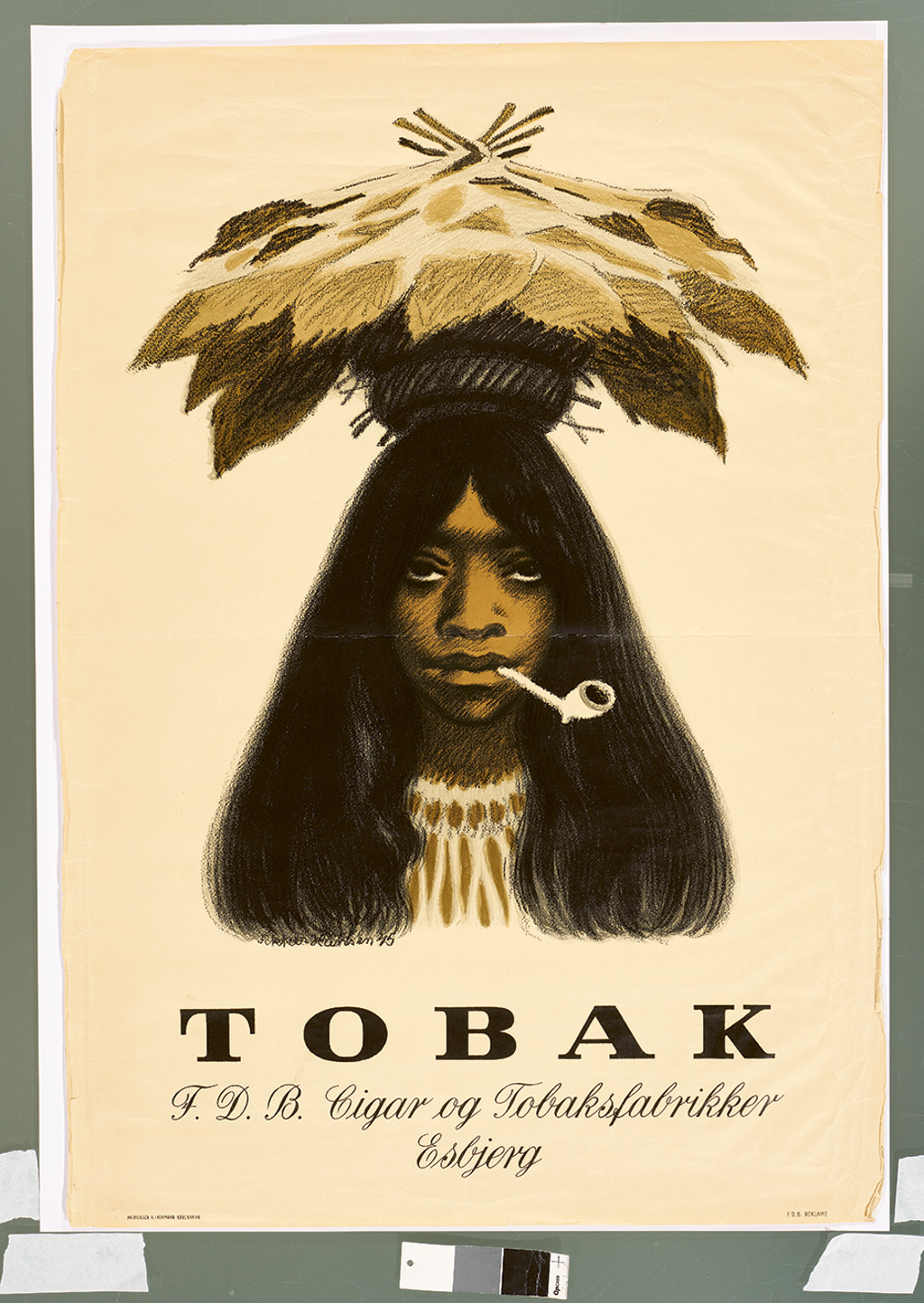
Aage Sikker Hansen’s drawing, the Cirkel Girl, which still adorns blue packages of Cirkel coffee in the Danish supermarket chain Coop, is an iconic image. It is a piece of Danish cultural heritage, but also a targeted advertising effort that was designed to teach consumers to buy pre-packaged goods.
Danbolt places the motif within a longer history of how retailers collaborated with artists to get positive emotions to adhere to specific products.
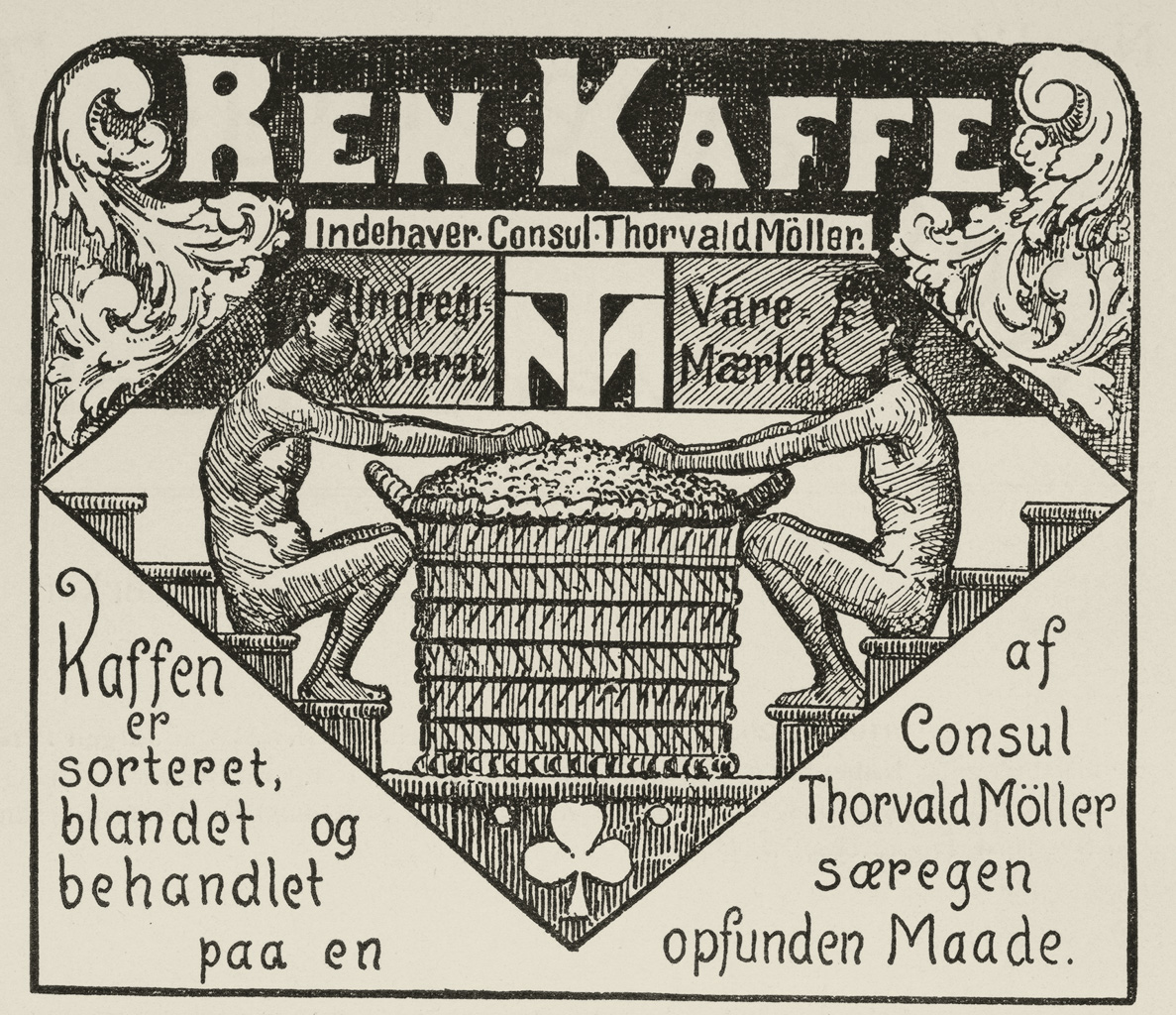
Stereotypical images of Black people were already used in the 18th century in Denmark to sell products from the colonies. The goods were meant to appear exotic and valuable. This colonial visual culture found new forms and formats with the emergence of a modern advertising aesthetic.
In the 1920s, shopkeepers — inspired by the booming retail trade in the United States — began selling pre-packaged products marketed with colourful imagery. It was the birth of the modern shopping experience, and pre-packaged goods streamlined the shopping and were good for business.
»Housewives were furious! In the 1920s, people wrote numerous letters to the editor protesting against advertising, calling the pre-packaged products ‘humbug’ and a ‘scam’. Branded goods were more expensive than the items bought by weight without packaging. In media debates, commentators hoped that the era of the ‘devil of advertising’ would soon be over, so that we would all be spared these ‘repulsive faces’ on the packaging,« says Mathias Danbolt.
Consumer cooperatives launched campaigns to make people appreciate the pre-packaged goods. They got children involved, collaborated with Aage Sikker Hansen, and produced aesthetic posters that people could buy and take home.
Gradually, the narrative shifted: It was no longer simply about packaging increasing the price of coffee — now it was about art, quality, homeliness, and family.
The logic of the images also changed. Well into the 20th century, Black people were often depicted as labourers in plantation fields. But after the Second World War this lost its appeal.
»In the 1950s, products were no longer marketed with images of Black workers in the colonies. Instead, they were portrayed as domestic staff, bringing comfort into the homes of Danish consumers.«
Mathias Danbolt has had firsthand experience of the strong emotions that adhere to traditional colonial commodity imagery. In 2015, after being interviewed on the cultural history of advertising images for the Danish newspaper Information, he suddenly found himself in the midst of intense public criticism.
»Politicians wrote that I should be given the sack. I got unpleasant messages, and I was verbally attacked on television. I was not at all prepared for it, and it completely knocked me off balance,« he says.
Working on Tropaganda has been a way for him to revisit these debates — but now with more distance to it, and with a permanent position and more confidence.
The question is why it provokes these strong feelings.
»It is often less about the images themselves and more about identity and history. About unsettling something that has felt safe and cosy,« Danbolt replies.
And so we return to the book’s title. Tropaganda is a contraction of ‘tropical’ and ‘propaganda’. When we say propaganda, we often think of slogans and explicit messages. But with the concept of ‘tropaganda’, Danbolt points to a type of visual propaganda that does not call attention to itself, but that conceals instead:
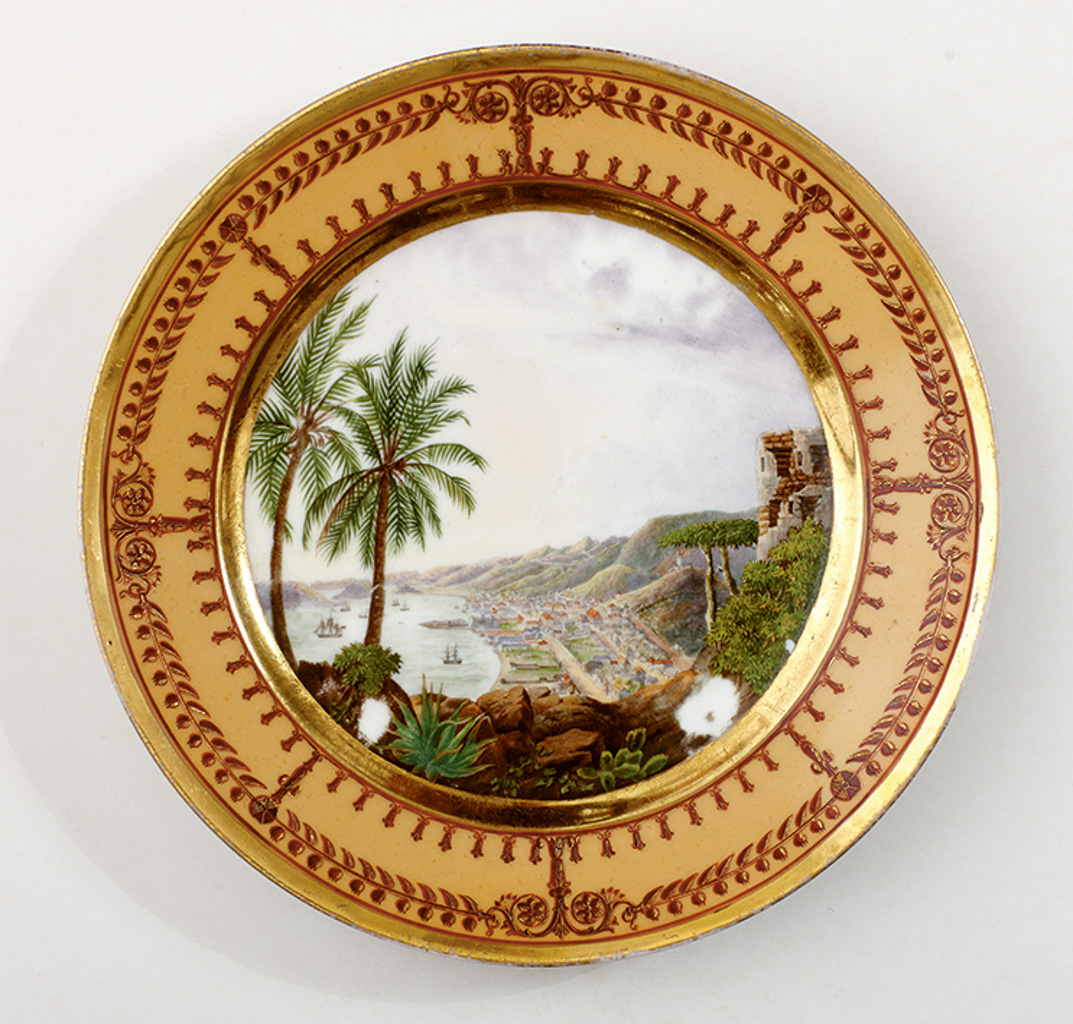
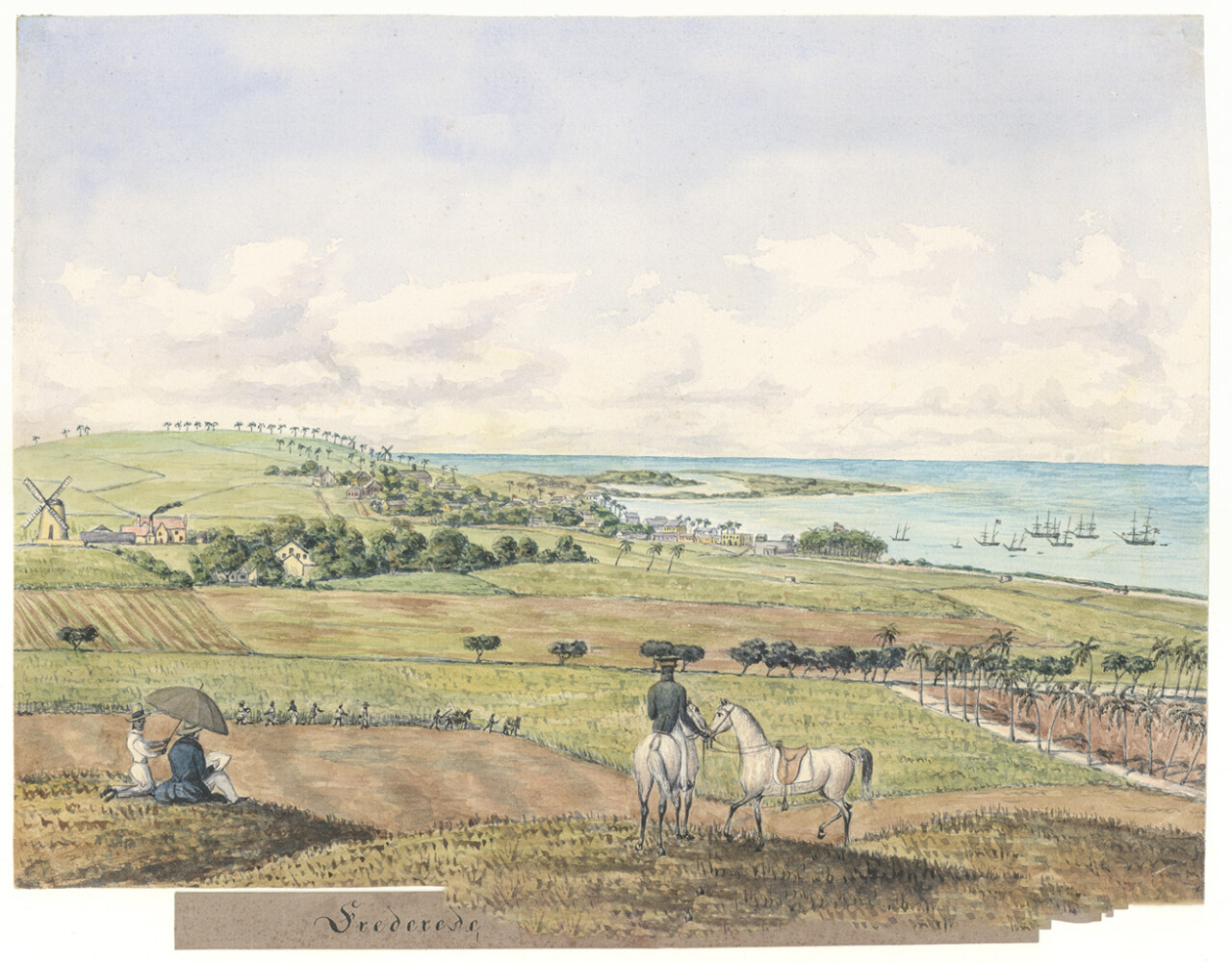
»We approach art and aesthetics as a space that is simply meant to be pleasant and beautiful. But art has also been used in ways that are not good or beautiful for everyone. The pleasant and beautiful qualities of tropical imagery have been tools to normalise or obscure historical conflicts and political power relations. These idyllic tropaganda images do not provoke debate, but gently invite carefree relaxation and enjoyment.«
The images that Mathias Danbolt analyses in the book — ranging from portraits of slave owners in the 18th century, to landscape paintings of sugar plantations in the 19th century, to more recent advertising imagery — all share the feature that they have helped make colonial history more palatable. This is the influence he wanted to explore more closely in the book.
»I am interested in how images and art function and affect us, both emotionally and in their ability to open up or close down conversations and understandings of the past.«
On the book’s cover is a work by the artist Jeannette Ehlers. On it also, a proverb in pink neon: »Until the lion has their historian, the hunter will always be a hero.«
Danbolt returns again and again to this sentence in the book. For him, it is about responsibility in the writing of history:
»When you work with histories filled with power, inequality, and violence, there is no neutral ground to stand on,« he says.
To write colonial history is to step into the ruins and look at the wreckage — but also at the resistance, the energy, and the life. Every choice has consequences. Which voices are given the space to speak? The art historian says that we are not very good at dealing with uncomfortable histories and difficult conversations. But we can gain alot if we practise.
Reaching a point where you are not so afraid of criticism is liberating.
Mathias Danbolt
I ask how he himself has worked with this, and he laughs. An earring dangles from his ear. There are two explanations, he says. The first is biographical.
»I think that as a gay man and a minority, I have never seen academia as a comfortable place. It is a place of power struggles. I never expected it to be comfortable, and that has probably meant that I was not as disappointed,« he says.
»When I was a student, I had many interactions with lecturers who did not think that what I was interested in was relevant at all. I write about AIDS, queer history, and minority perspectives, and it was seen to be irrelevant. That discomfort has always been there.«
The second explanation is that it is necessary:
»If we are to learn anything, we need to get better at being on the receiving end of criticism. Most people have a strong need for validation and want to be told we’re doing alright. But that is not always how we grow as people. Reaching a point where you are not so worried about being criticised is liberating.«
»Discomfort will not kill you. The body reacts, but it is not dangerous, and you move on. And disagreement can actually be both exciting and instructive. I wish we could make disagreement a bit less dramatic.«
Conversations about Denmark’s colonial past — and present — have risen to the top of the agenda via Donald Trump. And Danbolt senses a greater interest in understanding colonial relationships than ten years ago. Students are more curious, he says, even though the public debate has become more polarised.
He finds that questions about colonialism often tend to end conversations. With this book, he hopes to show that they can also be the beginning of conversations.
»I want to show that perspectives on colonial history can be a way to understand more about our art, our relationships, our nationality, identity, and history,« he says.
»The current conversation about Greenland in Denmark also reveals how difficult it is for us to listen: to simply say nothing. And that is the power of storytelling. Some stories are told so many times that we think they are true, and then we forget that things are experienced, heard, seen, and function very differently from other perspectives. In conversations with Greenlanders, I feel that we have begun to listen just a little more and to understand that the narrative that we are used to relying on is not a narrative that we share with everyone.«
Perhaps that is why Aage Sikker Hansen’s poster of the Cirkel coffee girl still hangs framed in homes across Denmark: She is not just an image — she is a story that Danes have learned to feel at home in.
This article was first written in Danish and published on 10 February. It has been translated into English and post-edited by Mike Young.