



Universitetsavisen
Nørregade 10
1165 København K
Tlf: 35 32 28 98 (mon-thurs)
E-mail: uni-avis@adm.ku.dk
—
Science
Fondsstyret — A new study shows that many researchers feel the conditions attached to research funding restrict their work. Movement for a Free Academia calls for a different balance and proposes a fixed annual sum that researchers can spend at their own discretion.
Foundations have played an increasingly important role in Danish research over the years. The billions of kroner they provide allow universities to hire researchers and launch new projects.
But the money also comes at a price. Foundations want clear rules on what researchers can use the funding for and how their work should be organised.
These are precisely the conditions examined by the Danish Centre for Studies in Research and Research Policy at Aarhus University in a new study of research funding. In the survey, 75 per cent of researchers say that current funding arrangements limit, to at least a moderate extent, how they would ideally conduct their research.
The problem is that society ultimately loses out
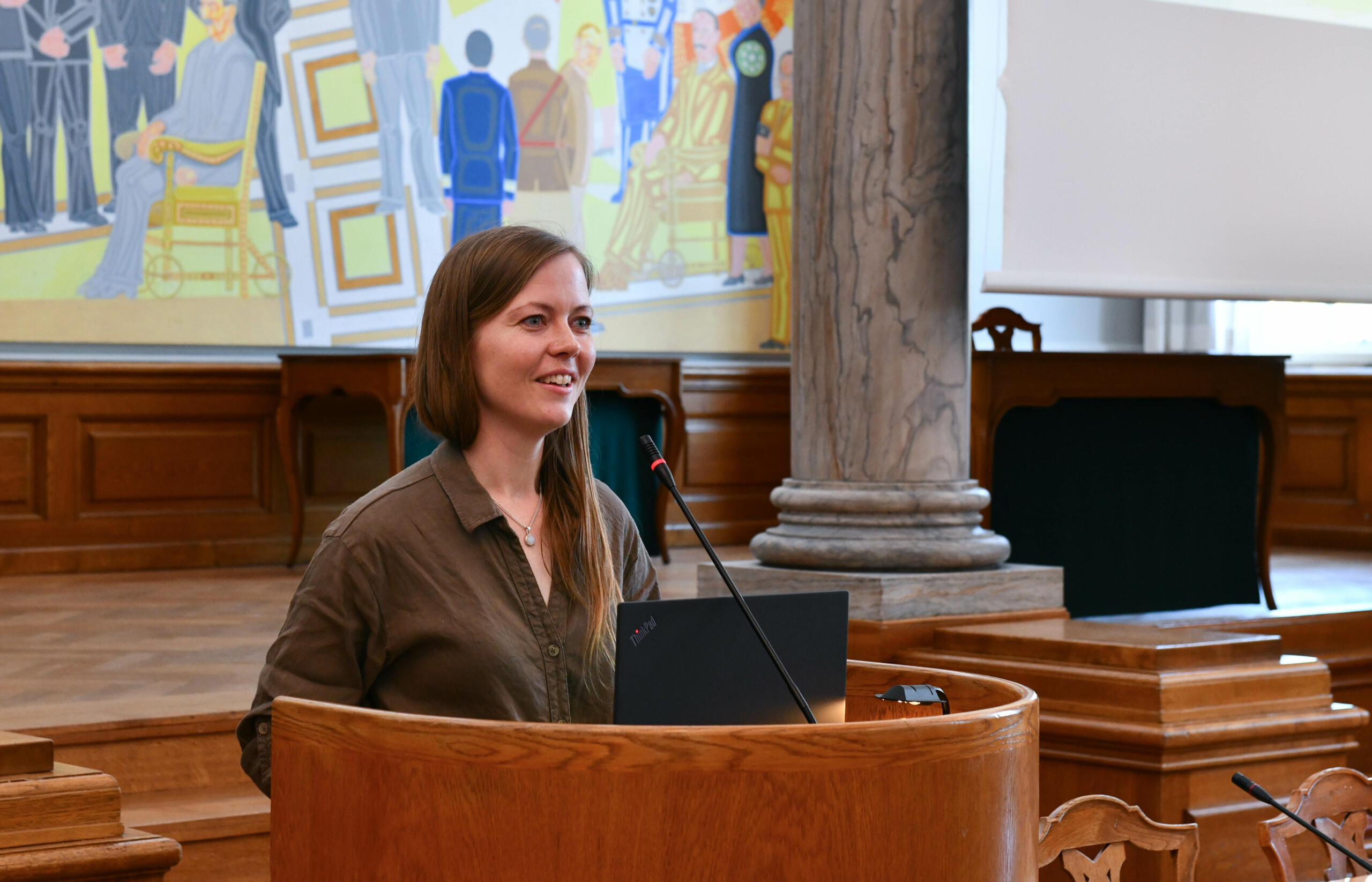
Maria Toft, founder and board member of Movement for a Free Academia
The new findings come as no surprise to Maria Toft, founder and board member of Movement for a Free Academia, a movement working to strengthen academic freedom.
She believes that the need for external funding leads researchers to adapt their ideas to the funding opportunities available. As a result, she says, much research never sees the light of day.
»There are questions you are never allowed to ask, and interests you never get the chance to pursue,« she says.
The growing importance of external funding is also evident at the University of Copenhagen. Between 2015 and 2025, external income rose from around three billion to just over 4.4 billion kroner in constant prices, while government research funding remained broadly stable.
READ ALSO: UCPH handles DKK 11.6 billion – so why are its finances under pressure?
In 2025, external funding, mainly research grants, accounted for 38 per cent of UCPH’s total income.
Besides three out of four researchers finding that the current system limits their research, 78.4 per cent say their research interests would change to some extent if they received two years of funding without the usual restrictions.
According to Maria Toft, creativity and innovation in Danish research suffer under the current system. She wants researchers to have more room to test ideas before having to describe a specific plan and demonstrate the likelihood of achieving a particular outcome.
If grants steer research towards particular solutions to a societal problem, she argues, there may be less room to ask whether an entirely different problem should be addressed in the first place.
But is it not reasonable for those funding the research to have a say in how the money is spent?
»Of course, but the problem is that society ultimately loses out. It is a collective loss when the potential for critical ideas and solutions from universities is restricted,« Maria Toft replies.
Earlier this year, Movement for a Free Academia presented its proposal ‘Universities for the Present’, which calls, among other things, for reducing the influence of foundations on research in Denmark.
The movement does not want to abolish foundations or competitive research funding, but wants to give individual researchers a basic level of funding.
It therefore proposes giving permanently employed associate professors and professors an annual research budget that they can spend at their own discretion.
Jes Søe Pedersen, an associate professor at UCPH’s Department of Biology, explains the proposal. He is a board member of Movement for a Free Academia and served on its working group on foundation funding.
»If there is one thing to do, I think this kind of annuum (annual grant, ed.) should be the priority, and it should come first,« he says, suggesting that an annual grant of 100,000 kroner would be appropriate.
According to Universities Denmark, Danish universities employed just over 7,000 associate professors and professors in 2024. At 100,000 kroner each, the scheme would cost around 700 million kroner a year.
The money is not intended to fund large research projects, Jes Søe Pedersen stresses. It could, for example, be used to test new ideas with students supervised by the researcher.
»And you could pay for absolute essentials such as a research trip, a new computer or simply an important academic book. Incredibly, many colleagues cannot even afford those things today,« he says.
A researcher with an idea would therefore not have to go straight from having no funding to applying for several million kroner. A small initial experiment could establish whether the idea is worth pursuing.
The Royal Danish Academy of Sciences and Letters has also argued for a fixed annual sum for researchers, allowing them, among other things, to test ideas that are not yet sufficiently developed for a major grant application.
Foundation funding also serves another purpose, however: it creates competition among researchers.
When researchers compete for grants, their applications can be assessed by other researchers, and the money can go to the projects judged to be of the highest quality.
There is no shortage of money in Danish research. There is plenty of money in Danish research. The problem is how it is distributed
Jes Søe Pedersen, associate professor at the Department of Biology at the University of Copenhagen and board member of Movement for a Free Academia
Jes Søe Pedersen acknowledges this argument too.
»Competitive funding is a good thing. It helps improve quality. But we are talking about large sums there. This annuum is a small amount that provides basic funding for people who have already been selected as the best in their respective fields,« he says.
But according to Jes Søe Pedersen, a fixed annual grant would have another advantage: it would reduce the number of applications researchers submit each year.
He argues that some of the pressure to apply stems from researchers lacking a basic level of funding.
With a smaller amount available for their everyday research, he believes more researchers could wait to apply for large grants until they actually have a project that requires one.
»It would ease all that bureaucracy by removing the pressure for everyone to keep applying all the time,« he says.
For Movement for a Free Academia, the upcoming negotiations on the research reserve offer an opportunity to change the balance of research funding.
Jes Søe Pedersen believes more government funding should enable individual researchers to pursue ideas without first having to make them fit a foundation’s call for proposals.
But increasing core funding for universities does not in itself guarantee that freedom, he stresses. University management would need to prioritise allocating the money to researchers, or politicians would need to attach conditions to new funding.
»There is no shortage of money in Danish research. There is plenty of money in Danish research. The problem is how it is distributed,« he says.
This article was translated with the assistance of artificial intelligence and subsequently reviewed by a member of the editorial staff.