




Universitetsavisen
Nørregade 10
1165 København K
Tlf: 35 32 28 98 (mon-thurs)
E-mail: uni-avis@adm.ku.dk
—
Campus
Change — The university will continue to have six faculties, but its academic disciplines will be organised differently. According to the Rector, the new structure should better »reflect reality«. Staff have responded to the plans with reservations and reform fatigue.
The University of Copenhagen is changing its academic structure.
Two faculties will be merged with two others, while the two largest will be split in two.
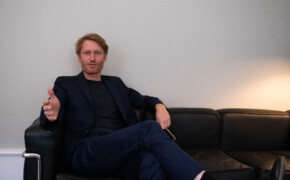
According to Rector David Dreyer Lassen, the new faculty structure should better »reflect reality«. The differences between the faculties have become too great, both in terms of their size and the responsibilities their deans are expected to shoulder, he says.
»SUND and SCIENCE have become very large faculties compared with the others. Their academic fields are being pulled in all directions by both external foundations and wider society. And our strategy is for the deans to engage more with society, but that is difficult if they also have a huge organisation to manage,« he tells the University Post.
The General Collaboration Committee (HSU) was briefed on the proposal 7 October 206, while the rest of the university community was able to read the news on the university’s intranet 8 October 2026.
The proposal comes from the Rectorate and the deans. According to the Rector, this is not a cost-cutting exercise, and redundancies resulting from the reorganisation are to be avoided as far as possible.
The plan is for all academic fields, as a starting point, to retain their current funding. There will, however, be places where »shared assets will have to be disentangled,« the Rector says.
»The point is that the University of Copenhagen has outgrown its current organisation. SCIENCE alone is larger than many other Danish universities, and the new organisational structure needs to reflect that.«
David Dreyer Lassen points out that SUND and SCIENCE are not only large, but also encompass many different academic fields. This can make it difficult for a single dean to cover them all.
New faculties from 1 January 2029
– Faculty of Humanities and Theology (HUM)
– Faculty of Law and Social Sciences (SAMF)
– Faculty of Health and Medical Sciences (SUND)
– Faculty of Clinical and Public Health Sciences (KLIN)
– Faculty of Science (NAT)
– Faculty of Biological, Environmental and Earth Sciences (GREEN)
»The Danish University Act states that academic staff must be managed by academic staff: Management must have a connection to and an understanding of the academic field. And as SUND and SCIENCE have grown, there is no longer enough management capacity,« the Rector says.
According to the Rector, the differences in the size of the faculties are primarily linked to the »dramatic growth« in external research funding. This funding often goes to SUND and SCIENCE and, according to him, has also contributed to the increase in the number of permanent academic staff.
The natural and health sciences will have four of the six faculties. Is it the University of Copenhagen’s ambition to position itself as a university with a particular emphasis on the natural sciences?
»No, it is more a question of wanting to reflect the reality of the university. And it is important to emphasise that this does not mean that theology and law will no longer have a place at the University of Copenhagen. They will become departments instead of faculties, which better reflects the size of their permanent academic staff,« he says, adding:
»We remain firmly committed to the humanities, law and social sciences,« he says.
According to David Dreyer Lassen, the changes will primarily take place at the university’s senior management level. Students are the group who will notice the new structure the least. Nor is there any plan to change the content or structure of the degree programmes.
Who will be affected by the reorganisation?
»Initially, not that many people, really. In the longer term, the ambition is to establish academic and strategic leadership that is better able to contribute to the university’s development. And when new developments occur within a field, we want leaders who are closer to what is going on,« the Rector says.
He continues:
»We need to stop thinking of faculties as natural barriers to collaboration – the administrative reform will also help with this. The idea is to make it easier to collaborate across faculties.«
The administrative reform has caused major upheaval for university staff and has yet to be fully implemented. Why launch another reorganisation now?
»We do not see this as a major reorganisation. It may be a major shift in terms of identity, but in practical terms, it does not need to be a major transition,« the Rector says, continuing:
»If we were a private company, we would simply have implemented this by the New Year. But we are not, and we will not – it will take place in two stages, meaning that it will be almost two and a half years before the wet faculties are in place. This is precisely out of consideration for the administrative reform – we do not want to put the university under any more pressure than is strictly necessary.«
Under the proposal, the mergers of HUM and TEO, and of JUR and SAMF, will take effect on 1 January 2028. The division of SUND and SCIENCE will follow on 1 January 2029.
Over the coming months, the proposal will be discussed in the university’s relevant forums before management makes its final decision in January 2027. According to David Dreyer Lassen, staff representatives at yesterday’s HSU meeting expressed »moderate reservations« about the new structure.
»Staff expressed reform fatigue. In terms of workload, this is not intended to be a major reform. But if people are tired of being disrupted, it is fair enough for them to say that we are now coming along and disrupting them once again.«
Have you consulted relevant staff in the different academic fields about the proposed new structure?
»The deans have been involved, so in that sense we have received academic input. But the broader staff consultation will take place this autumn.«
Peter Waaben Thulstrup is the joint union representative for academic staff at SCIENCE and a member of HSU representing the Danish Association of Masters and PhDs (DM). He emphasises that he has not yet had the opportunity to discuss the proposed new academic structure with union representatives or staff from the different academic fields.
He confirms that there were »reservations« about the new structure at the meeting.
»We have an organisation that is tired of structural changes. We are only just beginning to find our feet in the new administration, so we believe this may dampen staff enthusiasm,« Peter Waaben Thulstrup says.
Regardless of how you look at it, he believes that a reorganisation of this scale will affect staff at the different faculties.
We have an organisation that is tired of structural changes
Peter Waaben Thulstrup, joint union representative for academic staff at SCIENCE and HSU member representing DM
»Some units will experience this as a very significant change. Some will cease to exist, while others will be split up. And determining how the finances of the different units should be divided will be a major undertaking. There are concerns about how joint degree programmes, facilities and infrastructure will be managed when these are divided between the new faculties,« he says, continuing:
»It will primarily be an administrative task, but it will nevertheless weigh on staff members’ minds. It will be a burden. And we may also be concerned about whether funding will actually follow costs when the faculties are divided.«
Management believes that the University of Copenhagen has outgrown its current academic organisation. Do you agree?
»We have yet to see truly compelling arguments for this. And we are disappointed that staff were not involved in considering alternative models. But we will, of course, engage constructively in the consultation process between now and January and make the best of it.«
Ira Thomas Bro Pold is chair of the University of Copenhagen’s Student Council. According to them, it is important to ensure that the new organisation does not lead to a deterioration in services or cuts affecting students.
I hope they will also consider how student involvement can become broader and more democratic
Ira Thomas Bro Pold, chair of the Student Council
»So far, we only know the broad outlines, but we are paying close attention to whether there is a hidden agenda attached to the proposal,« Ira Thomas Bro Pold says, continuing:
»Particularly when faculties are merged, we may be concerned that student guidance services in the different academic fields will be cut. We are, of course, also interested in how the boards of studies will be organised and how students will be represented in the new structure.«
The Student Council does, however, feel that management is open to dialogue and interested in hearing the students’ input.
»I hope they will also consider how student involvement can become broader and more democratic,« Ira Thomas Bro Pold says.
This article was translated with the assistance of artificial intelligence and subsequently reviewed by a member of the editorial staff.