

Universitetsavisen
Nørregade 10
1165 København K
Tlf: 35 32 28 98 (mon-thurs)
E-mail: uni-avis@adm.ku.dk
—
Politics
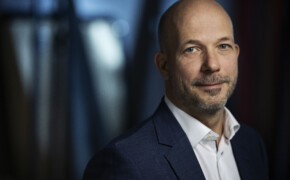
Evaluation — Lars Cyril Nørgaard led the investigation into the use of the UCPH retreat rooms. Here he sheds some light on the facts that were uncovered by it.
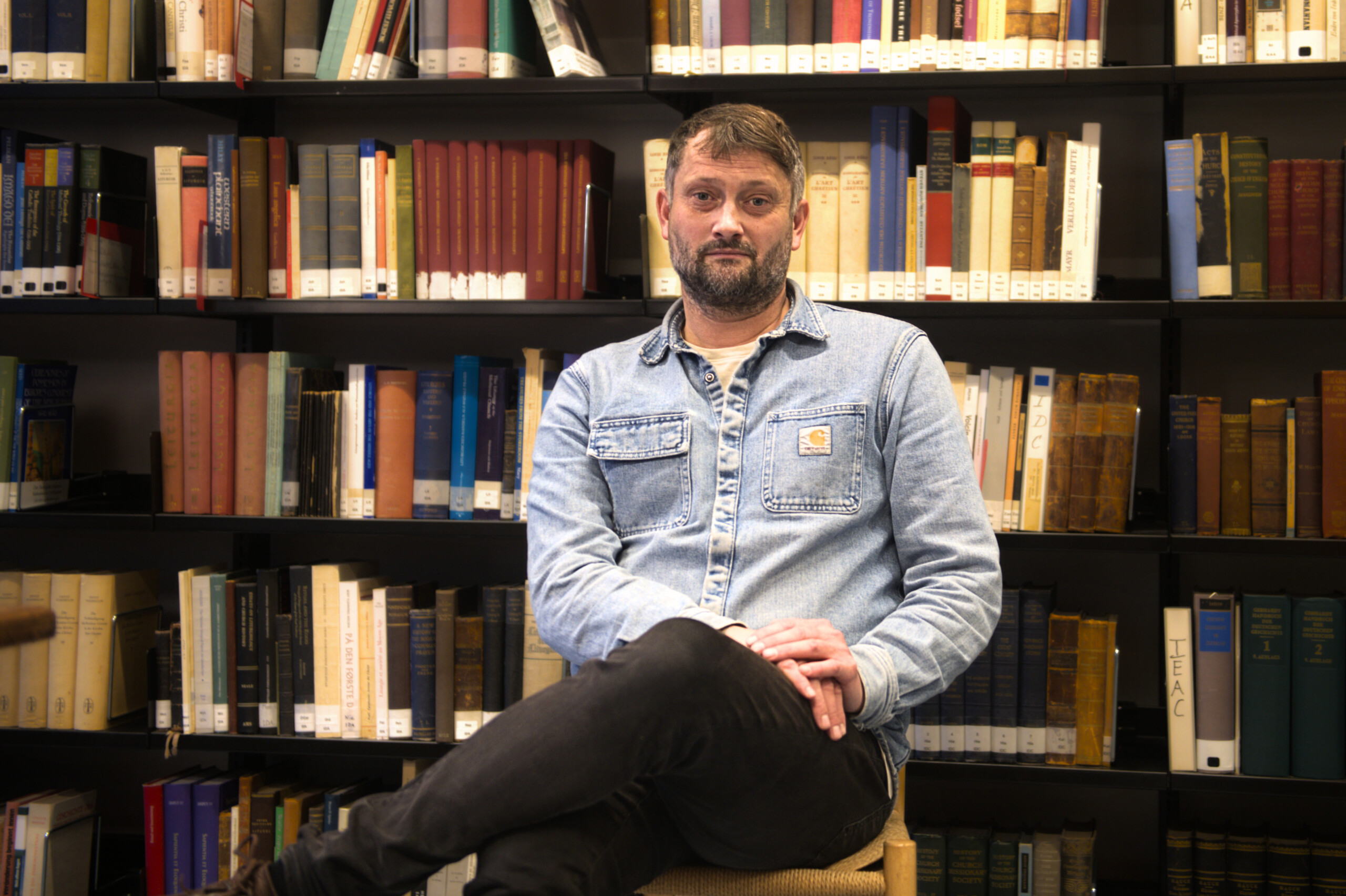
»Call me hopelessly naïve, but I’m surprised at how much this process has been entangled in politic interests,« says Lars Cyril Nørgaard.
The working group
The working group was set up by the University of Copenhagen’s senate in the spring to examine how the retreat rooms were being used. It worked with three scenarios: to leave the rooms unchanged, to adjust their layout and guidelines, or to close them down.
The group consulted experts and held hearings with, among others, Muslim students, who were identified as the primary users of the rooms.
Lars Cyril Nørgaard chaired the working group set up by the University of Copenhagen (UCPH) to examine the use of the now closed and much-debated retreat rooms, or quiet rooms, on campus. He is an associate professor in church history.
READ ALSO: Prorector defends decision to close retreat rooms: They failed their purpose
Nørgaard explains to the University Post that he approached the task with the intention of investigating the retreating rooms as scientifically as possible. It was a learning experience, he says, and not without its challenges. Both because participants in the working group were not always free of preconceived notions, and because the debate outside the group had for a long time been intensely polarised.
»The working group was never given the task of deciding what UCPH should do. That was never our job. Our role was, as academics, to be curious and to objectively examine how the rooms were used — not to have an opinion about the rooms or their use,« he says.
He adds that, although the topic proved to be difficult to work with, he has nothing but praise for the working group and their collective efforts. In his view, this kind of group ensures that decision-making is brought closer to staff and students.
If you ask Lars Cyril Nørgaard, many misconceptions and misinterpretations emerged in the media frenzy over the retreat rooms. One of them was the idea that the rooms were ‘prayer rooms’:
»Some rooms have primarily been used for prayer. But that’s just one aspect, because UCPH never intended them to be prayer rooms — and that’s not what they’re going to be either,« he says, adding:
»Consistently calling all retreat rooms ‘prayer rooms’ reflects a particular stance. It is — at worst — politicisation, and — at best — a reduction of the empirical complexity as I see it.«
Lars Cyril Nørgaard says the users of the retreat rooms are more diverse than the media often suggest.
Early in the process, the group was also made aware that students with disabilities used the rooms, and that their needs would be better met if the facilities were designed differently.
»Before starting this work, I honestly hadn’t considered that the retreat rooms also serve an important function for students with disabilities. I really learned something new here,« says Lars Cyril Nørgaard.
I don’t see why this small group’s need to practise their religion while studying cannot be accommodated
Lars Cyril Nørgaard
Most of the users of the rooms studied by the group turned out to be Muslim students, he says. But the working group also found that only a minority of Muslim students were regular users of the rooms.
The rest either prayed elsewhere, or not at all while on campus. This is why the working group’s report refers to regular religious users as »a minority within a minority«.
»I don’t see why this small group’s need to practise their religion while studying cannot be accommodated,« he says, emphasising that this should, of course, only take place within the university’s rules of conduct.
»I assume these students will still be praying — just in other rooms. So I struggle to see the purpose of closing the retreat rooms while they’re being rethought — unless there is a political purpose.«
Another area where the debate, according to Lars Cyril Nørgaard, is devoid of nuance is the discussion around whether the retreat rooms have enabled mechanisms of social control — particularly over Muslim female students.
»We heard one mention of one or two episodes involving this kind of peer pressure. But does that mean it no longer exists? Or that it happens on a very small scale? Or are we simply not hearing about it? We don’t know, and I’m uncertain myself. People may have all sorts of opinions and assumptions, but we don’t have empirical knowledge. So we can’t draw any scientific conclusions.«
I assume these students will still be praying — just in other rooms
Lars Cyril Nørgaard
The final report specifically describes how a person associated with the working group had spoken to students who expressed what they felt was normative pressure associated with the rooms. In the working group’s terminology ‘normative pressure’ means a social expectation to live up to the community’s values and norms. The episode took place between 2016 and 2020.
Another case is a previously mentioned story on the Muslim Student Association’s Instagram profile, reminding followers that the rooms could be used for the five daily prayers.
As a final example, the report highlights that the rooms studied had been used for gender-segregated activities. It describes an episode, also previously covered in the media, where codes had been set up to indicate when men and women could use the rooms.
The University Post has also found pamphlets from Islamist political activist group Hizb ut-Tahrir in one of the rooms — although they were 10–12 years old.
»When we talk about normative pressure, we need to try to document it as an empirical phenomenon. Based on the data we have, we can’t describe this pressure. We can neither confirm nor deny its existence,« says Lars Cyril Nørgaard, who emphasises that these were the only instances the working group came across in its investigation.
There needs to be space for nuance in the discussion, says Lars Cyril Nørgaard. Few people appear to be listening when you take on an evidence-based approach to documenting the environment and usage of the retreat rooms. That’s because, from the outset, the discussion is political:
»The actual use of the rooms matters. The difference between using terms like negative social control or normative pressure also matters. But these distinctions mean nothing in a political discourse, where subtlety is lost in the struggle for dominance.«
Lars Cyril Nørgaard points to one instance where the wider political debate has seeped into the report, namely in the section on whether retreat rooms could impact academic freedom at the university.
People are free to believe and think whatever they want, as long as they set aside their beliefs and views before participating in, for example, university teaching
Lars Cyril Nørgaard
»I personally find it hard to understand how a small minority of students choosing to spend their lunch break in prayer could impact academic freedom,« he says.
As with all the work related to the report, the working group looked for evidence to support this claim — but found none.
»I understand that some researchers — including some of my colleagues — who legitimately participate in debates about Islam or political topics, experience completely illegitimate pressure, particularly on social media but also through other channels. But to my knowledge, none of these cases are connected to the retreat rooms,« he says, adding:
»People are free to believe and think whatever they want, as long as they set aside their beliefs and views before participating in, for example, university teaching. And it seems our students are quite capable of doing exactly that.«
The report concludes with a description of three different scenarios where the group outlines the pros and cons of having retreat rooms on campus.
The first scenario would have kept the rooms unchanged. The second would have kept them open with the option of new guidelines and layout. Management chose a third scenario — to close the rooms.
The most detailed scenario in the report is the second, where the working group proposes that the rooms could be adapted for more individual use through advance booking, or be redesigned with new rules.
»I would have expected them to go with the second scenario. It was the clearest and most well-thought-out choice — and in a way, it is what they’re now doing,« says Lars Cyril Nørgaard of the decision, adding that the rooms could have remained open until 1 January 2026 for then to be rethought within a new framework.
»Management could have announced exactly what they’ve said now — without closing the rooms.«
Do you feel that management listened to you?
»I think they did. I also think they had to make a pragmatic decision based on multiple considerations — not only on what the group presented. That’s always been my expectation: anything else would have been wrong.«
Why do you think they decided to close the rooms?
»I think it’s a political signal they’re sending to the outside world. And then there’s the ‘baggage’ associated with the rooms, which probably just became too heavy to handle.«
On two occasions this year, management has been criticised for making major decisions on the retreat rooms without consulting users. Lars Cyril Nørgaard calls on management to communicate more effectively about the rooms:
I hope the users of the rooms will engage in constructive dialogue with management about what the future retreat rooms should look like.
Lars Cyril Nørgaard
»I think, as a starting point, that management should stand up for what they believe in and uphold the university’s autonomy. If, for example, they found it problematic that gender segregation took place during Muslim prayer, and they — with this otherwise legitimate concern — didn’t want these kinds of rooms at UCPH, then that is what they should have communicated,« he says, continuing:
»I don’t know if that’s what management thinks — I wasn’t part of the decision, so I trust what they’ve now communicated.«
The latest statement from management, according to Lars Cyril Nørgaard, means that students and staff must take them at their word — that the rooms are being closed in order to create something new and better:
»I hope the users of the rooms will engage in constructive dialogue with management about what the future retreat rooms should look like.«
He expects that management plans to organise a user forum or equivalent gathering, where there is space to freely discuss the needs and wishes for future retreat rooms:
»If this is not the case, then I fear that management will undermine their own decision. I can now say with certainty that many people have strong views about the rooms — so why not invite them inside and listen to them?«
This article was first written in Danish and published on 3 December. It has been translated into English and post-edited by Mike Young.