

Universitetsavisen
Nørregade 10
1165 København K
Tlf: 35 32 28 98 (mon-thurs)
E-mail: uni-avis@adm.ku.dk
—
Working environment
Administration reform — Three communications staff on having stronger professional ties — and on the challenges of centralisation
After fierce debate, the University of Copenhagen (UCPH) rolled out its new administration in March 2025. Staff and students have now had more than six months to get used to the new reality.
In a series of articles on the university’s intranet KUnet, UCPH deputy directors of eight central units share how they have experienced the first few months and provide an update from their area of administration.
READ ALSO: Education unit after the reform: »Uncertainty is still the order of the day«
The University Post is now doing a similar series, where we instead speak to employees and to union representatives across the organisation.
Half a year with the new administration
On KUnet, you can now read a series of articles where the deputy directors of the University of Copenhagen (UCPH)’s eight central administrative units take stock, six months after the new administration at UCPH was implemented.
At the University Post, we have launched a similar series — where we speak to staff and union representatives.
Read earlier instalments here:
UCPH Education
UCPH Finances
UCPH Buildings
UCPH IT
UCPH Innovation and Business
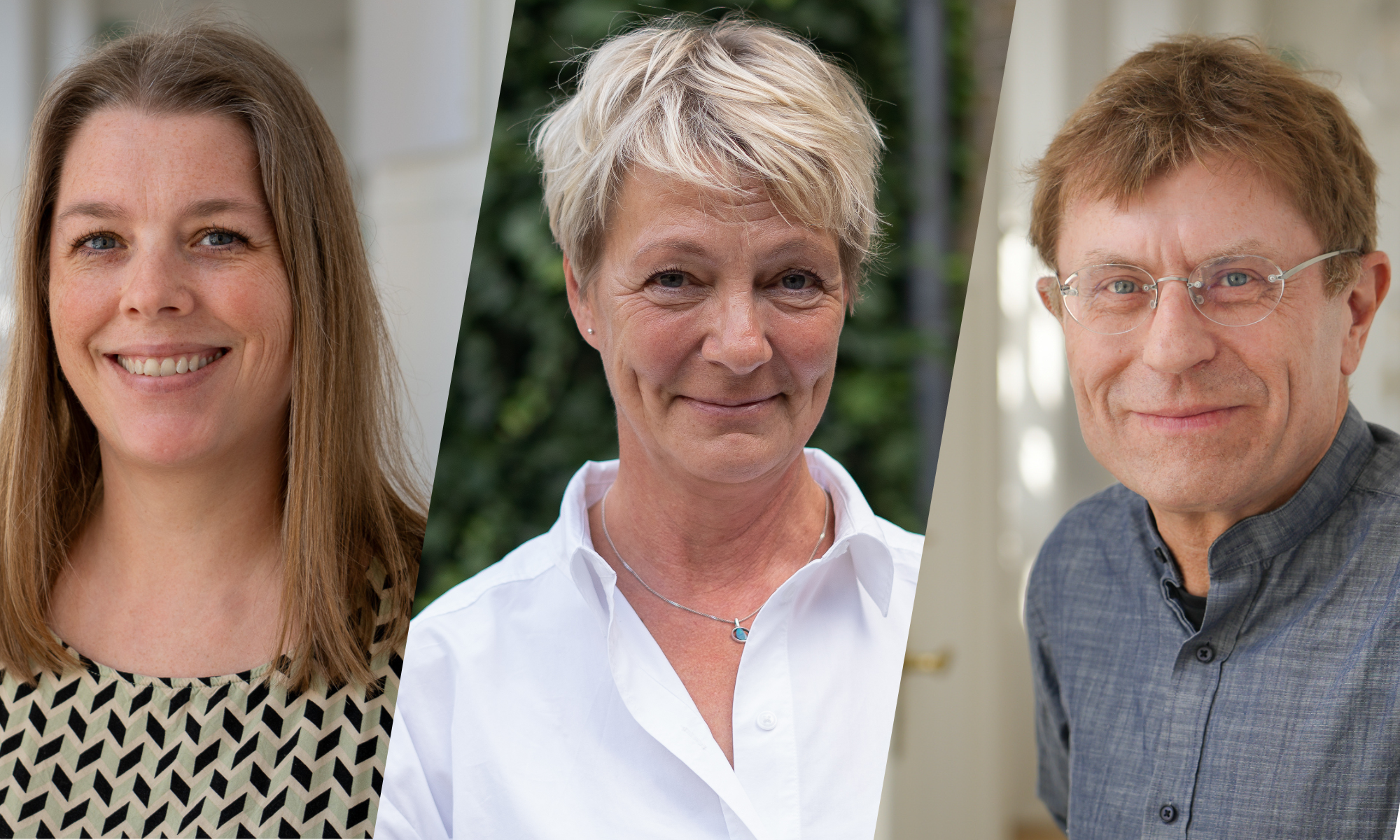
Lykke Thostrup was concerned she might end up bored in her new job. She had worked at Frederiksberg campus for 26 years — first at the then-independent Royal Veterinary and Agricultural University, then, as the University of Copenhagen at the Faculty of Life Sciences and the Faculty of Science. Her career had always been varied, including responsibility for a secondary school outreach programme where students could get a taste for natural science study.
»I was worried I’d end up with a more boring job if I had to do the same thing every day. At the beginning, it sounded like we’d be doing fewer things,« she says.
But that hasn’t been the case at all, says Lykke Thostrup. She is now part of the ‘Marketing of Study Programmes’ unit, has kept many of her old tasks, and is now also responsible for rolling out the secondary school outreach programme to other faculties.
»My job is to make it as easy as possible for secondary school teachers to find and make use of what we have to offer. I think it made perfect sense to move what I do into a central unit. It makes things easier for the users, and I can use my experience to scale up the programme.«
The move has actually made her job more enjoyable, she says:
»I’ve worked a lot with natural sciences, and now I get to learn about what’s going on in economics, the humanities and the social sciences. It’s been fun.«
I think it made perfect sense to move what I do into a central unit.
Lykke Thostrup, communications officer
The challenge now is to maintain close contact with the the different department communities.
»We need to remember where we came from, so we don’t become an office detached from reality.«
When staff were told they would be moved and got the option to submit their preferences, Lykke Thostrup asked to keep her outreach responsibilities — and she’s been allowed to do that. She’s also joined the team organising the university’s presence at the Folkemødet, Denmark’s annual public political festival. She has handed over other tasks, however.
»I need to learn that it’s no longer my job to deal with certain things. I have to remember to pass the questions on to the people who now handle them.«
The biggest challenge of the reform, according to Lykke Thostrup, has been that the Communications unit worked for many months without knowing its budget:
»It would have been the smart thing to have the finances in order right from the beginning. We’ve worked the first six months without knowing our budget, and it’s hard to plan anything when you don’t know how much money you have.«
Christina Wetterberg was introduced to many new colleagues over the past six months who — like her — are passionate about communications. As part of the administration reform, she went from being one of two communications officers in the central administration’s HR unit to now being part of a large, unified communications department in the central university buildings.
»When we’re at meetings, everyone is talking about communication. We can exchange ideas with each other, handle all channels, and if you have a question, you just pop upstairs or downstairs. I’m no longer isolated from my closest associates,« she says.
She has kept most of her old responsibilities.
»I know a lot about HR because I’ve written about it for years, so I wanted to keep doing that. But the move has really been great for me. I now have many more colleagues who share my professional background and who I can bounce ideas off.«
I now have many more colleagues who share my professional background and who I can bounce ideas off.
Christina Wetterberg, communications officer
She sees it as a »huge gain« that many areas have been brought together under the reform and believes that UCPH Communications management has made a big effort to keep staff informed. She has attended information meetings, met her future manager, had one-on-one talks, and took part in a department meeting before everyone had settled in.
»A lot of work went into making the transition as smooth as possible,« she says, and adds that she’s felt very welcome in her new department.
During the long lead-up to the reform — filled with uncertainty about where staff would end up — she found her former HR manager supportive and attentive to her needs.
»It was a very long process waiting to find out where we were going, but the managers were really good at taking care of us when we felt anxious.«
Now she’s settled in well among her new UCPH Communications colleagues.
»I am full of praise for how UCPH Communications welcomed us.«
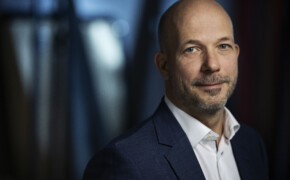
When the plans for the administration reform became clear, Søren Bang knew where he wanted to go: the ‘Advisory and Media Training’ unit in UCPH Communications.
Søren Bang, who is a communications officer and journalist, had worked with communications since 2020, first at the Anthropology and Sociology departments, later at the Faculty of Social Sciences. He wrote press releases and articles on new research and advised researchers on how to communicate their work in the media.
Six months into his new role in the newly established ‘Advisory and Media Training’ unit, he says the transition has been a positive one.
»It’s been a good experience for me personally. There’s value in bringing the expertise — that was previously scattered throughout the university — together. Collectively we’ve become smarter, and more skilled,« he says.
He is in a fortunate position, he points out. Since his new unit was created as part of the reform, everyone is doing something new and there’s no direct one-to-one comparison with previous roles.
His new department can deliver something that researchers across UCPH have long been asking for: more structured advice on how to communicate their knowledge and use the media.
»It’s a positive story. People are getting something they didn’t have before. That’s one of the reasons that it’s great to be in this unit. Others are struggling more with how to approach the tasks that they already had.«
Where he used to have many different responsibilities, he is now more specialised — and he sees this as a good thing. He no longer writes articles and press releases. He also no longer has daily contact with researchers and students at the Faculty of Social Sciences, however, and this is something that he misses.
The challenge of centralising communications is that staff end up more removed from the researchers, he says.
»That’s why it’s so important that we remain mindful of upholding close contact with researchers and research communities. We often visit them — even without a specific reason — to get a sense of what’s going on. It’s important that we show up.«
»That contact is worth its weight in gold, and it becomes harder when the distance is greater. I’m in a place where there’s hardly a researcher in sight, so I no longer bump into researchers and students on a daily basis. But that’s what phones are for.«
Søren Bang is personally happy with the changes the reform has brought about. He now has a stronger professional community. He is critical of how long the process took, however.
»To be stuck in a work-related limbo for one to two years is far too long. We were stuck at the faculty, not knowing what our future held — or whether we even had one at the university.«
What could management have done differently?
»It’s hard to say. But the result was that the process dragged on for a long time. And the reform still isn’t fully implemented, so I do worry it will continue to be a long haul before we reach the finish line.«
READ ALSO: Campus officers after the reform: Same job just got harder
This article was first written in Danish and published on 6 November. It has been translated into English and post-edited by Mike Young.