



Universitetsavisen
Nørregade 10
1165 København K
Tlf: 35 32 28 98 (mon-thurs)
E-mail: uni-avis@adm.ku.dk
—
Working environment
Taking stock — Both research and teaching will feel the aftershocks of the large-scale cuts at the Faculty of Science, University of Copenhagen, with entire research fields set to disappear. The dean announces tighter financial controls.
It is staff that are paying the price for what critical union representatives and the Academic Council have described as years of management failure.
And the backlash was intense when the Faculty of Science at the University of Copenhagen (UCPH) was forced to lay off 124 employees in a major round of cuts just before the Christmas break.
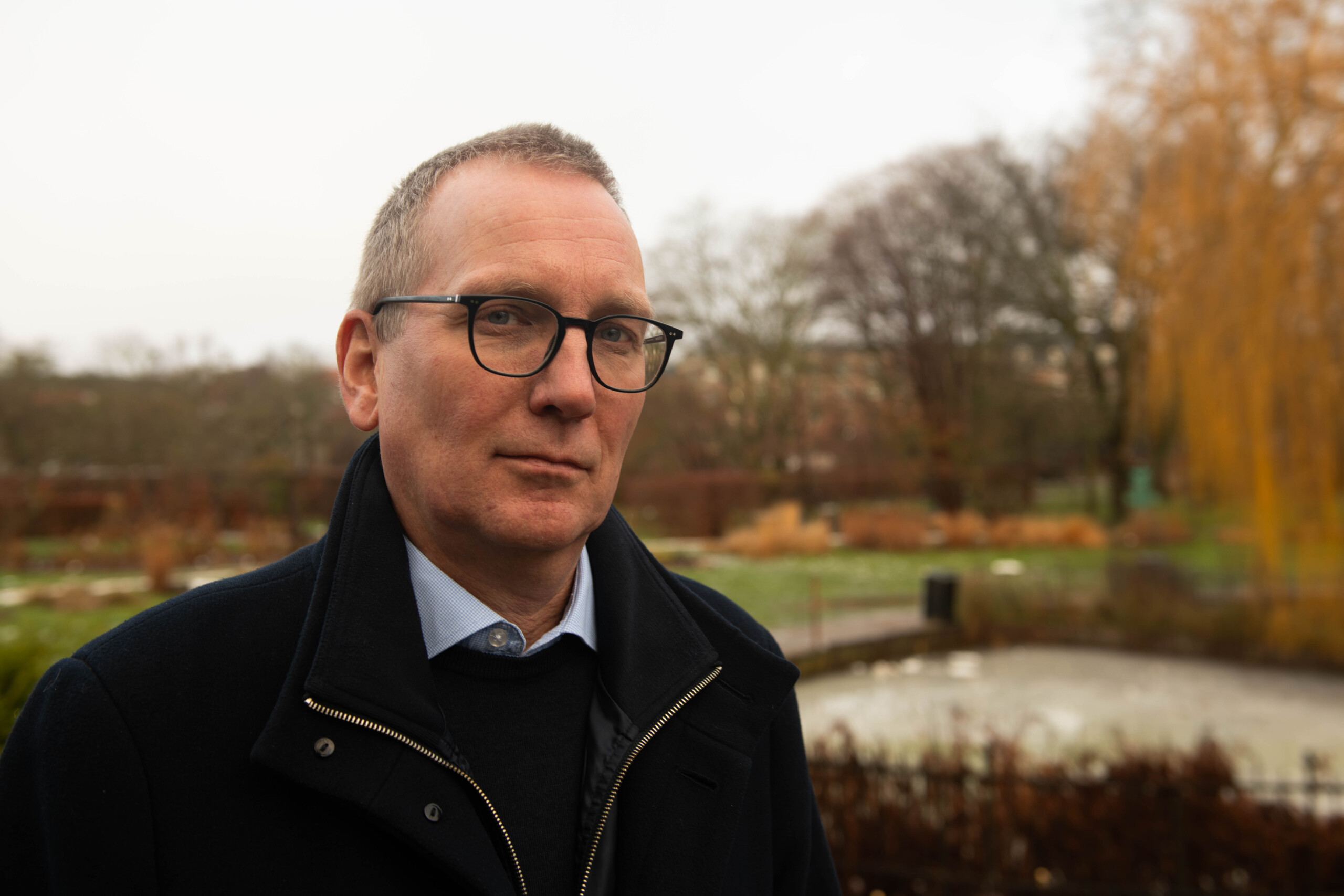
Now, in his first interview since the layoffs, the faculty’s dean, Bo Jellesmark Thorsen, speaks out about the consequences of the cuts.
»This has not been a fun process. It’s been challenging and exhausting every step of the way,« he says to the University Post.
He acknowledges at the same time that students will feel the impact of the dismissals.
»This is such a major event that it will have consequences, especially in the short term. In terms of courses, there may be disruptions — especially this semester,« says Bo Jellesmark Thorsen.
The inevitable drop in quality will initially be limited to the areas where we are forced to make changes.
He expects the consequences to appear primarily as staff gradually begin to leave the faculty, depending on their termination periods.
»When people start leaving, there will be areas where we’ll need to bring in new instructors, cancel certain courses before they begin, or restructure them,« says the dean, adding that departments are already working on »plan Bs« for teaching.
READ ALSO: 124 jobs lost at Faculty of Science — academics fear lasting damage
He cannot quantify exactly how extensive the changes will be, as the process depends on when the affected employees find new jobs and when they actually leave UCPH.
The dean expects that the affects on research will, at first, be less visible. In the longer term however, the layoffs will, according to him, reshape the academic profile of the faculty.
»As we implement a round of staff cuts of this size, it has in some departments been necessary to shut down whole areas of research. There will be areas in which we will no longer conduct research going forward,« says Bo Jellesmark Thorsen.
The consequences will not be equally visible to all students and staff across the Faculty of Science, according to the dean.
»All departments have had their budgets reduced according to the same principles, and all departments will have to manage teaching with fewer resources going forward. Some departments have managed the reductions more through voluntary agreements, senior exit schemes and other measures, while others have had to rely more heavily on dismissals. The changes will feel most dramatic and abrupt where the number of layoffs has been the greatest,« says Bo Jellesmark Thorsen.
READ ALSO: Layoffs shake trust in University of Copenhagen — researcher warns international colleagues
The differences, at the same time, are also due to the fact that some departments had either less financial leeway, tight or overrun budgets before the cuts, or relatively more fixed salary expenses. In some departments, it has been more difficult to find savings without resorting to layoffs.
There are no good solutions. If you act quickly, the period of worry is shorter — but the shock hits harder.
The departments that have been hit the hardest by the layoffs are Biology, Plant and Environmental Sciences, Nutrition, Exercise and Sports, as wells as Geosciences and Natural Resource Management.
»The inevitable loss of quality will initially be limited to the places where we are forced to make changes,« says Bo Jellesmark Thorsen.
But these changes could ripple beyond the directly affected courses and environments. When a course suddenly has to be covered by other instructors, it can shift staffing and priorities elsewhere.
»There may well be ripple effects,« says the dean, pointing out that an instructor moved to cover a course where there is a pressing requirement might then have less time for other tasks. Or another course might have to be restructured just to get the timetable to work.
READ ALSO: Students confront management: »Will my master’s be a joke degree?«
The cuts led to 66 staff members at the Faculty of Science being dismissed. There were voluntary resignations and exit agreements with senior staff on top of this, bringing the total number of staff losses to 124.
It all stems from an underlying annual budget deficit of around DKK 100 million, primarily due to increased operating costs associated with the Niels Bohr Building and the new Danish Natural History Museum.
The layoffs set off criticism about the way management handled it — in particular for dragging out the process and prolonging the uncertainty across the organisation. Something that might have been avoided had decisions been implemented quicker.
The dean acknowledges this concern. He notes that a lengthy process can leave staff wondering for a longer period of time whether they will be affected directly.
»There are no good solutions. If you act quickly, the period of worry is shortened. But the shock hits harder,« he says.
READ ALSO: Rector on cuts to Faculty of Science: There’s no way around it
Bo Jellesmark Thorsen defends the drawn-out process. He says it was crucial to take the time that was needed to explore alternatives, consider priorities, and give staff the opportunity to opt into voluntary schemes to reduce the number of compulsory layoffs.
»The good thing about the longer process is that people had time to consider whether to take a senior exit agreement or to volunteer their resignations. This reduced the need to let people go at the other end,« he says, adding that the process was also about ensuring the least worst outcome in a bad situation.
Criticism has also focused on the fact that, in the years leading up to the layoffs, the Faculty of Science drew on its savings — including the funding of activities in research and teaching — rather than reserving funds for the kind of situation that it now faces. Critics argue that a larger financial buffer could have lessened the need for such a sweeping round of job cuts.
But Bo Jellesmark Thorsen rejects the idea that the savings alone could have provided a solution — even if more had been held back.
»You can’t use savings to solve a long-term structural loss. Sooner or later, you have to adjust your spending,« he says.
I completely understand if people aren’t thrilled about it right now and find it hard to see the building as a positive thing. But I still believe people will grow to appreciate it once the wounds have healed.
He points out that the savings would have been depleted in any case if they were used to cover an annual overspend, and that a strategy of ‘saving’ the money would, at best, have only postponed the problem.
»Then we would have been just postponing solving the problem. But not actually solving it,« he says.
The dean’s own assessment is that it would not have been responsible to base the faculty’s finances on the idea that savings would be able to rescue it later once the increasing building costs truly began to bite.
He emphasises that the savings were gradually spent on education and research. In his view this was a legitimate priority — as long as there was an awareness that the funds could not be used to finance a permanent deficit.
»We simply can’t use savings to cover an overspend forever,« he says.
The Academic Council at the Faculty of Science, led by chair Hanne Andersen, has also criticised the course of events.
In a statement dated 4 December 2025, the Council points out that the structural deficit had been known for years without it being addressed in a timely manner. Based on this, the Council concludes that there has been »a total failure of management.«
Bo Jellesmark Thorsen is familiar with the criticism but declines to comment on the specific phrase »a total failure of management.«
»Hanne Andersen has written a very fine analysis that goes all the way back to 2020, looking at how communication has taken place between the various committees and the leadership,« he says.
Instead, the dean points to what he sees as specific reasons why, in previous years — before he became dean at the Faculty of Science — more money was spent than was in the budget.
»There were reasons for doing what was done at the time. We had savings that were prioritised to be spent. That meant more money was distributed to the departments than actually came in through the front door,« he says.
He also emphasises that the increasing operating costs did not truly kick in until 2024–2025, when the Faculty of Science took over a larger share of expenses for new buildings — and that this contributed to making the the current situation critical.
The financial crisis at the Faculty of Science is closely linked to large-scale prestige construction projects at the university — including the Niels Bohr Building, which ended up going more than DKK 3 billion over budget and being delayed for eight years. For chemistry staff, the move-in to the building is still not even fully completed, as there are still technical issues.
Bo Jellesmark Thorsen says he understands if staff currently have mixed feelings about the building.
»I completely understand if people aren’t thrilled about it right now and find it hard to see the building as a positive thing. But I still believe people will grow to appreciate it once the wounds have healed,« he says.
If we keep things on track and don’t make new mistakes, this will be enough.
The dean points out that in the years leading up to the move into the Niels Bohr Building, the Faculty of Science grew significantly so that more space had become a necessity.
»We take up far more space than we did back then when the idea for this building was conceived and the process was started. So we wouldn’t have been able to fit in the buildings that we had,« he says.
READ ALSO: University of Copenhagen needs 75,000 m² cut to offset financing shortfall
He will not pass judgement on whether the project could have been approached differently, and notes that the decisions were made before his time as the head of the faculty. But now that the building is here, the task, according to him, is to make better use of it and reduce the faculty’s total footprint:
»Now it needs to be used properly. It has to be used efficiently,« he says.
Following the round of cuts, Bo Jellesmark Thorsen sees a long and difficult road ahead to rebuild trust between staff and management. And it won’t be easy, he says.
»It’s hard to have trust in a dean who has a top-level role in an organisation that you don’t have a relationship with,« he says.
His own recipe is more dialogue and more transparency — both in collaboration with the academic council, the staff cooperation committee, and staff representatives, and in communication more broadly across the organisation. He adds that it’s not enough to communicate only via committees and representatives.
»There’s a limit to how much I can expect academic council members and staff reps to relay information throughout the organisation. That’s a responsibility I have to take on myself,« says Bo Jellesmark Thorsen.
He plans therefore to set up an annual finance and budget seminar that is open to all staff, where the faculty’s finances, and trends at UCPH will be reviewed.
»I want all interested staff members to be able to attend. It should be open to everyone,« he says, adding that he will also visit departments to answer questions — »even the critical ones.«
But at the same time, the dean wants tighter financial control at the faculty going forward. When it comes to new permanent positions in particular, he and faculty management will be more cautious and require closer dialogue on the financial foundation of them.
»When we talk about new permanent positions, we really need to think things through. We need a much closer consultation on this,« he says, adding that the purpose is to ensure stability.
Bo Jellesmark Thorsen is confident that the plan of action that the faculty has now set out will prevent another round of cuts. The fear of having to go through the same thing again has been a key driving force in the process.
»The worst thing would be to drag this out, do it halfway, and then have to do it again,« he says.
His assessment is that both management and departments have taken things »seriously« this time. They have made decisions that go far enough, according to Bo Jellesmark Thorsen.
»With all the knowledge we have right now, what needed to be done has been done. So we have to stay the course. If we keep things on track and don’t make new mistakes, this will be enough«.
This article was first written in Danish and published on 21 January. It has been translated into English and post-edited by Mike Young.