
Universitetsavisen
Nørregade 10
1165 København K
Tlf: 35 32 28 98 (mon-thurs)
E-mail: uni-avis@adm.ku.dk
—
Student life
Welcoming — Before the semester starts, exchange students can take a course to get to know their new city — and have a go at the tricky Danish language.
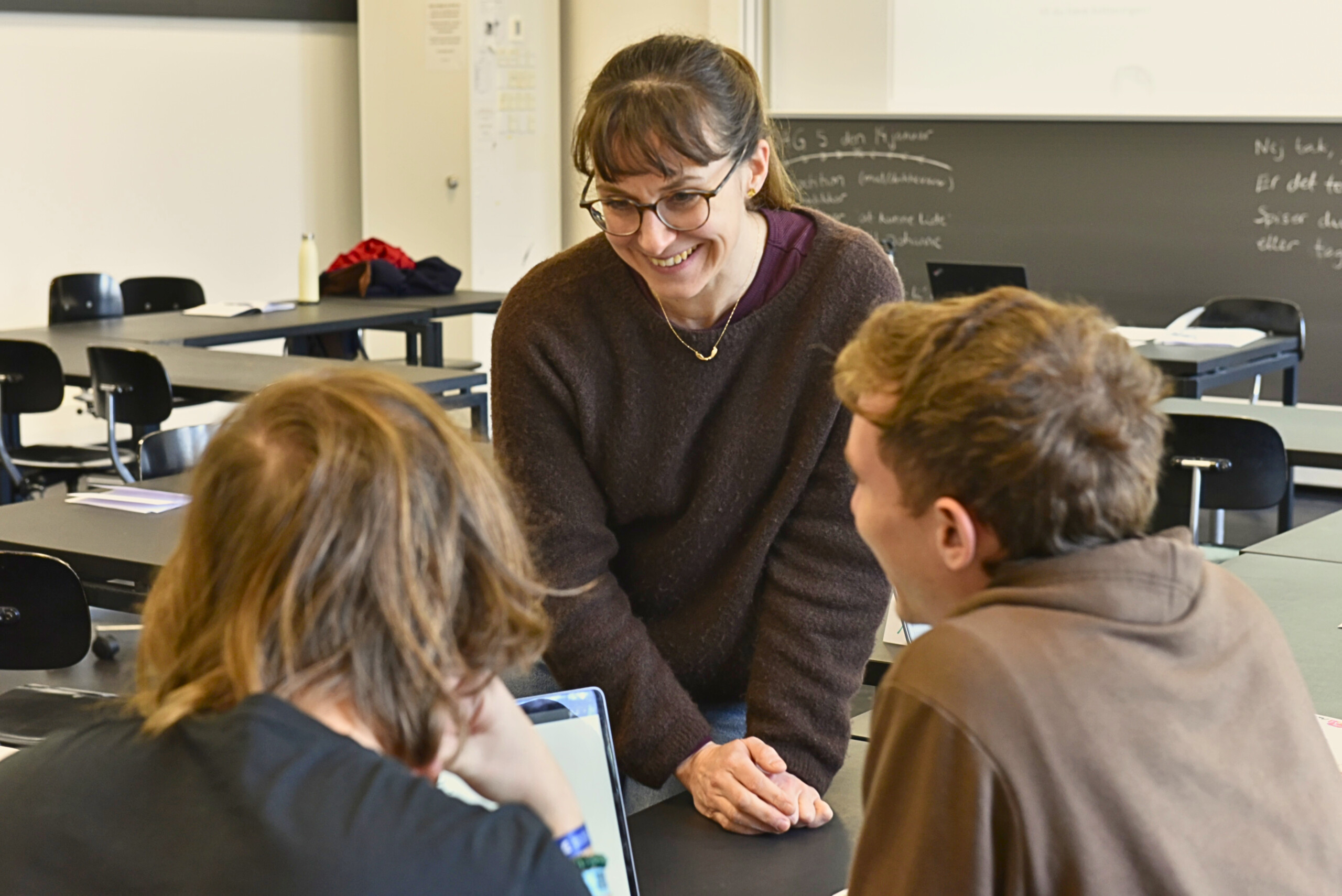
12 students are seated in a small room up on the fifth floor of a South Campus building. Danish sentences are being practiced.
»Jeg vil gerne have en kaffe,« says one, wanting a hot beverage.
»Min livret er lasagne,« states another, about their favourite dish.
»Kan jeg hjælpe den næste?« offers a third, offering to help the next in line.
They are from all over the world and have just arrived in Copenhagen to begin their exchange semester at the University of Copenhagen (UCPH).
To help them settle into their new city, the Saxo Institute, in collaboration with the Centre for Internationalisation and Parallel Language Use (CIP), offers an introductory course for all new exchange students. It’s called Copenhagen Past and Present with Danish Language and combines a crash course in Copenhagen’s history with a bit of Danish language instruction.
The day’s programme is on the whiteboard. Students are to first revise material from the last lesson. After that, they will learn how to talk about what they like and don’t like.
»When the course was first set up in 2022, we had maybe 50 participants. Since then, its popularity has grown, and we now have more than 100, with up to 250 enrolled in the summer,« says Katja Årosin Laursen from CIP. She is responsible for the Danish course and teaches on one of the six Danish-language classes.
»We actually got the feedback that some students chose to come to the University of Copenhagen because they had heard good things about the course.«
The course runs for three weeks and takes place in both January and August. Over the course of 20 lectures, students get a crash course in Danish history, which concludes with a history exam. This exam is necessary, explains Katja Årosin Laursen. Without it students can’t receive ECTS credits for the course. And no ECTS means no funding.
I’m surprised at how well UCPH takes care of us exchange students.
Jonathan Pioch, exchange student
The nine Danish language lessons are not followed by an exam. But the students appreciate the language instruction nonetheless. It gives them the chance to ask all the questions that arise when arriving in a new country.
Katja Årosin Laursen and the other Danish-language instructors teach the students how to introduce themselves in Danish and order a cup of coffee, but they are also happy to answer questions about getting a Danish SIM card or how to ride safely on busy Copenhagen bike lanes. Most importantly, the students get to know each other. According to Katja Årosin Laursen, this is just as important as learning the language.
»It’s a social course that gives students a soft landing in Denmark. They can get help with all the questions that come up — and build a network in the city.«
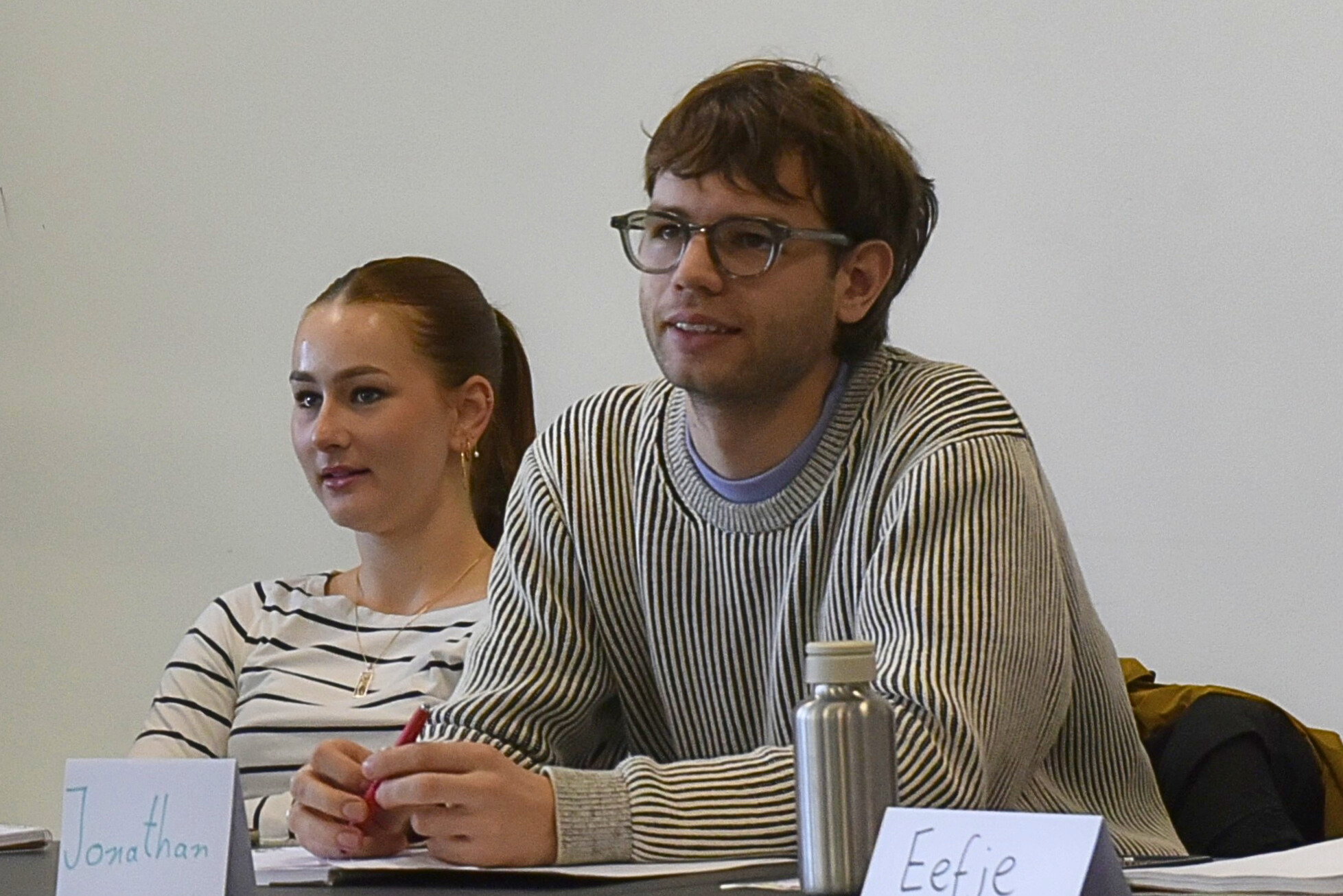
One of the course participants is psychology student Jonathan Pioch. He is originally from Kiel but he now studies in Berlin. He moved to Copenhagen the day before the course started.
»I stumbled upon the course by chance, and I’m glad I signed up. It’s exciting and the teachers are really skilled. I’m surprised at how well UCPH takes care of us exchange students,« he says.
For Jonathan Pioch, Copenhagen is not entirely unfamiliar. He has visited the city many times, and he grew up in a setting that is influenced by Danish culture, as Kiel is home to a Danish minority. Jonathan Pioch was able to take Danish classes for a couple of years in primary school because of this.
»I’ve forgotten most of it now, but German isn’t that different from Danish. That makes things a bit more accessible. It’s mostly the pronunciation and the grammar that I struggle with,« he says.
Apart from brushing up on his Danish, Jonathan Pioch has already made lots of new friends, and he has been exploring Copenhagen with them.
»Everyone is really up for meeting after class and at weekends, so we can go out and explore the city together,« he says.
To bring the students together, they are also sent on two excursions. The first excursion is at the beginning of the course and goes to Roskilde. The trip includes an organ concert in the cathedral and a guided tour of the Viking Ship Museum. The University Post was given permission to go on the second excursion with them.
A canal boat is a teaching space like no other.
Benjamin Asmussen, senior researcher and PhD in maritime history
A little after lunchtime on a sunny Tuesday, the group gathers on the quay at Gammel Strand. They have just visited the National Museum and are headed for a canal tour.
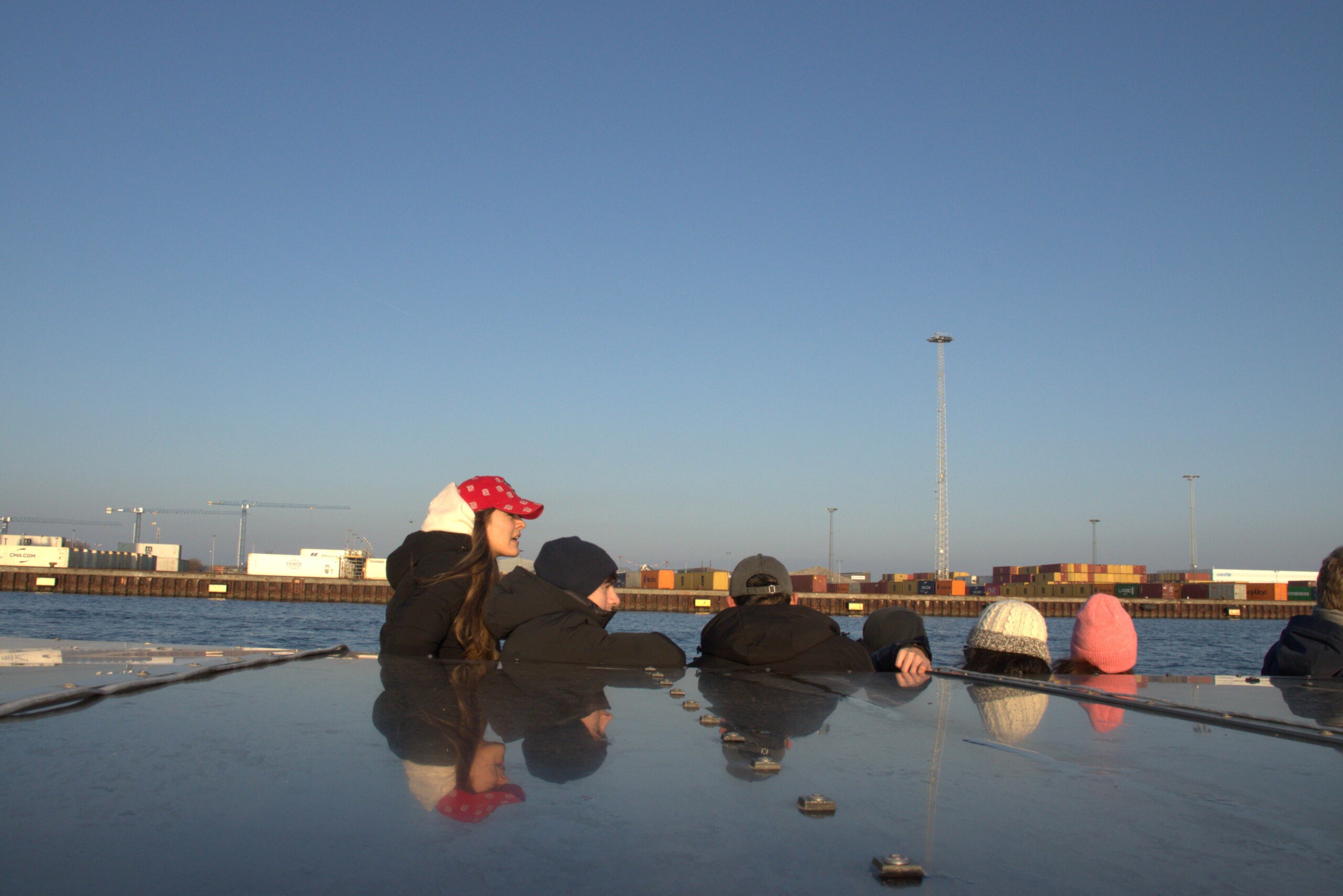
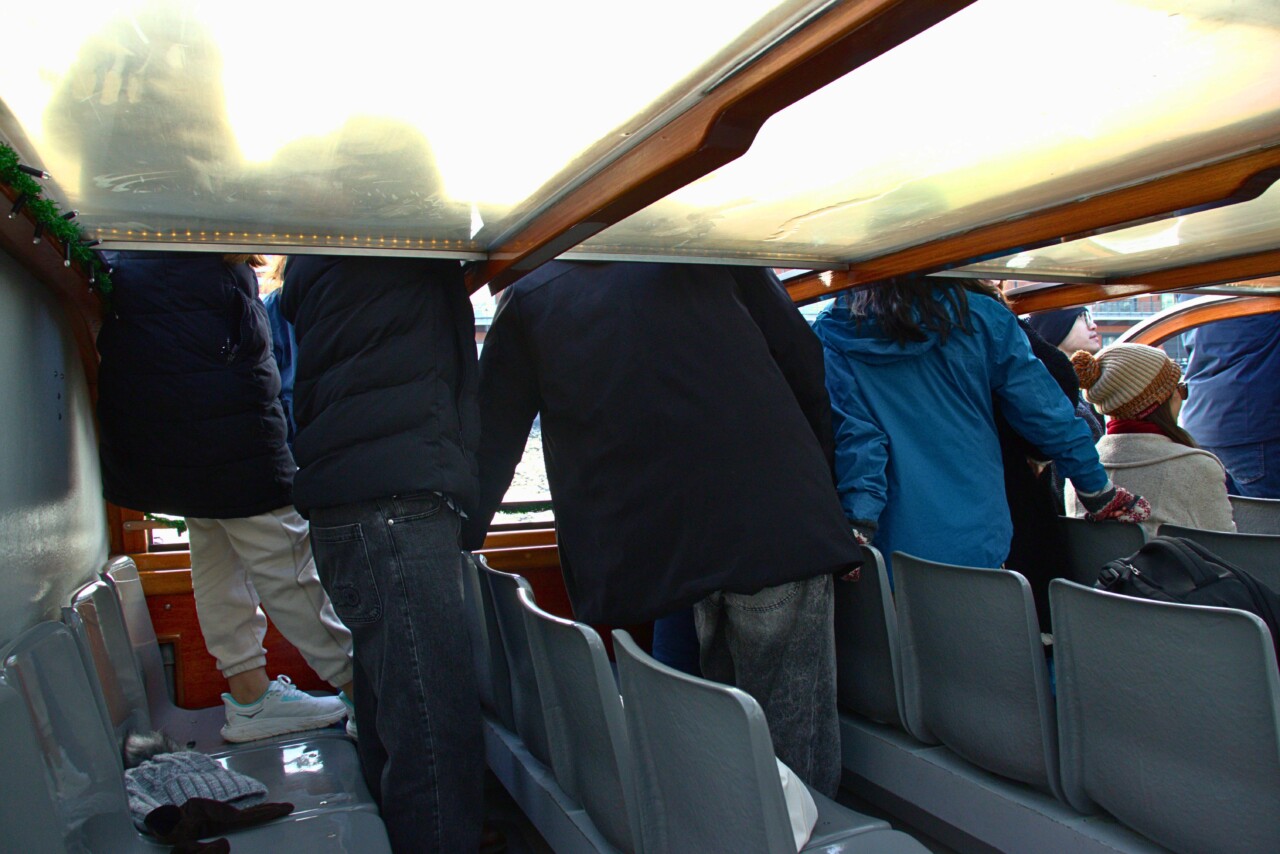
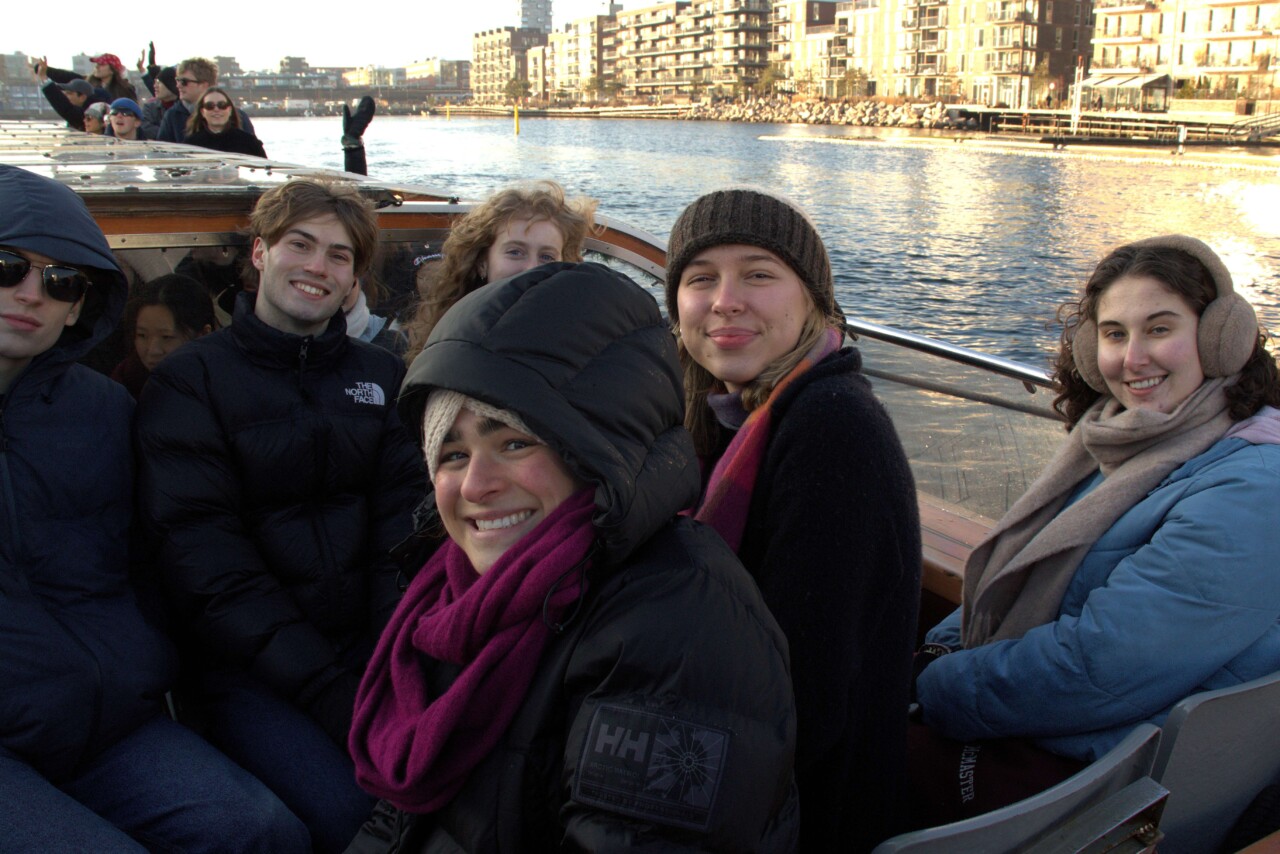
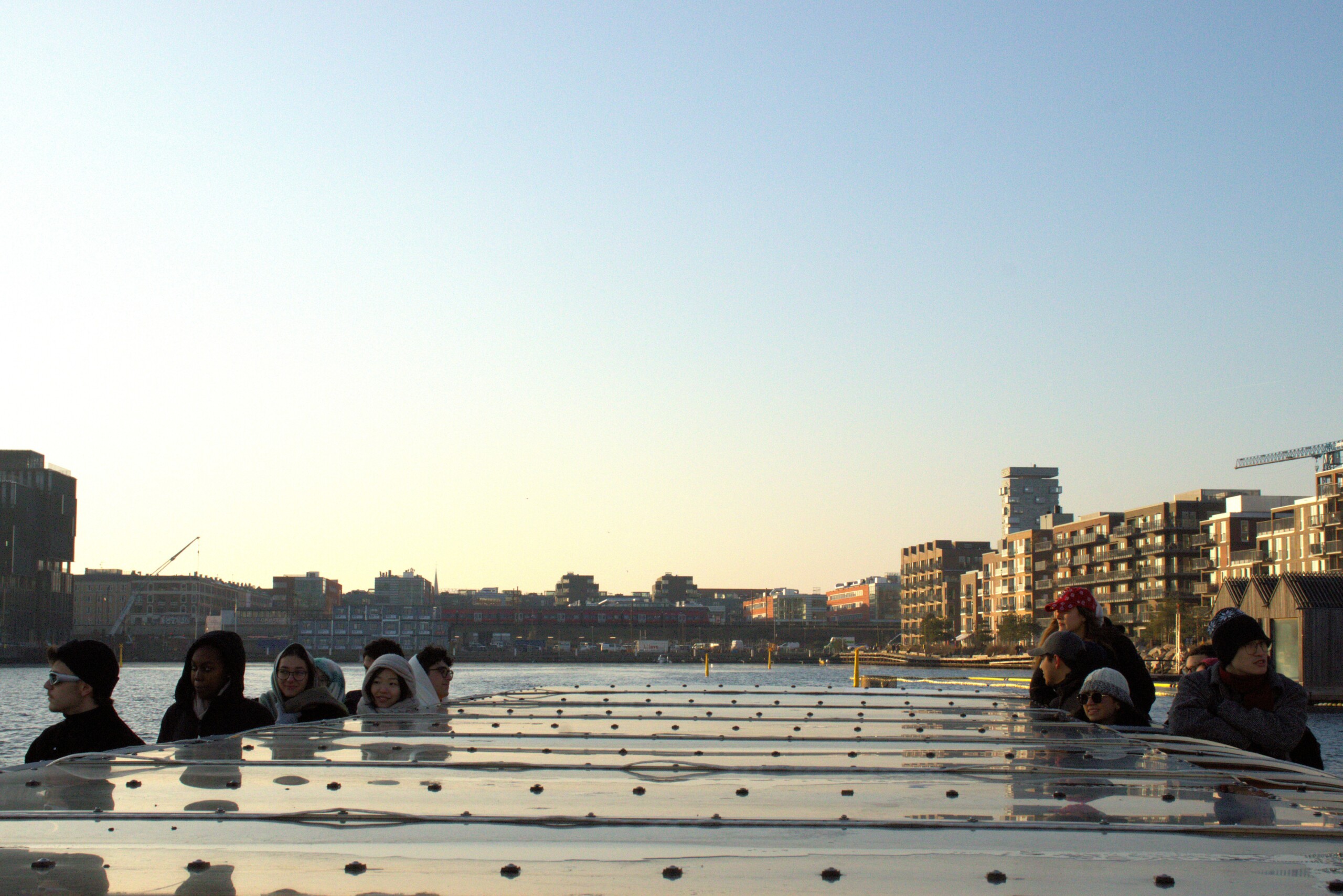
It’s a crisp winter day, and Copenhagen is bathed in sunlight. About 80 eager students take their seats in the boat. Despite the cold, the windows are quickly flung open as soon as the boat sets off. The students stand on the seats with their heads out the windows.
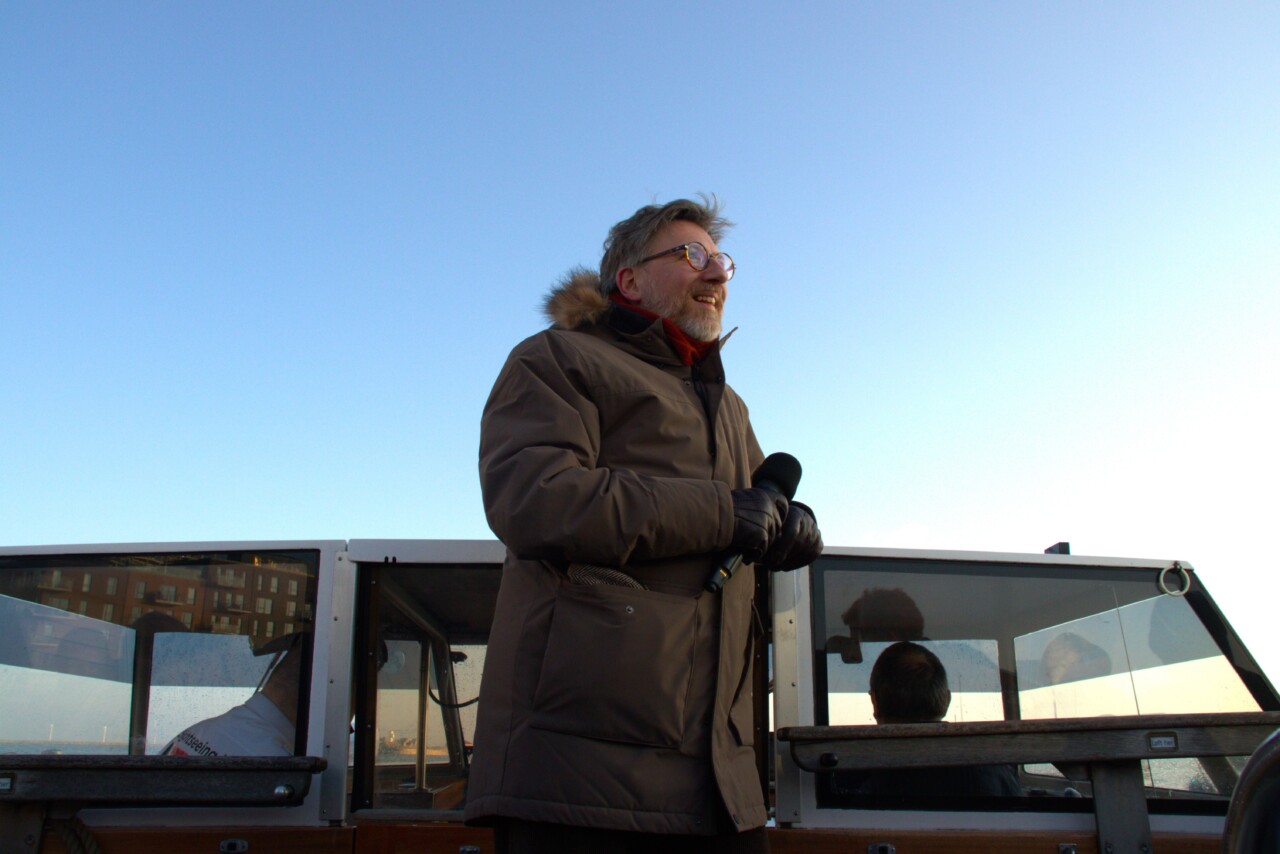
Senior researcher and PhD in maritime history Benjamin Asmussen is today’s guide. As the boat glides through the canals, he points out the city’s most important landmarks.
»A canal boat is a teaching space like no other. The world passes by like an analogue PowerPoint, and the students can’t go anywhere — so they have to listen to what I have to say,« says Benjamin Asmussen with a knowing smile to the University Post reporter.
He helped set up the course back in 2022. Today, he works at the National Museum, but still gets to take part as a guest lecturer on the course.
READ ALSO: Bikes, bars, and big discoveries: An exchange student in Copenhagen
»We’re really proud of this course and always get fantastic feedback. I hope it continues for many years to come,« he says, and adds:
»Of course it costs UCPH a bit to finance the course, but we get to send hundreds of enthusiastic UCPH ambassadors out into the world each year in return. And we give the students a great start to student life in Copenhagen.«
Every now and then excited students are asked to sit down as the boat passes under a low bridge. But as soon as they are past, they’re up out of their seats again — eager not to miss a single part of the view.
»It’s fun to see how the social dynamics change. On the first excursion, no one knows each other and everyone is keen to talk to everyone. Today you can already feel the atmosphere is more relaxed,« says Sara Bazi.
She is a student of history and helps out on the course. With her colleague Huria Hissabu, a pharmaceutical technology student at the Technical University of Denmark (DTU), she takes care of all the logistics of the excursions. Later on, they also help plan the sessions in a larger semester-long course for exchange students.
READ ALSO: Four months in Copenhagen: An exchange student reflects
»We’re happy to help the students with practical stuff. They often ask how to get a bike, or how the exams and course registration work,« says Huria Hissabu.
One of the lecturers pops his head in with Huria Hissabu and Sara Bazi. He wants to check on whether the sound is good here at the back of the boat.
»It seems like a good group this year. They certainly talk a lot. It’s almost impossible to get a word in,« he says.
The students are from all continents, and the groupings seem random. One group of the five has decided to brave the cold and sit at the bow of the boat to enjoy the full view, unimpeded by dirty windows. They come from Colombia, Japan, Germany and Australia. Their spirits are high even though they are huddling in the winter chill with their hats pulled tightly down over their ears.
»I’m really excited about the course. I think they’ve gone to extraordinary lengths to make sure we feel welcome,« says the student from Germany. The others nod in agreement.
»It’s also cool to learn a bit of Danish. The language is really difficult to pronounce — especially for me,« says the student from Japan.
Back on the boat, Huria Hissabu and Sara Bazi are watching a few video clips they’ve recorded for the course’s Instagram account.
»It’s always fun to see how we suddenly get loads of followers right before the course starts,« says Sara Bazi.
The Instagram channel helps students get an idea of the course programme. It also features short video interviews with former exchange students.
»When I look at the students from the outside, I really admire them. It’s all so intense. They have to get to know a new city and a new country, while also trying to make new friends. It must be incredibly overwhelming,« says Sara Bazi.
READ ALSO: Danish millions to strengthen academic ties with Africa
Huria Hissabu nods. She herself went on exchange in the US, so she can easily relate to the students who are now eagerly chatting away with one another.
»I think there’s a big difference between being in the middle of it and seeing it from the outside. When you’re in it, you focus on all the new and exciting stuff and forget just how hectic it actually is,« says Huria Hissabu.
After two hours on the water, the boat returns to Gammel Strand. The students applaud, stand up, and stamp their feet to keep warm before jumping back on to dry land.
This article was first written in Danish and published on 28 January. It has been translated into English and post-edited by Mike Young.