

Universitetsavisen
Nørregade 10
1165 København K
Tlf: 35 32 28 98 (mon-thurs)
E-mail: uni-avis@adm.ku.dk
—
Science
Antisemitism is surging online — University of Copenhagen historian is now to lead a new research and outreach initiative
What does antisemitism look like in Denmark today — and what role does history play in current trends?
These are some of the questions that Sofie Lene Bak, an associate professor of history at the University of Copenhagen (UCPH), will investigate in a new research project that has just got DKK 11.9 million from the Independent Research Fund Denmark.
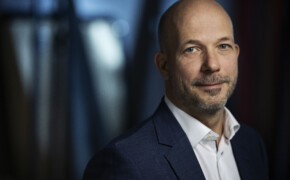
Sofie Lene Bak has worked with antisemitism since her days as a student. She has written several books on the topic and has been a curator at the Danish Jewish Museum.
»There is real momentum for antisemitism research right now,« she says. »It just so happened that I actually submitted the grant application for the project I’m currently working on on 8 October 2023 — the day after Hamas’ attack on Israel.«
The grant comes from a special, politically designated, theme pool under the 2025 special research budget, aimed at strengthening Danish research on antisemitism.
Sofie Lene Bak will set up the project National Forum for the Study of Antisemitism with the funds: a research centre collaboration between the University of Copenhagen and Roskilde University.
The purpose of the new forum is to create a national focal point for research into antisemitism — both how it is currently expressed and its historical roots.
In Denmark, we are in many ways defenceless against waves of antisemitism because there is so little research in the area
Sofie Lene Bak, UCPH associate professor and research leader
The researchers will examine how antisemitism currently manifests itself in Denmark and what the mechanisms are that are driving it.
Chair of the Independent Research Fund Denmark’s Council for Culture and Communication, Lone Koefoed Hansen, who led the distribution of the grants, emphasised the project’s societal significance in an interview with Danish news agency Ritzau:
»The research can help us understand the relationship between antisemitism and contemporary society. With thorough and independent knowledge, we can as a society better understand how to counter prejudice, hate, and discrimination — including the kind that takes place online.«
The project’s purpose is to »set up Denmark’s first national research forum dedicated to interdisciplinary studies of antisemitism,« according to the grant description.
The forum is intended to build bridges between disciplines like history, the sociology of religion, and digital humanities, by bringing together leading researchers in antisemitism and modern Jewish history in Denmark.
»We are trying to approach the phenomenon of antisemitism from as many angles as possible, something that I believe is characteristic of antisemitism studies as a research field,« Sofie Lene Bak says to the University Post.
The forum will also serve as an expert resource for both politicians and the general public. Public understanding is crucial in the fight against antisemitism, she says.
READ ALSO: Jewish student scared of anti-Semitism
According to Sofie Lene Bak, not having a strong research environment in the country can have serious and concrete consequences.
Antisemitism has exploded on social media — but also in everyday interactions between Jews and non-Jews
Sofie Lene Bak, UCPH associate professor and research leader
»In Denmark, we are in many ways defenceless against waves of antisemitism because there is so little research in the area,« says Sofie Lene Bak, and continues:
»Antisemitic prejudices — just like racist or Islamophobic ones — run the risk of being normalised if we do not have a solid research effort. Without knowledge, we could end up with aggressive or even violent attitudes become part of public discourse. I’ve raised the concern for a long time that we lack the tools to recognise antisemitism.«
The risk of a wave of antisemitic prejudice has become more urgent in recent years, Sofie Lene Bak says, but this risk has also changed in nature.
Before the internet and social media, antisemitic views were mainly associated with the political fringes, according to Sofie Lene Bak.
»Extremist communities were largely disconnected,« she says, »and they had a hard time spreading their views.«
Recruitment into these communities happened via word of mouth or by distributing magazines in people’s letterboxes, says Sofie Lene Bak. This made it easier to identify and monitor them. But that’s no longer possible.
The internet and social media offer new opportunities for organising and networking — and that increases the spread of antisemitic viewpoints.
»Throughout my research career, I’ve warned of the risk of antisemitism creeping into mainstream discussions,« says Sofie Lene Bak. »But the internet has amplified and accelerated this risk. Antisemitism has exploded on social media — but also in daily interactions between Jews and non-Jews. So there is a real need for a multifaceted response.«
Outside the university, antisemitism is an explosive political issue. Are you concerned that the research could be exploited for political ends?
»No, I’m not concerned about that, because I’m hyper-aware of the potential weaponisation of research — that it could be used to attack others politically,« she says.
»But you do have to keep in mind that the topic is highly politicised every time you speak publicly — that’s something you get used to when working with antisemitism,« says Sofie Lene Bak.
»One good safeguard against the misuse of research in public debate is to be very clear about our premises, definitions and methods.«
Although the project will place a strong emphasis on academic research, Sofie Lene Bak also stresses the importance of public outreach:
»The research needs to have an impact on society, and that’s just as important to us. That’s why we’ll be producing a book series and a podcast series, and experimenting with various lecture and presentation formats, including online ones, that will be publicly accessible. It’s important for us to be in continuous dialogue with the public on this issue.«
This article was first written in Danish and published on 16 December 2025. It has been translated into English and post-edited by Mike Young.