





Universitetsavisen
Nørregade 10
1165 København K
Tlf: 35 32 28 98 (mon-thurs)
E-mail: uni-avis@adm.ku.dk
—
Student life
Finances — Student reporter on the University Post is testing whether he can survive the month of February on DKK 1,500. Here is his status after one week.
7½ hours into my experiment it suddenly dawns on me what I got myself into when I suggested to my editor that I would try living off DKK 50 a day in Copenhagen.
It is Friday morning, pitch black, and the cold is biting into my nose and cheeks the moment I step out of my building.
The experiment
From 30 January to 27 February, I have to live on less than DKK 1,500. The amount must cover food, entertainment, as well as transport and subscriptions.
67 per cent of students with a budget of under DKK 1,500 say that they, over the past year, have refrained from spending money on social activities for financial reasons.
Read the first article in this series: Can you live on DKK 50 a day in Copenhagen? A student experiment
I have a half-hour bike ride ahead of me — on a bike that, incidentally, has frozen overnight and is stuck in first gear.
Normally I would not have hesitated for one second: leave the bike behind and jump on to the metro. But that would blow my daily DKK 50 budget before the day has even properly started.
So I can either walk or take the trip in first gear.
READ ALSO: Can you live on DKK 50 a day in Copenhagen? A student experiment
My frustration increases with the pain from the icy headwind, and it is quickly directed at those whom I now perceive as shamelessly privileged motorists, sitting in their warm bubbles drinking coffee and chilling to talk radio.
There ought to be an absolute, unconditional, right of way for cyclists in the cold, I reckon. Why should I have to wait up and freeze my toes off so that they can get ahead faster in a rolling living room?
As bus 5C snakes around the corner, and stops ahead of me, I almost unleash my simmering monologue onto unsuspecting, exiting passengers. But that would be rude, and I realise that I am off onto a mental tangent. Self-inflicted suffering should not be taken out on others.
The bus triggers something in me, that becomes an early turning point in the experiment: I can complain about my — self-imposed — financial limitations over the next four weeks, or I can try to turn the challenge into something positive.
Because who, actually, is being cheated here?
I feel a growing obsession with the Excel sheet: My experiment is like a game
Motorists get tight hip flexors, expensive insurance premiums, and a a weaker moral position when dinnertime conversations turn to the climate.
I get to save money, and get some free exercise and fresh air. And what other undiscovered gains might there be in my new, streamlined, budget life?
My newfound optimism leads me to the best invention of the experiment so far: An Excel spreadsheet with my spending, where I enter purchases, calculate my average expenditure, and see how much money I have left for the rest of the month.
I feel a growing obsession with the Excel sheet: My experiment is like a game in which the goal is to keep average spending as low as possible.
Small purchases are no longer treats. They are speed bumps that I happily avoid. The discount crate in the 365 supermarket no longer seems like a rubbish container, but a treasure trove.
On Sunday I meet up with a couple of friends, and it is understood that we are going to have dinner together. Here I encounter a new type of challenge.
Should I blow my budget on a burger at a café? Or should it be my friends that have to embrace my bean-based lifestyle?
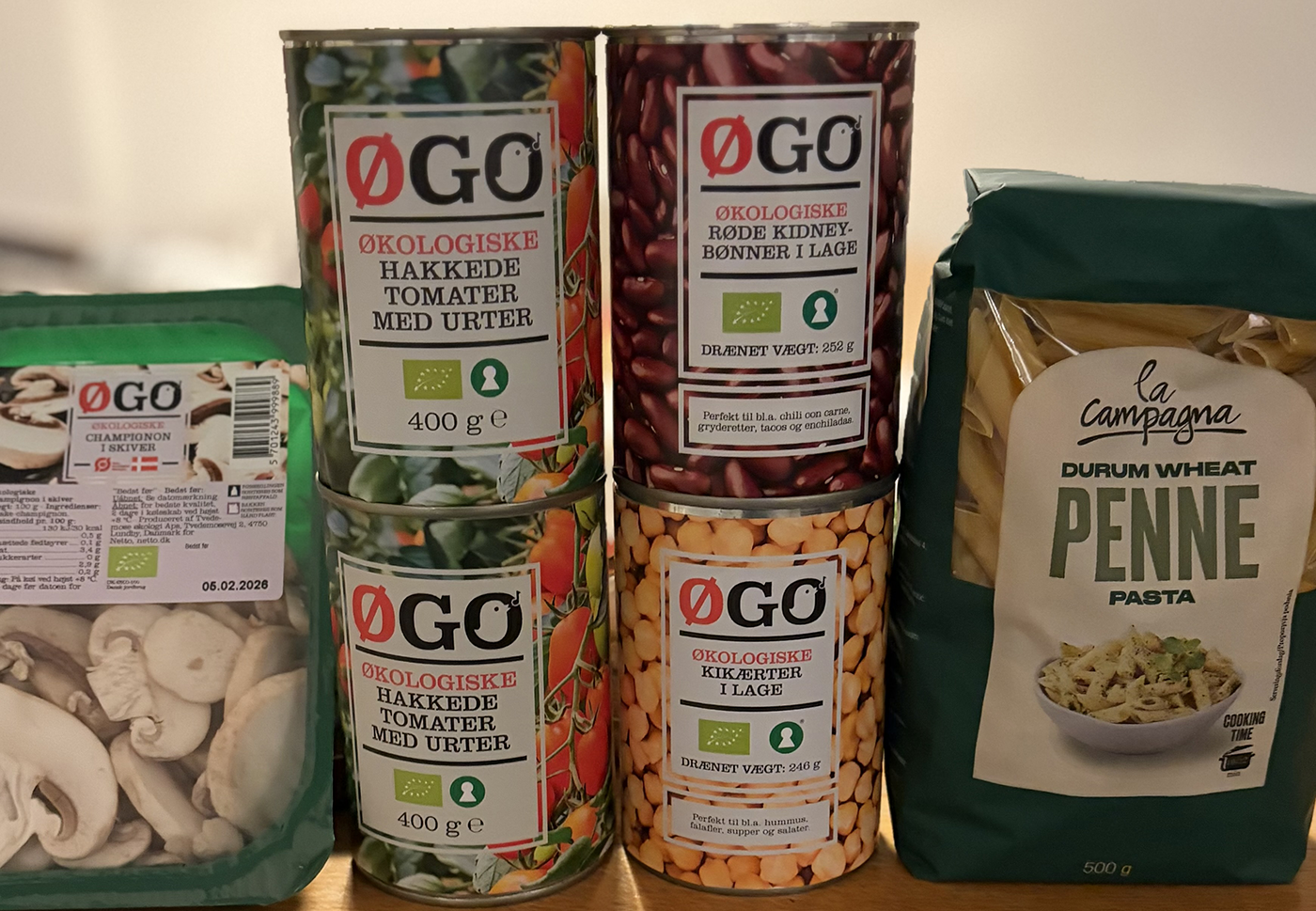
Dinner turns into a pasta dish with tomato sauce, mushrooms and beans at a per-person cost of DKK 13.50
It is one thing to keep my own personal spending in check. But I can’t exactly drag my friends into my budget regime — or can I?
Someone has to give. And perhaps it is only fair that it should be those that have to give up the least. The cost of spending (too) little is lower than the cost of spending too much, and so we land on the lowest common denominator.
Dinner turns into a pasta dish at home with tomato sauce, mushrooms and beans at a per-person cost of DKK 13.50.
Should a useful rule of thumb be, that it is the poorest person in the group that sets the financial boundaries? But this still leads to an awkwardness that does not exist between financial equals. In the long run this would become tiring.
I have always thought that shared interests, values and sense of humour are what bind people together. Now it seems (unfortunately) obvious to me that money is also a factor. Fortunately, it is a factor that I only have to worry about for the next three weeks.
In the first week of the experiment, I have lived well under my budget. My total spending is DKK 215 kroner — DKK 135 less than I was allowed to spend. Thanks Excel.
This article was first written in Danish and published on 6 Feburary. It has been translated into English and post-edited by Mike Young.