

Universitetsavisen
Nørregade 10
1165 København K
Tlf: 35 32 28 98 (mon-thurs)
E-mail: uni-avis@adm.ku.dk
—
Campus
Q&A — Retreat rooms at the University of Copenhagen are history, and they will not return in their previous form, says Prorector for Education Kristian C. Lauta in this interview with the University Post.
A University of Copenhagen (UCPH) management decision to close retreat rooms on campus 1 December has set off strong reactions.
According to management, the reasoning behind the closure was that the rooms were mostly used by Muslim students for prayer. This was in conflict with the idea of a broadly inclusive study environment for all students,
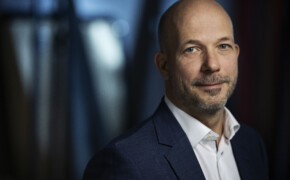
The University Post spoke to Kristian C. Lauta, Prorector for Education at UCPH, about the decision.
»Over the past year, a working group has looked at different scenarios related to the retreat rooms. Their report highlights two things that we based our decision on. Firstly, the rooms were primarily used by a small group of students, mainly for prayer. Secondly, the large group of students with disabilities — who we also hoped would use the rooms — did so only to a limited extent. Our attempt to make these rooms a space for all students has not succeeded, and so we’ve decided to close them and begin a dialogue with students about how to create a campus that includes spaces for taking a break.«
»It becomes a problem if the rooms are not experienced as accessible to all students. We want a campus that is inclusive for everyone. Back in the spring, Danish universities collectively decided that they would not have rooms designated solely for prayer or religious activities. After this, we tried to neutralise the rooms to make them more broadly accessible. Unfortunately that effort hasn’t worked at UCPH, since the rooms are still perceived as accessible only to a particular group of students.«
READ ALSO: Rector intervenes on gender-segregated prayer room at the University of Copenhagen
»It’s been front and centre in the public debate. But we’ve tried to address the issue on our own terms by setting up a working group and having internal discussions. And yes, it’s unusual for university management to get involved in the use of seven small rooms on campus. So in that sense, the issue has clearly had an impact — it’s become so important that senior management had to address it. But if you’re asking whether public opinion has directly influenced our decision-making, I’d say no.«
READ ALSO: UCPH removes all furnishings from prayer rooms. See the before-and-after photos here
»By closing the retreat rooms and rethinking them at the same time, we’ve effectively chosen a hybrid between scenarios 3 and 2 in the working group report. But we decided to close them, because as long as the rooms remained open, some users would continue to fight for them to stay the way they were, rather than taking part in a discussion about how they could be reimagined. It was important for us to move the debate to a place where all students could participate equally in talking about how we create spaces of calm during a busy study day.«
»I understand that the decision can be interpreted as targeting a specific minority. But it’s important for me to emphasise that this is not the case. All students are welcome at the University of Copenhagen. And in a debate about diversity, I do understand why this could be seen as restricting the rights of a minority. But embracing diversity also means designing our campus spaces to be inclusive for all students, regardless of background. That’s the thinking behind our decision to close the rooms.«
»This is a debate that has been ongoing at the university for the past 12 months — including in your publication. Users had the opportunity to meet with the working group, and the issue was also discussed in the Senate (an open forum where management, selected staff and students meet two to four times a year to discuss the university’s development, challenges and budget, and advise the rector, ed.). There were student representatives in that forum and also in the working group itself. So I reject the criticism that users were left out of the process.«
»I don’t think we’ll see retreat rooms in the same form as we’ve historically had at UCPH. But I welcome a discussion with students who can convince me of better ways to use the rooms. Still, I don’t imagine that discussion will be about these specific rooms. They are now closed. The broader issue is how we create spaces across campus for students to take a break during their day. The university has one million square metres and 36,000 students with very different access to the seven rooms in question. So I see this as a welcome opportunity to talk about the kind of university we want to be in the future — rather than a debate about seven specific rooms.«
»I hope they’ll take part in the dialogue on how we can create a study environment that allows for breaks. My impression is that many of the Muslim students who used the rooms didn’t just pray there — they used the rooms for all kinds of purposes related to taking a break. I fully acknowledge that, and that’s why I think they, like other students, can contribute to the conversation on how we build a campus where everyone feels included.«
This article was first written in Danish and published on 3 December. It has been translated into English and post-edited by Mike Young.