
Universitetsavisen
Nørregade 10
1165 København K
Tlf: 35 32 28 98 (mon-thurs)
E-mail: uni-avis@adm.ku.dk
—
Working environment
Administration reform — New opportunities for collaboration, but less proximity to researchers. That’s how research adviser Heidi Weje describes life in the UCPH Research and Information Security unit after the reform.
After fierce debate, the University of Copenhagen (UCPH) rolled out its new administration in March 2025. Staff and students have now had more than six months to get used to the new reality.
In a series of articles on the university’s intranet KUnet, UCPH deputy directors of eight central units share how they have experienced the first few months and provide an update from their area of administration.
The University Post is doing a similar series, where we instead speak to employees and to union representatives across the organisation. This time, the focus is on UCPH Research and Information Security.
Half a year with the new administration
On KUnet, you can now read a series of articles where the deputy directors of the University of Copenhagen (UCPH)’s eight central administrative units take stock, six months after the new administration at UCPH was implemented.
At the University Post, we have launched a similar series — where we speak to staff and union representatives.
Read earlier instalments here:
UCPH Education
UCPH Finance
UCPH Buildings
UCPH Communications
UCPH IT
UCPH Innovation and Business Collaboration
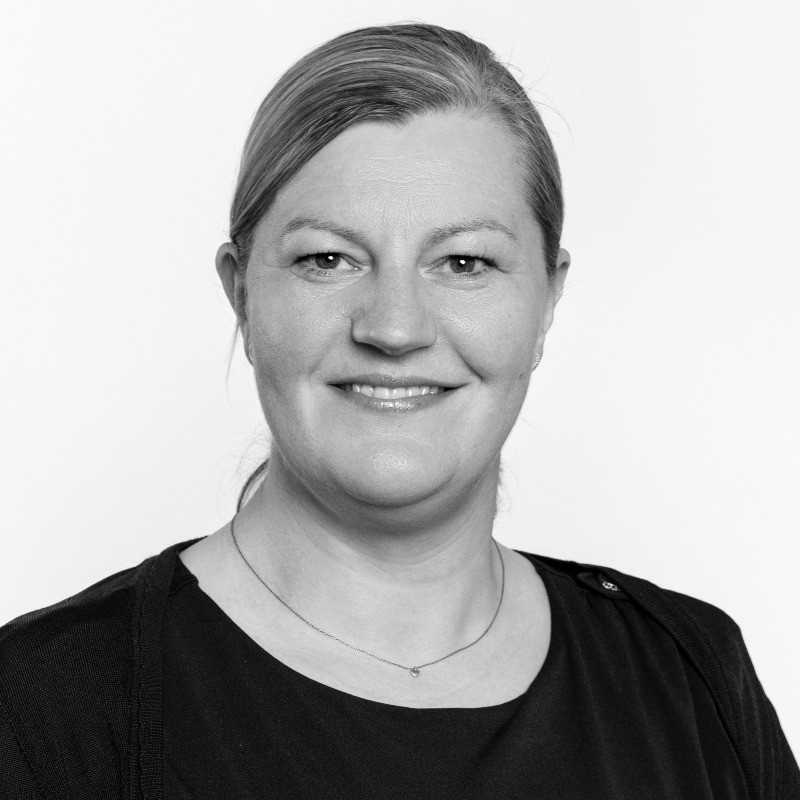
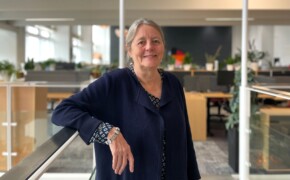
When senior consultant and research adviser Heidi Weje showed up for work on 1 March, she no longer had her office at the Department of Food and Resource Economics (IFRO) for the first time in many years. She was now part of the new administrative unit UCPH Research and Information Security.
She describes the shift as moving from one dream team to another — but also a farewell to daily researcher interactions.
Before the reform, Heidi Weje was the only person in her role at IFRO. She helped researchers with applications, collaboration agreements, external contacts, and all the admin that comes with the department’s many projects and grant applications. She was the link to that part of the operation that involves external funding.
»Quite a central role,« she says.
After the reform, some of her tasks moved to UCPH Research Funding Frederiksberg+, while other tasks remained — and that has consequences for a small department, she says:
»They’re already a small team, and some of the tasks I used to handle are now with the head of administration or the researchers themselves. That was never the intention of the reform.«
There are tasks that fall between the cracks. When the reform was designed, they didn’t make the divisions clear enough.
Heidi Weje, senior consultant
She has spent the past eight months figuring out what falls under her responsibility in the new structure — and what doesn’t. Those interfaces could have been much clearer, she says.
»There are tasks that fall between the cracks. When the reform was designed, they didn’t make the divisions clear enough. We simply don’t always know how far to take a task before passing it on.«
One example is collaboration agreements. Previously, Heidi Weje handled all the administrative work while the lawyers took care of the legal side.
Now the admin tasks are left to the researchers:
»It’s a shame. The tasks have been bumped up the ladder.«
Tasks related to government contracts and commissioned research are also at risk of falling through the cracks. This is a problem, as these make up a big part of department budgets.
»There are many tasks that lie between researchers, legal staff and the department — and no one really knows where they belong,« she says.
Her new area of responsibility is much larger. She used to support 160 researchers at the Department of Food and Resource Economics. Now she serves the entire Faculty of Science and Frederiksberg Campus. Back then, she was on her own in the job. Now she’s on a team where ideas, and tasks, can be shared.
»I used to be stuck with 400 applications, while at the same time someone else only had three. This is much better now.«
And on a personal level, the reform has brought on professional growth.
»I like working in that space where you support researchers with all sorts of things, so personally, I’m now doing more of the work I enjoy,« she says.
The biggest change, however, isn’t about the tasks — it’s about proximity, she says:
»I feel more distant from the researchers. I’m no longer invited to the same meetings, and we no longer bump into each other by the coffee machine or at lunch. Back then, researchers could just drop by my office if they were nearby — but that doesn’t happen now that I’m based in the main building on Frederiksberg campus.«
She knows how important it is to maintain close contact with academic settings, so she seizes on every opportunity to be on-site.
I take every meeting with the researchers at their place, and I have lunch with colleagues so that I’m still visible
Heidi Weje, senior consultant
»I take every meeting with researchers at their place, and I have lunch with colleagues so that I’m still visible. It can be done, but at a big place like UCPH, changes take time«
Looking back, there is one thing in particular she wishes had been done differently:
»If management had decided on a 1 June start date, there would have been more time to identify the gaps and to define the interfaces properly,« she says.
Several units lacked staff during the start-up phase, she explains. Including the research funding unit on South Campus.
»They’ve had to recruit new staff, and it takes time to build a unit from scratch. Researchers feel this too. Here on Frederiksberg campus, we’re all running faster because we’re helping other units while also building up our own. This affects how well we integrate with the research communities,« she says.
This article was first written in Danish and published on 11 December 2025. It has been translated into English and post-edited by Mike Young.