
Universitetsavisen
Nørregade 10
1165 København K
Tlf: 35 32 28 98 (mon-thurs)
E-mail: uni-avis@adm.ku.dk
—
Science
Breakthrough — An internship in Australia set off a research project on functional disorders. Now, two Danish students have published their results in one of the world’s leading medical journals.
One day, as Emma Johanne Poulsen Siig was having dinner at a conference with some colleagues, her conversation partner stood up, tapped their glass, and announced to the whole room:
»This woman is about to get an article published in The Lancet!«
Blushing, Emma Johanne Poulsen Siig realised that this was, in fact, a big deal.
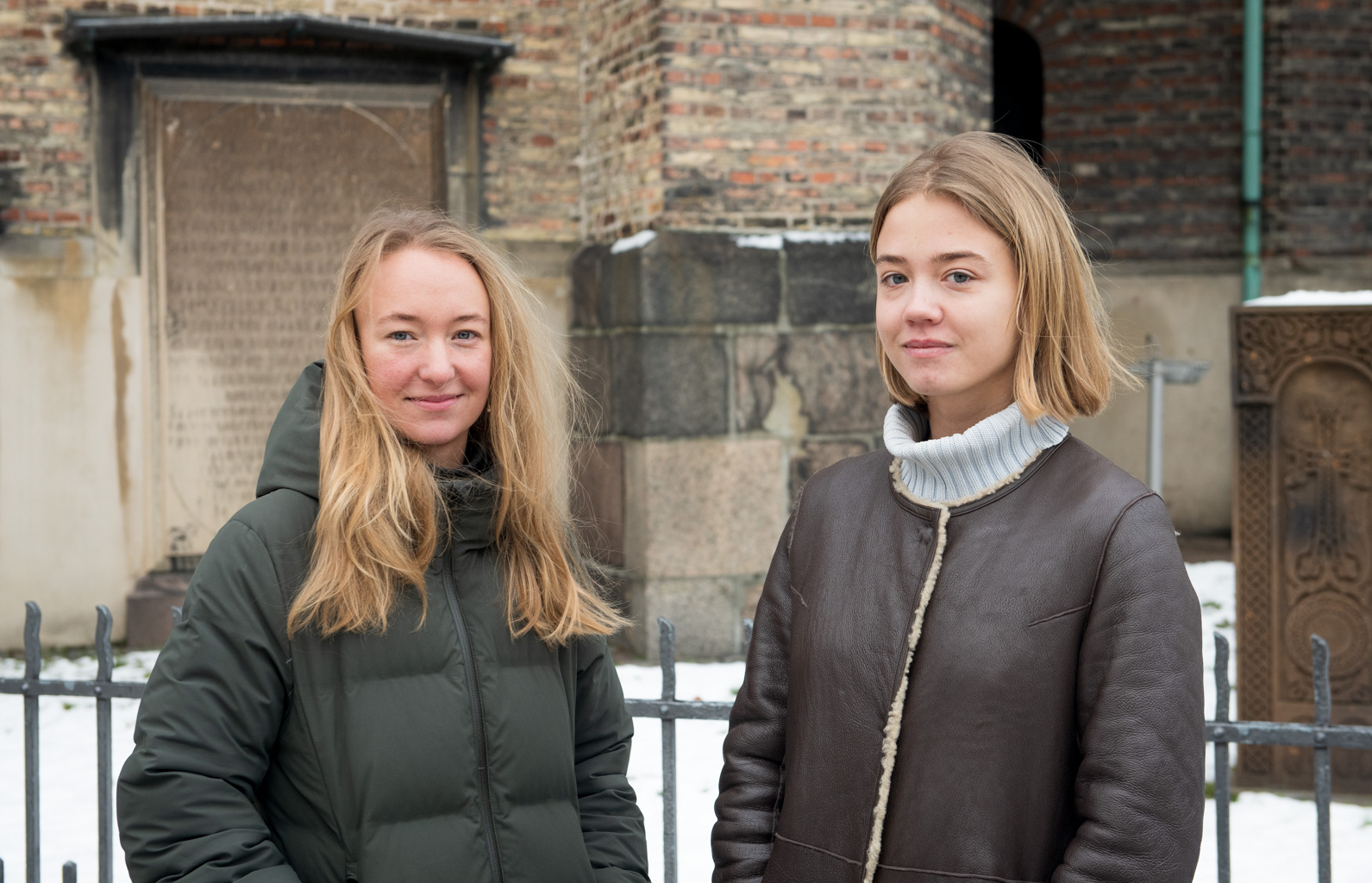
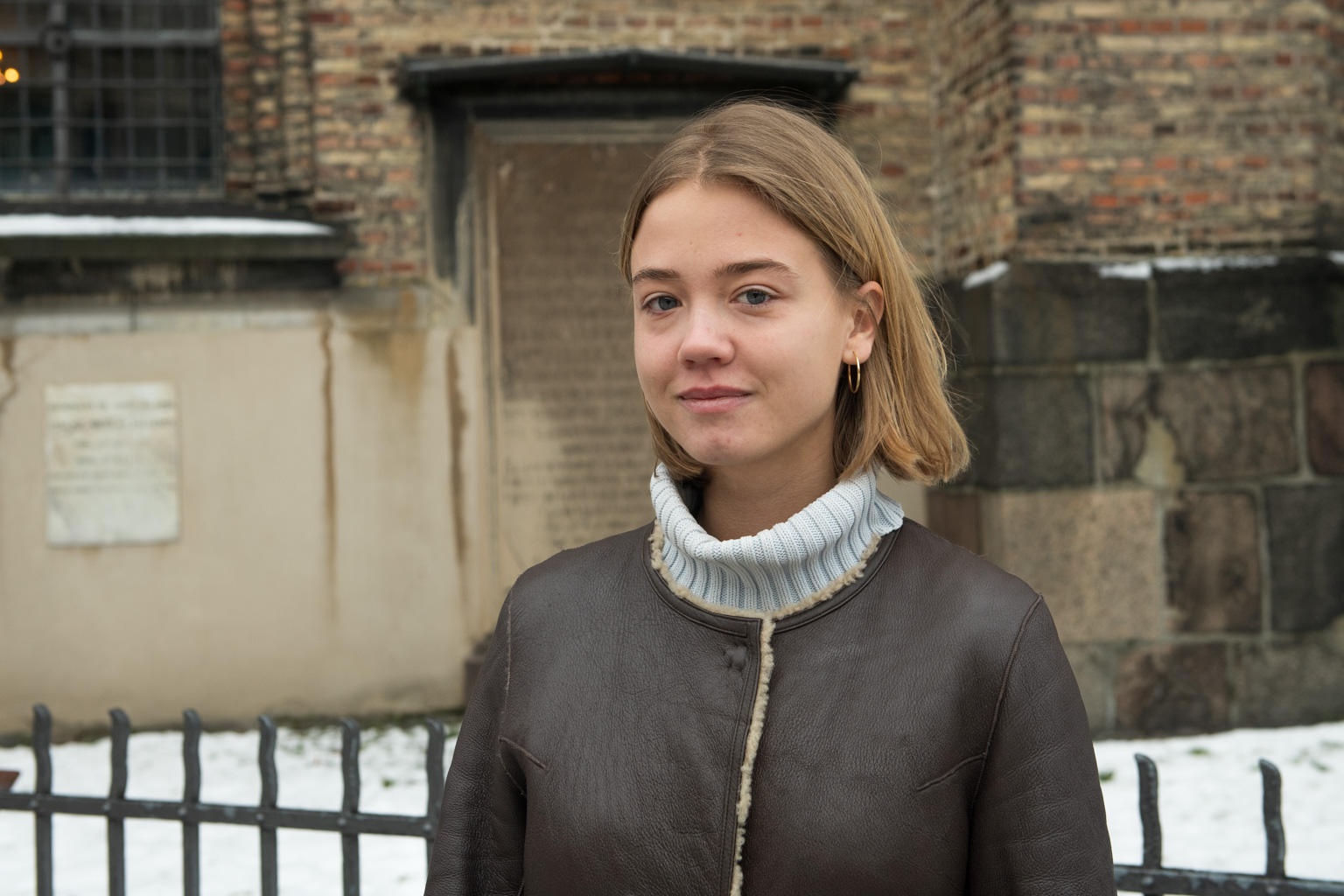
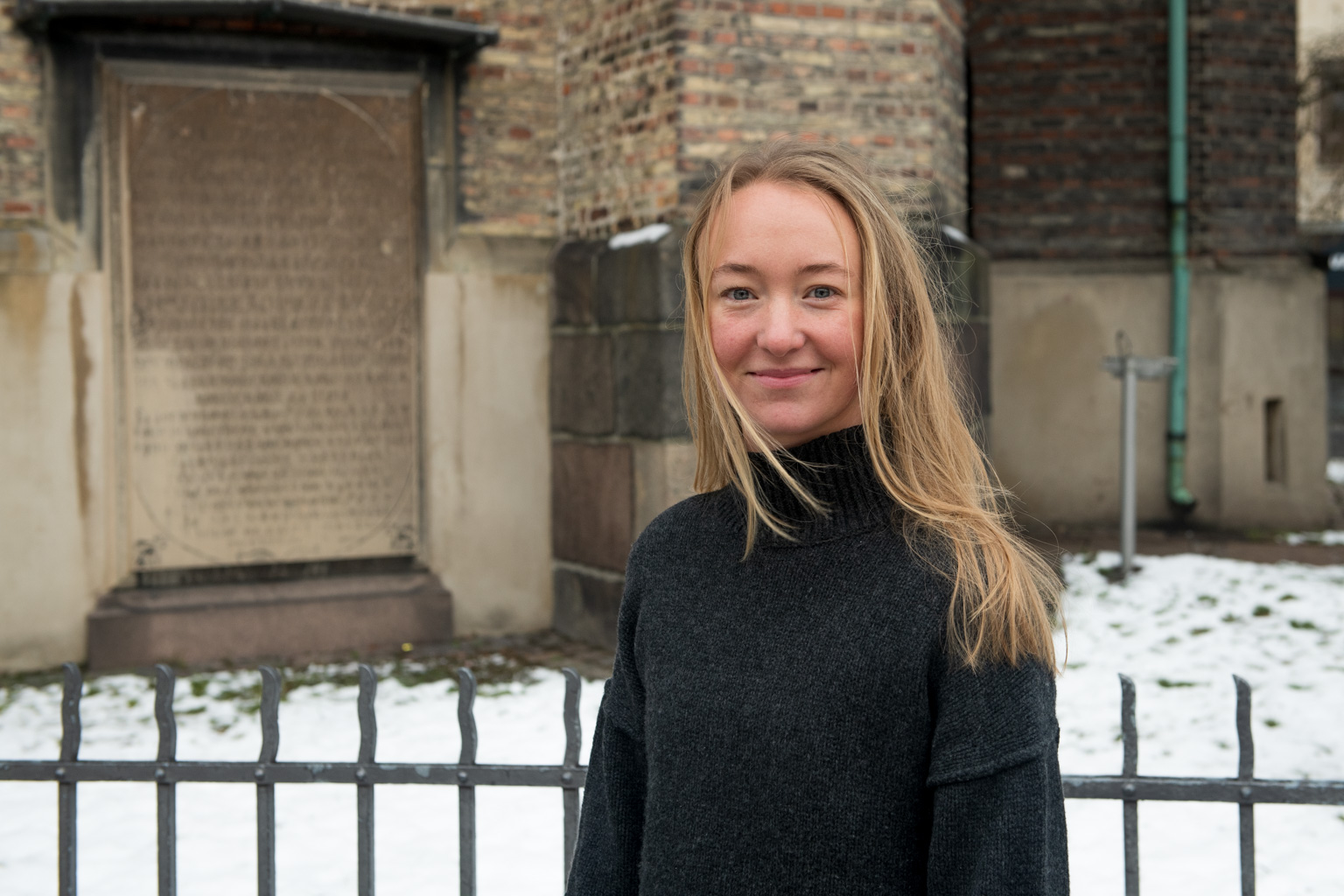
Emma Johanne Poulsen Siig and Viktoria-Maria Hvidtfelt Lykke are master’s students on the Public Health programme at the University of Copenhagen (UCPH). In the autumn, they had a scientific article based on their bachelor’s project published in the international journal The Lancet Psychiatry — one of the most prestigious and influential medical science journals in the world.
So how did it all come about?
Emma Johanne Poulsen Siig and Viktoria-Maria Hvidtfelt Lykke take a seat in the University Post’s kitchen, trying to shake off the winter chill. They are in the middle of their exams — together. They have written nearly all their assignments together since they met on the very first day of intro week more than four years ago. They have done internships together, postponed courses together, and soon they’ll be going on exchange to Tokyo — together.
Now, after a year and a half of work alongside their studies and student jobs, they’ve published an article in a respected international journal. Something that only a few students can put on their CV.
»We’ve talked a lot about how important it is to have a partner in this,« says Emma Johanne Poulsen Siig. »Because there are seriously so many tough and gruelling hours involved. Hours that are hard to get through if you are on your own — especially when you don’t know if the work will ever pay off.«
Viktoria-Maria Hvidtfelt Lykke, sitting next to her, adds:
»Emma and I sometimes had to get up in the middle of a lecture and go out into the hallway to respond to comments from researchers who were peer-reviewing the article — because it had to be done right there and then.«
For Emma Johanne Poulsen Siig, publishing a scientific article wasn’t something she had ever considered when she started studying. Viktoria-Maria Hvidtfelt Lykke felt a bit differently:
»I had the idea early on that it would be really cool to try and publish something. I was thinking about all the exciting and ambitious things you could do during your studies.«
It was her idea that took the two students to Australia for an internship at the Queensland Centre for Mental Health Research. Here, a group of researchers work on the globally recognised Global Burden of Disease study, which aims to map out groups of diseases and their overall burden on public health.
»We just wanted to go somewhere cool, so we went down there with a pretty naïve mindset. We figured they would assign us all sorts of tasks,« says Viktoria-Maria Hvidtfelt Lykke.
But they were soon introduced to the project and tasked with examining a disease group that the researchers had not previously analysed: functional disorders — also known as somatic symptom disorders. Suddenly, they were in the middle of an inspiring international research setting and began to wonder whether their work could be turned into a scientific paper.
But first, it had to become a bachelor’s project.
»There are completely different requirements for a bachelor’s project and a scientific article. For the bachelor’s, we had to place our results in a Danish and public health context,« Emma explains:
»We had a period where we collected data and read a ton of literature. Then we wrote the bachelor’s project, and afterwards we rewrote the whole thing into a paper.«
In Australia, they got a supervisor, Damian F. Santomauro, who is also co-author on the article and who became a key person in the project’s future. He saw potential in their data and encouraged them to pursue it further.
»He was very ambitious on our behalf,« says Viktoria-Maria Hvidtfelt Lykke.
Back in Denmark, they chose a bachelor’s supervisor, Terese Sara Høj Jørgensen, who has previously helped students publish projects. She also became co-author on the article.
After handing in their thesis, they spent the next year and a half working evenings and weekends to turn the project into an article suitable for publication in an international journal. This included undergoing peer review by experienced researchers.
The researchers in Australia had previously published in The Lancet, so it seemed natural to aim for that. A meeting was held first, however, to discuss whether they should start with a smaller journal to make the process easier. But they rejected the idea:
»We decided to go all in — we could always try somewhere else if we got rejected.«
The first draft was nearly rejected. They received extensive revisions and had to submit a new version.
»It wasn’t like they just said: ‘We’ll take it!’« says Emma Johanne Poulsen Siig.
READ ALSO: He has been ready for university, since he was 11
Back in Denmark, they began the rewrite. Nights out with friends had to wait, and waking up with a guilty conscience and a long to-do list became the new normal.
But the hardest part wasn’t the hours spent at the computer — it was the unpredictability. They never knew when the next feedback would arrive. Holiday week or work week? No clue.
How do you keep your spirits up when there are constant changes and you have no idea when it will all end?
»I think it helped that we didn’t know beforehand how hard it would be. That way, we could be a bit delusional,« says Viktoria-Maria Hvidtfelt Lykke.
»We had no idea it would be such a long process,« says Emma Johanne Poulsen Siig.
»No. We’ve often said to each other that we don’t know if we would’ve done it had we known how demanding it would be,« adds Viktoria-Maria Hvidtfelt Lykke.
As a researcher at a Danish university, you have working hours and a salary. But as students they didn’t.
»Looking back, it was pretty extreme. We were studying full time and working — and still trying to have a social life.«
They experienced it as their introduction to an academic world full of tacit rules. How do you respond to a respected researcher when you disagree? They learned that it takes both courage and a good sense of timing.
»As a student, you just want to do what you’re told. But we had to learn to trust our gut feeling. Our supervisor Damian was good at reminding us that it was our project, and that we knew it best,« says Viktoria-Maria Hvidtfelt Lykke. »That gave us confidence — I realised I could actually do this.«
When the final version of the article was due, Viktoria-Maria Hvidtfelt Lykke was on holiday in Naples with her family, while Emma Johanne Poulsen Siig was on a boat with no internet. The plan was that Viktoria-Maria would call Emma if anything needed changing — and Emma would quickly check it as soon as the boat docked.
And then … it was suddenly out.
Don’t keep that dream to yourself!
Viktoria-Maria Hvidtfelt Lykke
»It actually felt a bit anticlimactic,« says Viktoria-Maria Hvidtfelt Lykke. It wasn’t something they talked about at university, and after all, very few people read The Lancet Psychiatry on a daily basis and stumble across the article on their own.
But it has been noticed elsewhere.
At the conference, at job interviews. That’s where it became clear that the huge amount of work they had put into the article over a year and a half was being recognised and made an impression.
»I think it makes a difference if you want to go into research later on,« says Viktoria-Maria Hvidtfelt Lykke.
They both want to continue researching and publishing. They’ve developed a taste for it, they say. And they have one piece of advice for other students with the same dream:
»Don’t keep that dream to yourself! Reach out to people. Write to someone who’s published something you think is cool, and ask how you can get started yourself,« says Viktoria-Maria Hvidtfelt Lykke.
The importance of having good people around you who are ambitious on your behalf can’t be overstated when, as a student, you want to try your hand at publishing. They both agree on this. But it requires the courage to knock on a few doors and ask for help. And you should definitely feel free to do so, they say.
»I feel like we’ve only met people who really wanted to help us,« says Emma Johanne Poulsen Siig.
This article was first written in Danish and published on 15 January 2026. It has been translated into English and post-edited by Mike Young.