


Universitetsavisen
Nørregade 10
1165 København K
Tlf: 35 32 28 98 (mon-thurs)
E-mail: uni-avis@adm.ku.dk
—
Science
Research openness — 75 years after Niels Bohr’s open letter to the United Nations, researchers warn that science — once again — is caught up in a collaboration and security dilemma. New geopolitics initiative wants to help the university find its way in an era where research has to be both open and protected.
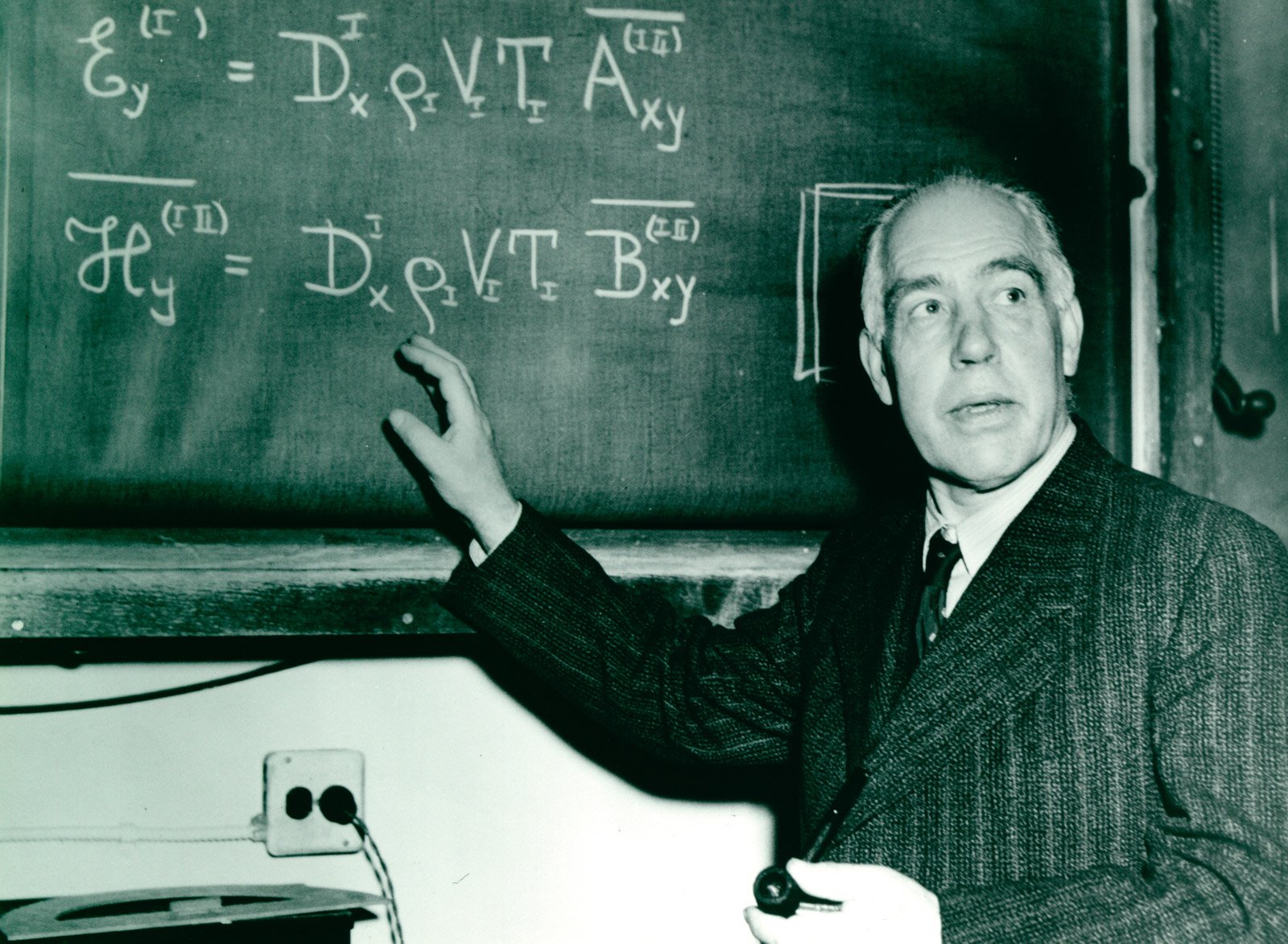
When the University of Copenhagen (UCPH) invited researchers and international experts to a conference on openness in research 19–21 November, it was framed around a historical document: Danish atomic physicist Niels Bohr’s open letter to world leaders from 1950.
The letter, written in the shadow of the nuclear arms race, insisted on one thing: Openness as a prerequisite for security.
According to one of the speakers — Danish Minister for Higher Education and Science Christina Egelund — that exact message »could just as well have been written today«.
In an op-ed on the Danish news site Altinget, she quotes Niels Bohr, who wrote in his letter that openness is a »primary condition for the progress and protection of civilization«, and that we also, once again, find ourselves in a technological dilemma, where knowledge can both improve and destroy the world.
It was this dilemma the conference organisers wanted to explore.
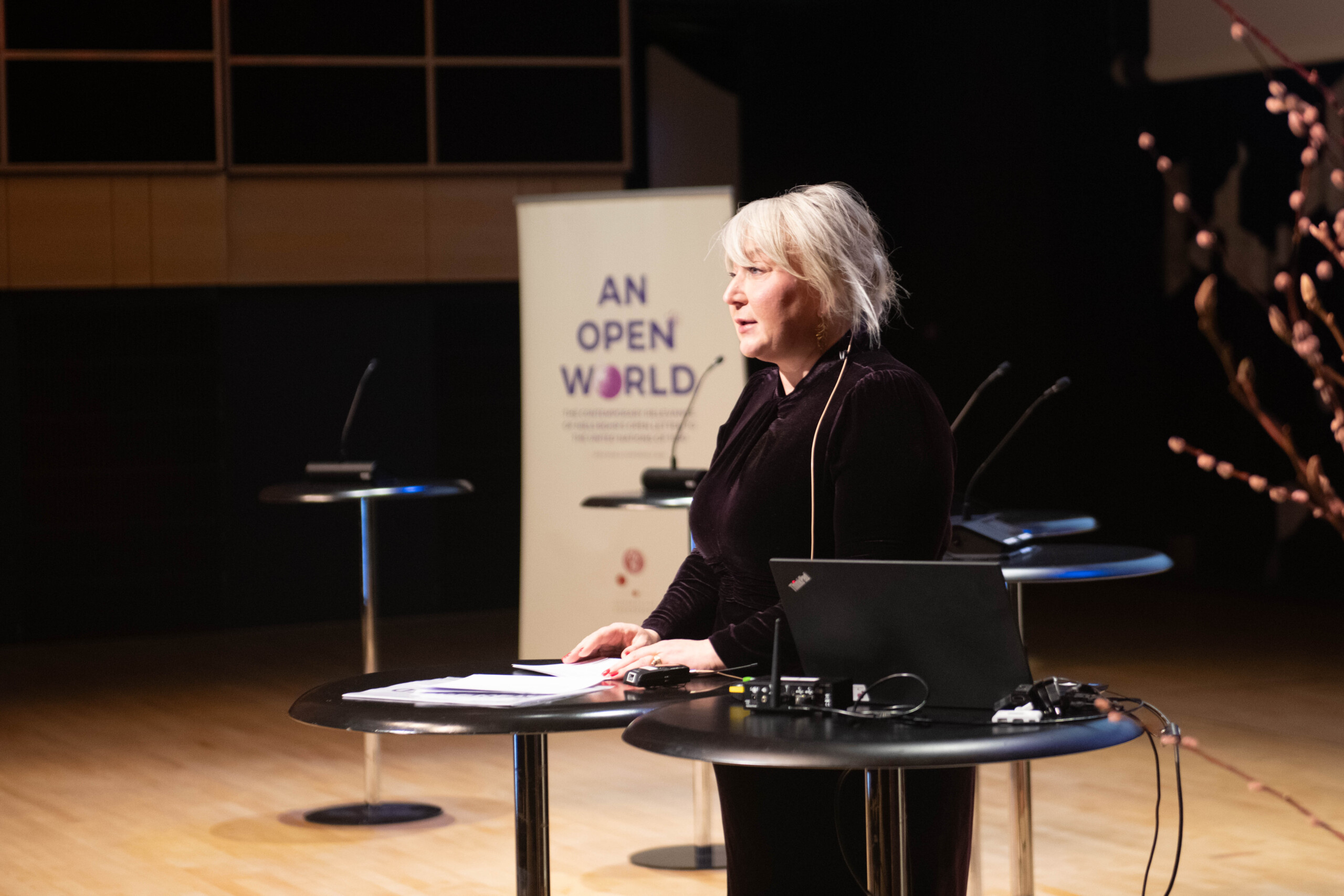
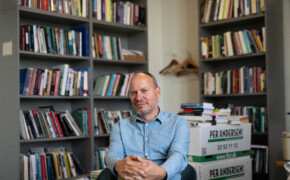
Theis Lange, head of the Department of Public Health at UCPH and one of the principal organisers of the conference, said in an interview with the University Post before the event that Niels Bohr’s dilemma is once again relevant — though now re-emerging in a modern technological context.
»It’s still about nuclear weapons. But now it’s also about climate change, AI, and things like this. But when it comes to the question of openness, the issues are similar: Who is science working for, and when?«
Theis Lange sees the world of research caught up in a global debate between openness and restriction that is fraught with dilemmas. We should not be naïve, according to him. But openness should be our guiding principle.
»We can’t share absolutely everything with everyone all the time. But the conversation should begin from a position of openness — not from one of fear.«
Collaboration with China has in recent years become a sensitive issue in the world of research.
The country is home to several top universities and is a global leader in numerous scientific fields. But there have also been cases of research espionage, abused research ties, and research repurposed for unintended purposes — including military use or mass surveillance.
READ ALSO: Warning of Chinese espionage: But Danish universities are still sending students to China
In a previous statement to the University Post, the Danish Security and Intelligence Service (PET) assessed that »the Chinese state is willing to go to great lengths to pursue its strategic interests in the scientific and technological fields, and that there is a risk of illegal or undesirable Chinese transfer of knowledge and technology, especially in the areas that China strategically prioritizes«.
In January, the heightened security situation prompted the Danish government to impose stricter controls on research collaboration with China in selected areas.
READ ALSO: Danish government puts new restrictions on Chinese research co-operation
The relationship with China was a key part of the conference programme. But despite changes to collaboration practices on the part of Denmark, Theis Lange warns against what he calls »overinterpretation«:
»When I talk to researchers across UCPH, some have got the impression that we can’t collaborate with China at all. That’s simply not true,« he says.
READ ALSO: University of Copenhagen steps up defences against espionage
The department head points to a new cooperation agreement from January 2025, where the minister emphasised that China remains an important partner — especially when it comes to research into the green transition.
This is why, according to Theis Lange, it is a problem if the research community’s default reaction becomes to withdraw from projects with China »just to be on the safe side.«
Another speaker at the conference was Ole Wæver, professor of international politics at UCPH.
Like Theis Lange, he is concerned about a scenario where researchers prioritise their reputation over their professional judgement.
»If decisions are not precise enough, we’ll end up in a situation where everyone pulls out of collaborations with the Chinese — just in case. And that’s just stupid.«
Both researchers point to the paradox that Niels Bohr had already outlined in his letter 75 years ago: Too much secrecy can be just as dangerous as too much openness.
READ ALSO: Deputy Director: International spying a future threat to research
While China took centre stage in the debate, it has lately been the uncertainty about the United States that haunts the research community.
US President Donald Trump launched a campaign against several US universities in the spring of 2025 which, observers note, affected academic freedom there.
Research in fields like diversity, gender, equality, and climate had to be adjusted to be in line with the president — or universities risked losing federal funding.
READ ALSO: Danish researcher: A fight for freedom is brewing at US universities
We need to ask one another what openness is, what the limits of openness are, and what we can learn from history.
The United States has withdrawn funding from a wide range of international research collaborations, something that Ole Wæver says is »catastrophic«.
»The Americans are pulling out of international databases and research infrastructure, and this undermines collaborations where they are key players,« he says.
Ole Wæver is not concerned about the international research community withdrawing from the United States — but rather that the Americans will disappear.
It is into this unpredictable landscape that the University of Copenhagen (UCPH) has launched its UCPH Geopolitics initiative that gathers researchers from across the university’s six faculties to share evidence-based insights on a world in turmoil.
»With UCPH Geopolitics, we are committing to put our knowledge to work — in public debate, in the media, and in the spaces where decisions are made,« Rector David Dreyer Lassen said in the press release that announced the new initiative.
For Theis Lange, the new effort is an example of UCPH taking the lead.
»We’re trying to be a bit more proactive and say: We have something that society needs. This is better than waiting for someone to come and ask us for something that ends up being even more narrowly defined,« he says.
In this way, according to the department head, the initiative evokes Niels Bohr’s original message: Openness should not be a passive state of affairs, but an active strategy.
Theis Lange hopes the conference has set off a conversation about how researchers and universities navigate this new reality.
»We need to ask one another what openness is, what the limits of openness are, and what we can learn from history,« he says, stressing that it won’t be easy.
Because this conversation — as both Niels Bohr and modern scholars argue — is essential.
This article was first written in Danish and published on 27 November 2025. It has been translated into English and post-edited by Mike Young.