



Universitetsavisen
Nørregade 10
1165 København K
Tlf: 35 32 28 98 (mon-thurs)
E-mail: uni-avis@adm.ku.dk
—
Working environment
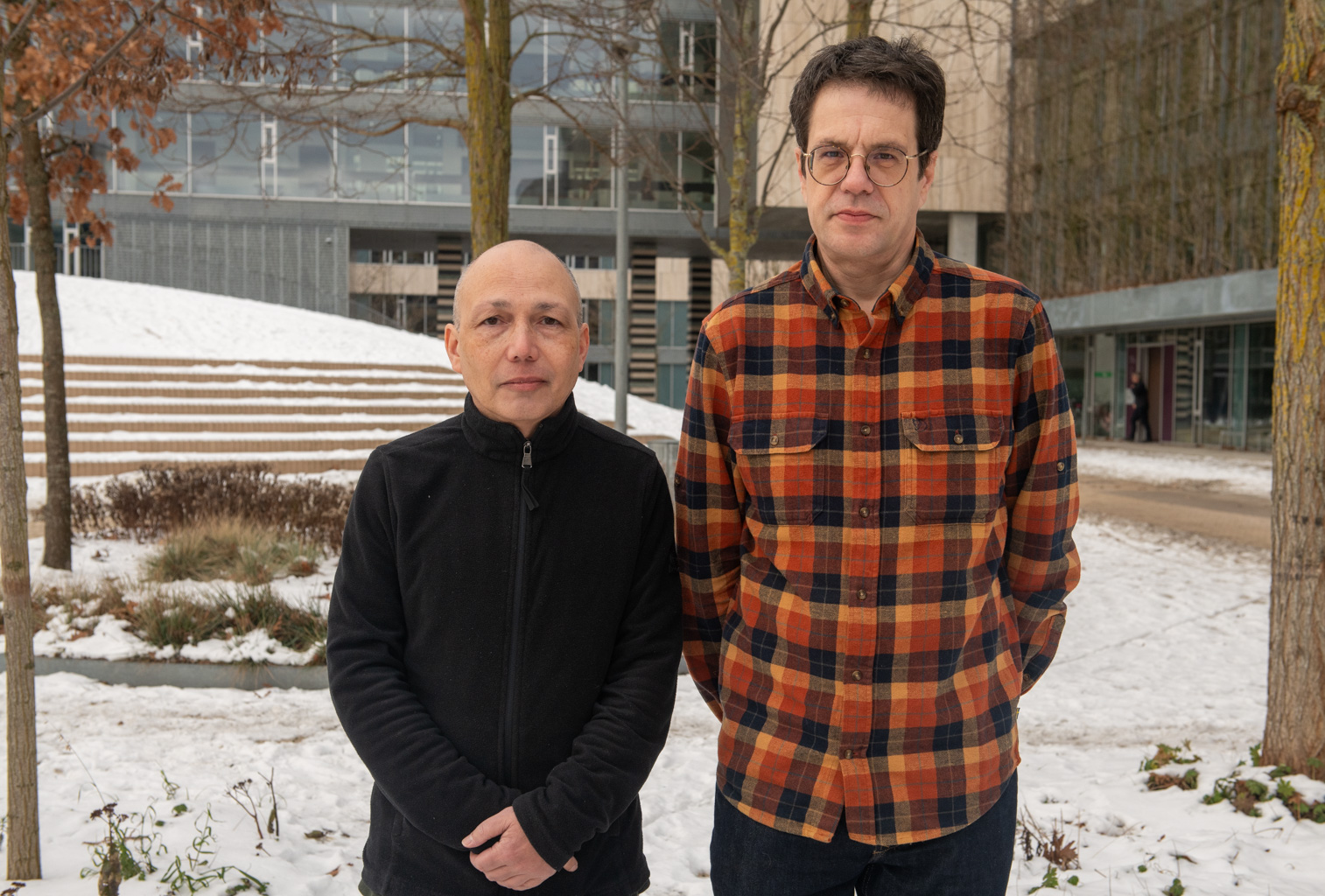
Precariat — When their contracts expire this summer, two popular literature lecturers at the University of Copenhagen stand to lose their jobs — or get stuck in positions without any allotted time for research. Their story is not just about them. It is about what research-based teaching should look like in the future.
The contracts of Michael Høxbro Andersen and Agus Djaja Soewarta at the Department of Arts and Cultural Studies at the University of Copenhagen (UCPH) are set to expire this summer. Department management would like to keep them on. But only in a job category that has no allocated time for research, and no real opportunities for career advancement.
Their situation is now the cause of a dispute between department management and staff representatives over working conditions, finances and — not least — what research-based teaching actually means in practice at the university.
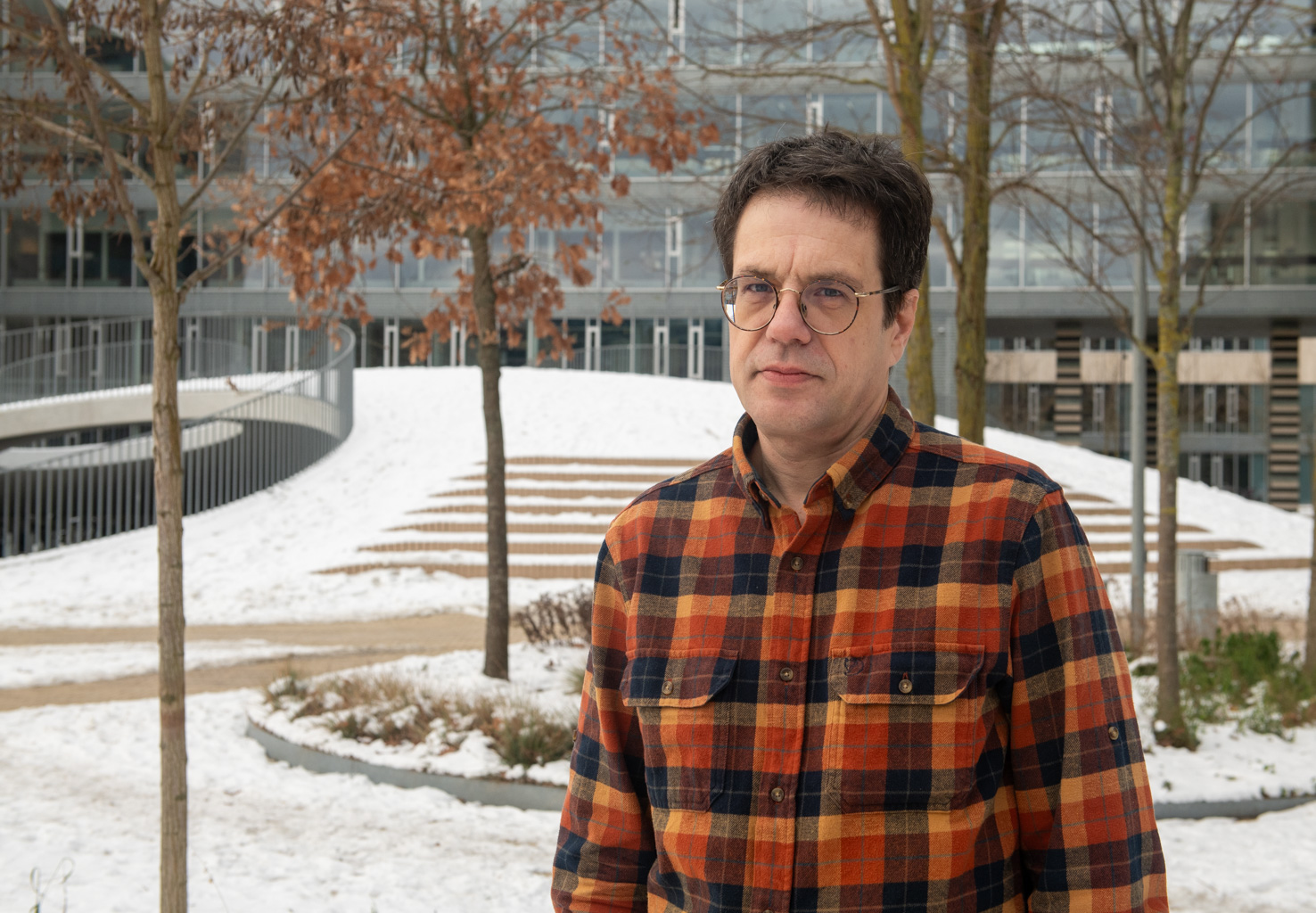
Michael Høxbro Andersen loves teaching. He loves the buzz of the classroom, and what he calls the interplay between the students, the texts and the present. He feels this is where he can actually make a difference. Sure, you can spend a long time writing a good academic paper, he says, even if it gets read by some people and praised by a few of them: But how much difference does it really make?
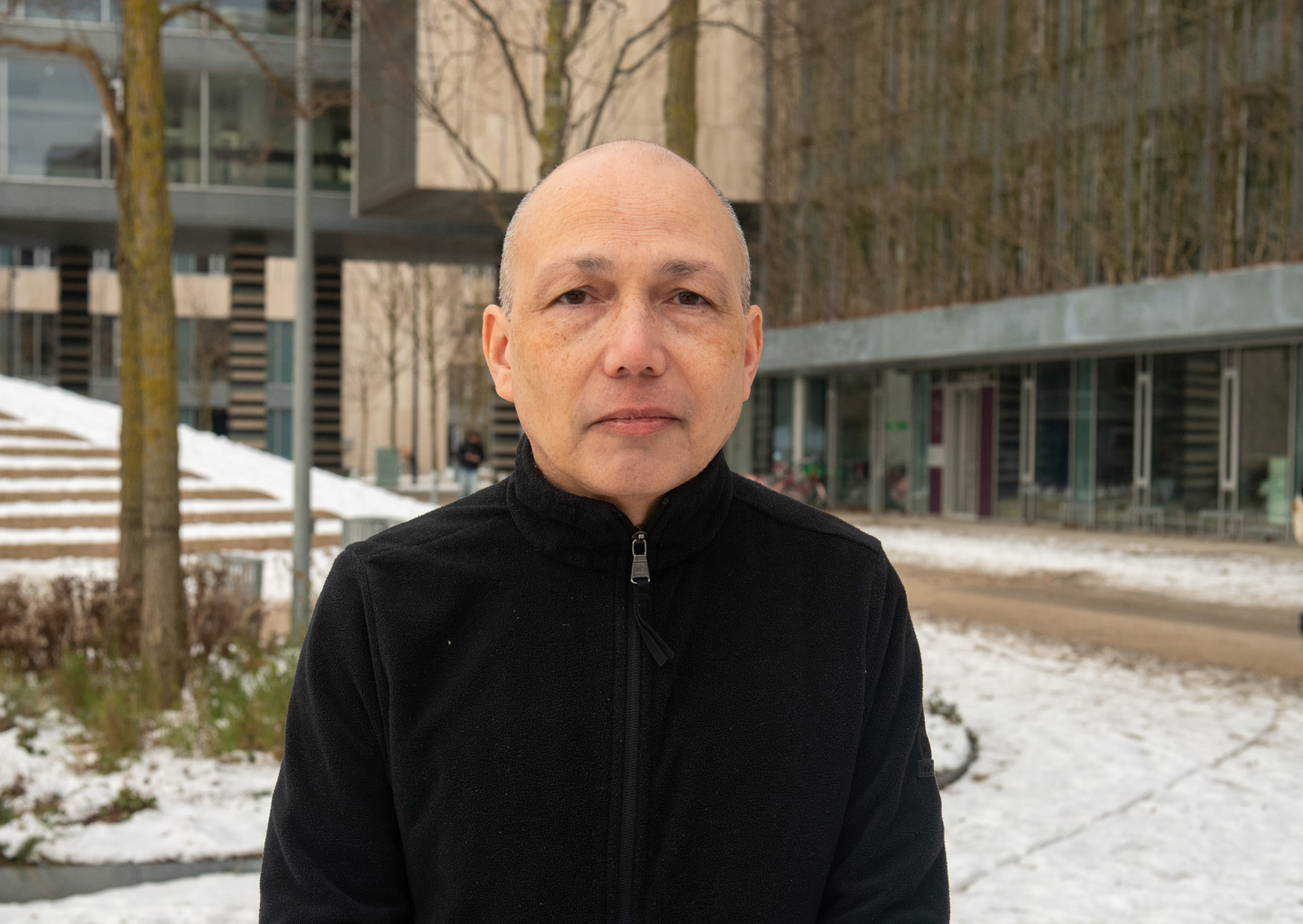
For his colleague Agus Djaja Soewarta, teaching is not just about communication — it’s part of an ongoing process of discovery. In his encounters with students, he gains insight into his own position as a lecturer. It always goes both ways, he says. How do you set up a space that is not overshadowed by traditional hierarchies, and where independent thinking can flourish?
Personally, I think teaching matters more to me than research.
Agus Djaja Soewarta
»Personally, I think teaching matters more to me than research. In one way, I see teaching as a type of research. You get so much out of your interactions with students,« he says.
READ ALSO: Petition launched for University of Copenhagen lecturers in contract limbo
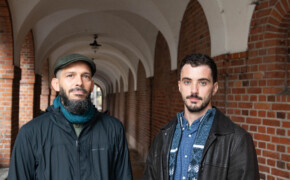
Michael Høxbro Andersen and Agus Djaja Soewarta have been key lecturers on the Literature programme for decades. They both now face the prospect of either having to leave the university when their contracts expire, or being retained in a position with no research time and no career outlook.
Michael Høxbro Andersen and Agus Djaja Soewarta are employed in the assistant professor category. For now. Their contracts run until the end of August this year, and it remains unclear whether — and how — they will be rehired.
Michael Høxbro Andersen has been teaching at UCPH since 2001, always in temporary positions.
»I have never had doubts that I would be rehired in some capacity. This time though, I have no idea what — if anything — I’ll be offered,« he says.
The department’s management wants to employ them as ‘teaching associate professors’. This is a job category with no allocated research time. You teach full-time, cannot supervise master’s theses, and are not allowed to teach research-based courses. The category is designed for methodology and practical subjects. On the Musicology programme, for example, teaching associate professors teach piano.
Before Christmas, a group of students launched a petition to keep the popular lecturers and to fight for decent working conditions on their behalf. The petition had 173 signatures at the time of this article’s deadline.
The study board for Literature has been asked by management to come up with a list of courses that are not research-based and which a teaching associate professor could teach. The problem is, there are no practical subjects in the Literature programme.
»The paradox is that no one actually wants to get rid of us. The department head wants to keep us, the union rep wants to keep us, and the students want to keep us,« says Agus Djaja Soewarta.
»But we’ve ended up in a dilemma that’s not just about us. It’s about how a university is run.«
READ ALSO:»No matter what I do, I won’t get a permanent position«
Tue Andersen Nexø is an associate professor and union representative at the Department of Arts and Cultural Studies. He says it comes down to the department’s finances.
The department has to cut six to eight per cent of its budget in the coming year — the equivalent of three to four positions. But it is already struggling to cover the teaching needs.
»In conversations with management, I get the impression that they basically want Agus and Michael to do the same work as the rest of us — that is, to deliver research-based teaching. But the Ministry’s regulations clearly state that teaching associate professors may only teach tools-based courses, practical subjects or introductory courses that are not based on recent research,« says Tue Andersen Nexø.
Research is essential if you want to get through the eye of the needle to an associate professorship.
Michael Høxbro Andersen
Or, as Michael Høxbro Andersen puts it: »The problem is that there’s no job category for people like Agus and me.«
When Michael Høxbro Andersen and Agus Djaja Soewarta were hired in 2024 under assistant professor-like conditions, there was, according to the union representative, a clear expectation that tenure track positions would be advertised in the autumn of 2026 — positions they could apply for.
But in the meantime, the department has run a deficit, and management now wants to rehire them as teaching associate professors — a cheaper job category.
»A teaching associate professor is cheaper for management because they can cover more teaching hours. This isn’t about new teaching needs — it’s about getting teaching capacity more cheaply,« says the union representative.
READ ALSO: »It would be nice to know that the university felt a sense of obligation towards me«
Even if permanent positions were advertised, the two lecturers don’t feel they’d be strong contenders. The reason is simple: they’ve spent most of their working lives teaching.
»When you teach that much, you’re tired when you get home. You don’t just sit down and do research. And research is essential if you want to pass the tough selection for an associate professorship,« says Michael Høxbro Andersen.
Agus Djaja Soewarta agrees.
»We struggle to compete for researcher positions because we haven’t had the opportunity to build up long publication lists,« he says.
The truth is that even on a good day, the prep time never seems to be enough.
»Everyone — even the most experienced — agrees that the preparation time you get per teaching hour is completely inadequate. No one can make it work,« he says.
For associate professors on a permanent employment contract, preparation time eats into their allotted research hours. They have to apply for external funding to be released for research. And this, in turn, means that someone else has to cover their teaching. And that’s where a lecturer that has no allotted research time becomes a convenient way out.
READ ALSO: Associate professor: The world of research is »vicious«
According to Tue Andersen Nexø, the use of teaching associate professors could set a dangerous precedent.
»If we accept that large parts of the teaching are done by lecturers with no time for research, we undermine the model of research-based teaching. This sets a precedent,« he says.
»If teaching associate professors can be used in the same way as associate professors and professors, there won’t be any new permanent hires in these categories for many years to come,« he says.
Tue Andersen Nexø understands that the department is under financial pressure. What he doesn’t understand is why that pressure should always impact staff working conditions.
»I find it hard to understand employees always have to accept worsening working conditions, when there are other options on the table. My impression is that management is willing to take liberties with the guidelines on using teaching associate professors just to make the budget work,« he says.
Michael Høxbro Andersen has been employed at UCPH since 2001. What do you think about the fact that, after 25 years, he still doesn’t know whether he’ll have a job this summer?
»It’s horrendous. I think the various university managers over the years should do some serious soul-searching and ask themselves whether they really believe this is good staff care,« he says, adding that both Michael Høxbro Andersen and Agus Djaja Soewarta are more than qualified for research positions.
»There are always more people who want a research position than there are jobs available, and the university exploits this by leaving some staff to fend for themselves with low pay. Management will say that they can’t afford to offer permanent jobs to Agus and Michael — but in reality, we depend on them. We are understaffed in the Literature programme, and there simply aren’t enough people to cover the teaching,« he says.
READ ALSO: »I felt that the work was the most important thing in the world. But the coffee tastes better now«
Neither Agus Djaja Soewarta nor Michael Høxbro Andersen wishes to criticise department management. On the contrary, they feel they are supported. The problem is structural, they say.
But they are worried.
If Agus Djaja Soewarta is offered a teaching associate professor position, he will likely accept.
»It’s also about unemployment. Teaching at university is pretty much all I know how to do — and I’m not exactly getting any younger,« he says.
Michael Høxbro Andersen is a bit more hesitant.
»In theory, the offer could be so poor that I’d have to turn it down. But it does get to you, that you cannot make any long-term plans.«
He still hopes the department can find the money to post openings for permanent roles with allotted research time. For him, the issue isn’t just about his own future:
»When people are lost like this, we stand to lose the very foundation of the discipline: that literary scholars teach literature.«
The University Post presented the criticism raised in this article to the head of department at the Department of Arts and Cultural Studies, Helle Munkholm Davidsen. She declined to be interviewed but provided the following written statement:
»I’m pleased to hear that students value their lecturers. We always strive to retain talented teachers and to provide them with the best possible conditions within the rules and the financial framework that we have as a department.«
This article was first written in Danish and published on 22 January 2026. It has been translated into English and post-edited by Mike Young.