




Universitetsavisen
Nørregade 10
1165 København K
Tlf: 35 32 28 98 (mon-thurs)
E-mail: uni-avis@adm.ku.dk
—
Campus
Escalation — Nearly two years ago, five University of Copenhagen students and Greta Thunberg were arrested during an attempt to blockade and occupy Rector's administration building. Now, they are facing trial in a case they fear will have consequences reaching far beyond themselves.
It was a little after eight on a Wednesday morning when six people were escorted out of the Museum Building at Frue Plads by heavily armed police officers.
One by one. Hands zip-tied. Arrested.
One of them was the world-famous climate and human rights activist Greta Thunberg. The other five were students at the University of Copenhagen.
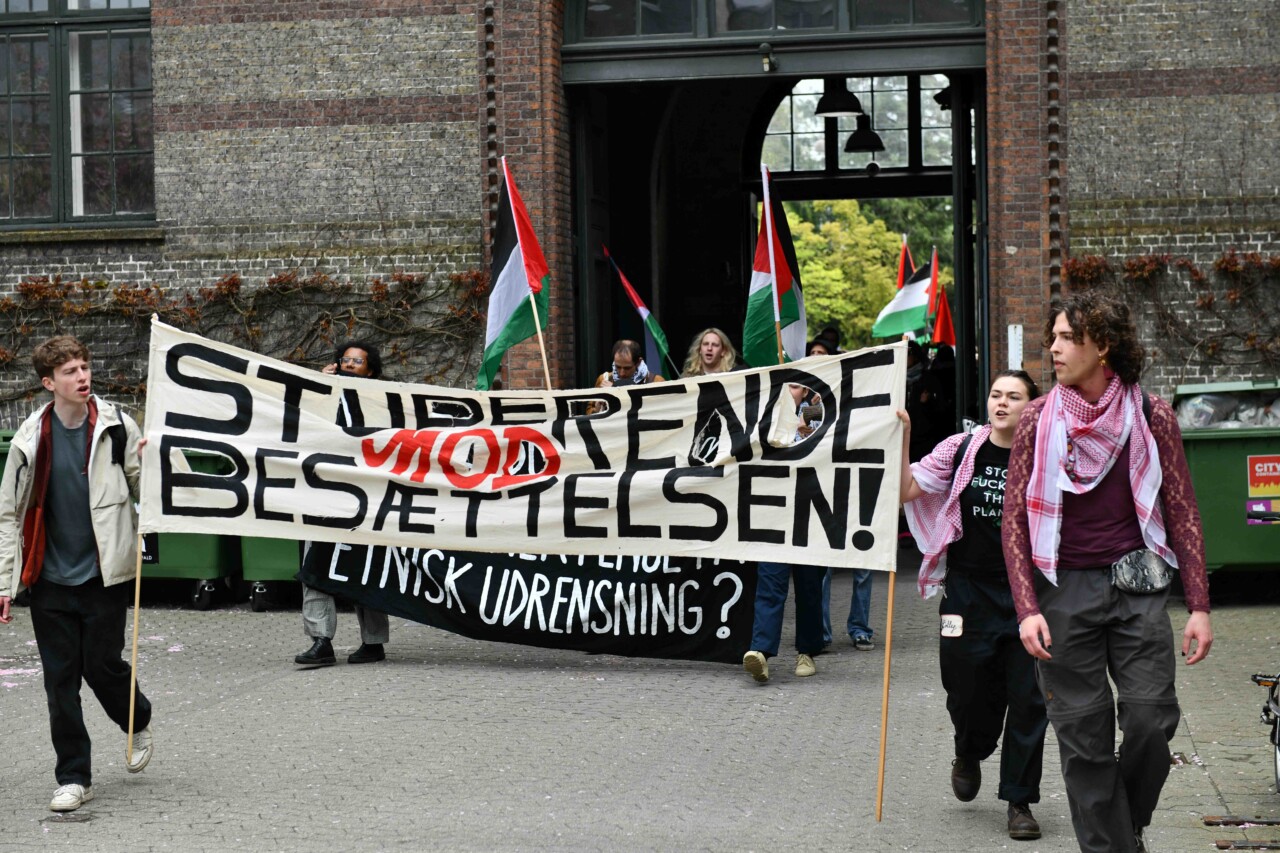
It was the 4th of September 2024. Earlier that morning, a group of students from Students Against the Occupation had attempted to block and occupy the administration building, also called the Museum Building, in an effort to pressure the university to adopt an academic boycott of Israeli universities.
Now, almost two years later, the six individuals have been summoned to court. They are charged with trespassing and risk both fines and criminal records.
They themselves believe they took part in a legitimate student protest. And they fear the case could have consequences reaching far beyond their own situation.
»This is not about us as individuals, but about students’ democratic rights. If we are found guilty in court, then student blockades will de facto become criminalized,« says one of the defendants, Özgür Yegâh, who studies Education at the University of Copenhagen.
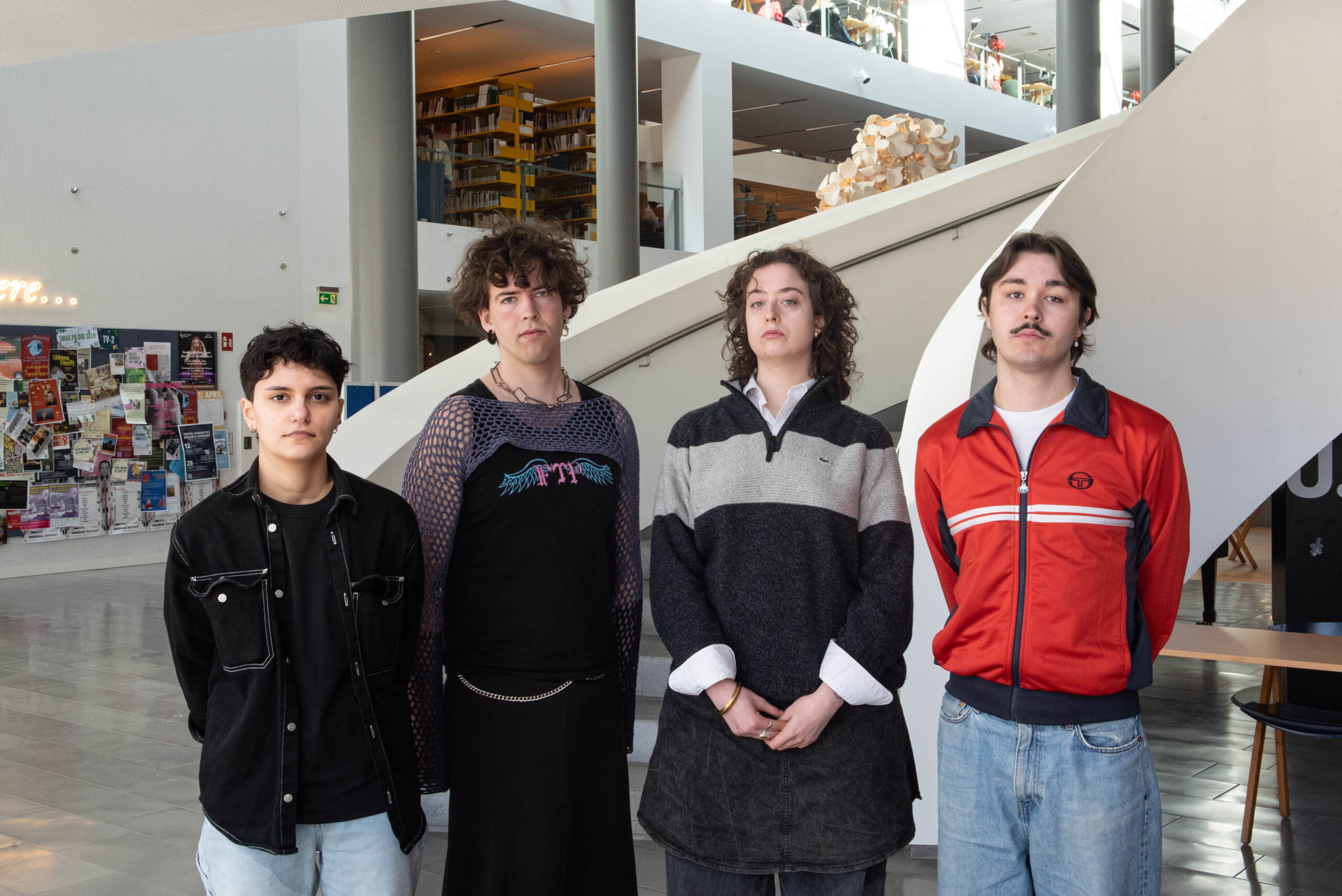
Uniavisen spoke with four of the five students: Aleksandra Milanović (Film and Media Studies), Magnus Munk (Political Science), Emil Nielsen (Philosophy), and Özgür Yegâh (Education). It has not been possible to reach the fifth student.
Here, the four students share their side of a case they believe could prove decisive for the future of student activism.
To understand the background of the court case, which is set to be decided in June 2026, we must return to the events of September 4th, 2024.
The occupation began shortly after seven in the morning. In an internal survey seen by Uniavisen, University of Copenhagen employees said that 10–15 masked demonstrators suddenly appeared inside the building housing the university leadership and administration.
How they gained access remains unclear. The main entrance had not yet opened, and the remaining entrances require keycard access.
According to the university leadership, an employee contacted the police because they felt unsafe.
READ ALSO: Student protesters blockade central University of Copenhagen buildings
Aleksandra Milanović, Magnus Munk, Emil Nielsen, and Özgür Yegâh claim they were not among the activists who forced their way into the Museum Building early that morning.
They all arrived later — at different times — they were not masked, and they could »walk straight in,« as Özgür Yegâh puts it. Yegâh arrived together with a couple of other students.
»On our way in, we ran into a few employees and told them that the building was occupied. They took it completely calmly. One of them handed me a bag of milk and asked if I would put it in the fridge for her. So I did.«
Emil Nielsen also arrived at the building later. He spoke with several employees, and he says that some of them expressed irritation about the students’ action.
»One employee said the blockade was inconvenient because an auditor from Deloitte was coming that same day. We replied that we were very sorry to hear that,« says Emil Nielsen, with an irony he makes no effort to conceal.
He also says that one employee refused to leave her office, so she stayed there. None of the students objected to that.
»We had drawn inspiration from other historic student blockades — the rector blockade in 2013, the HUM blockade in 2019, and the psychology blockade in 2022. In those cases, students also asked employees to leave their workplaces, or physically kept them out using things like air mattresses. I don’t see how this was any different, and it was not my impression that anyone felt unsafe,« says Emil Nielsen, while Özgür Yegâh adds:
»I know the university leadership would like to create an image that we were hostile toward employees, but that is not at all how we experienced it.«
In retrospect, you could say that we never should have done it. But that’s difficult, because we saw it as a completely legitimate action — and we still do
Do you acknowledge that it may have been an unsettling experience for employees to suddenly find masked people at their workplace telling them that the area was occupied?
»The intention was never to make employees feel unsafe. When some students chose to wear masks, it was solely because they feared being sanctioned by the university for exercising their democratic right to protest,« says Özgür Yegâh.
Magnus Munk tells Uniavisen that he spoke with two employees, wishing them a good day. Aleksandra Milanović says she did not speak to anyone at all.
By different routes, the four students eventually ended up together in an empty room on the first floor. They were all in roughly the same area of the building when armed police entered.
From the window, Emil Nielsen could see students being escorted out of the building one by one. He shouted chants down to the people gathered in the street: »What do we want?« And the students assembled below responded: »Justice!«
Magnus Munk was standing in the hallway and watched the police force move up the stairs:
»I just thought, okay, shit, man. There were rifles, battering rams, dogs. It was literally the counterterrorism unit they had sent in. Insane,« he says.
The students locked the door to the room they were in because, according to Özgür Yegâh, they became frightened and »panicked« over the dogs and loaded rifles heading toward them. And Aleksandra Milanović says:
»It was completely coincidental that I ended up in the room together with the others and Greta (Thunberg, ed.). I didn’t even know she was there. I was just trying to stay calm and make sure no one had a panic attack.«
And this is where we return to the beginning of the story:
The students were arrested, their hands bound with zip ties behind their backs, escorted out of the building, and taken to the police station, where they were held in custody for between five and seven hours before finally being released. An experience Özgür Yegâh describes as »super traumatizing.«
However, the ordeal was far from over for the arrested students. In the months that followed, each of them was summoned to internal disciplinary proceedings at the University of Copenhagen for violating the university’s code of conduct.
The first summons arrived for Özgür Yegâh. It came a week after they had spoken to Uniavisen about their experience with the police and the arrests.
»At the time, I considered whether I should speak to the media at all. But I thought our experience was unprecedented, so the story needed to be told. I had never imagined that I would be summoned to disciplinary proceedings because of an article in Uniavisen — but that’s what happened,« says Özgür Yegâh.
The three other students were not summoned until several months later, after the university leadership had managed to identify them through various means.
Uniavisen has reviewed the documents in the cases. Aleksandra Milanović’s case file states that she was identified through a video published by Ekstra Bladet, where her face was matched with photos from Instagram. The University of Copenhagen had also received the names of those arrested from the police.
For the four students, the disciplinary proceedings resulted in written warnings for violating §1 of the university’s code of conduct, which states that students must not cause inconvenience to others. None of the cases contained evidence that they had behaved in a threatening or violent manner.
»For us, the written warning was solely about the action itself — not about our specific conduct as individuals. It was about the blockade as a tactic, and I think that’s unsettling,« says Emil Nielsen.
He emphasizes that neither he nor the three others took part in the actions the university highlighted as particularly problematic — including masking and the fact that some demonstrators forced their way into the building.
»Unfortunately, what we’ve almost learned from this process is that wearing a mask might be necessary next time. Everyone who wasn’t arrested and couldn’t be identified has avoided disciplinary proceedings,« says Emil Nielsen.
The four students are hesitant to speak out publicly again, and three of them answer yes when asked whether the incident and its aftermath have affected their continued participation in student activism.
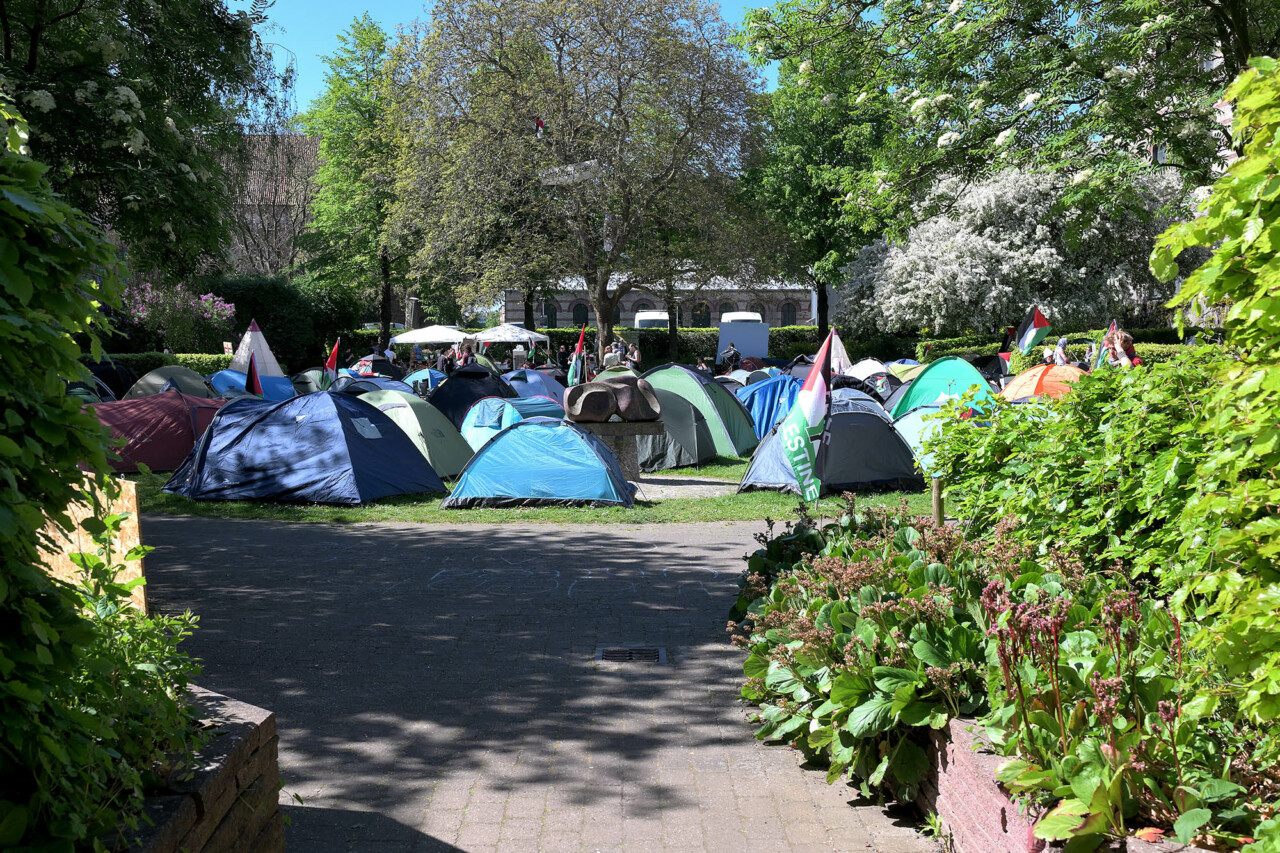
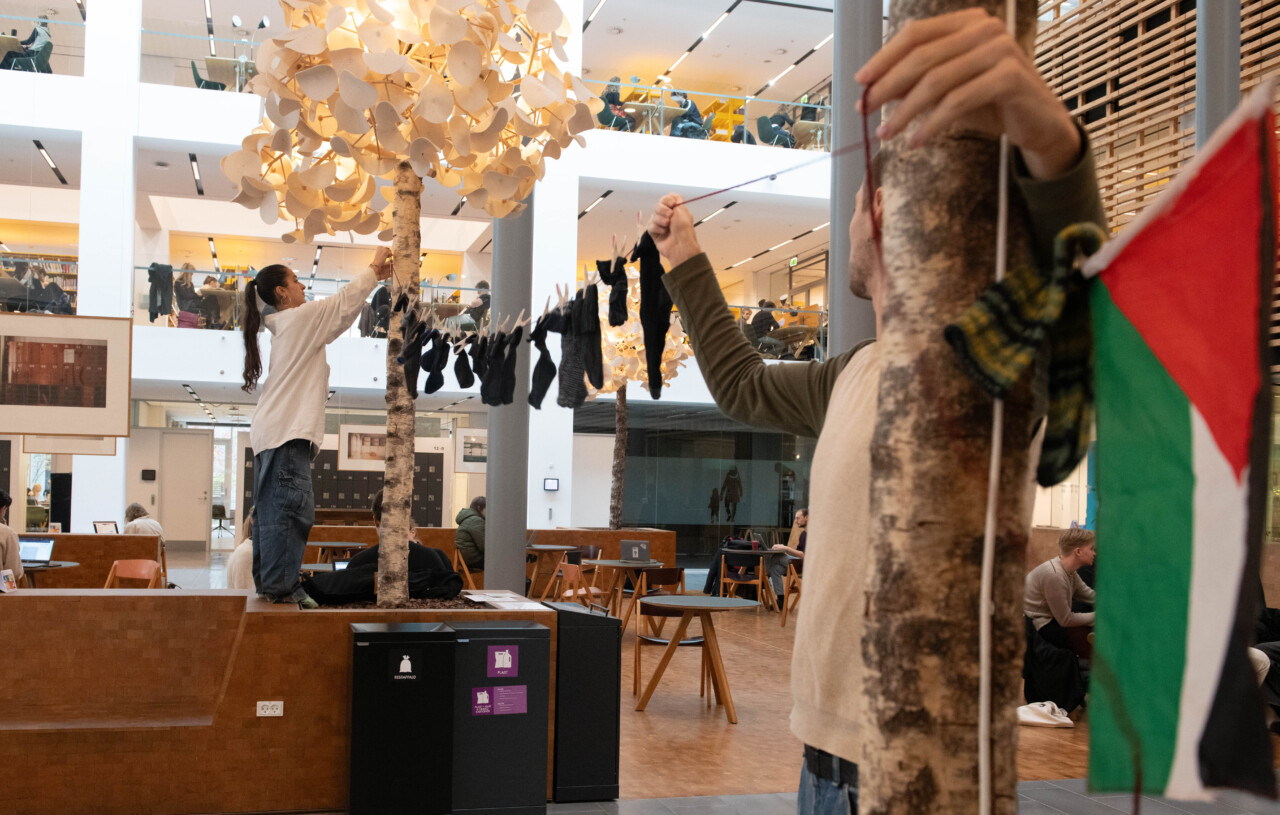
During the autumn and winter of 2024, students from Students Against the Occupation established “Hurriyeh Hall” — a series of actions involving an indoor tent encampment, garlands of socks, and Palestinian flags at South Campus.
READ ALSO: No more patience from UCPH management: These students may no longer demonstrate
At the time, the university leadership expressed a zero-tolerance policy toward the movement’s actions, and on several occasions the students were removed by police.
READ ALSO: No more tent camps and sock protests: Students against the Occupation evicted by the police
But although Magnus Munk, Emil Nielsen, and Özgür Yegâh sympathized with the actions, they say today that they no longer dared participate actively:
»During Hurriyeh Hall, I chose to leave because I couldn’t risk going through another disciplinary case and potentially being expelled from the university. My entire education — and even my housing situation — was at stake, because I live in student housing,« says Emil Nielsen, before Magnus Munk continues:
»I also visited Hurriyeh Hall several times, but I didn’t dare participate actively.«
For Aleksandra Milanović, however, the experience had the opposite effect.
»I wasn’t afraid of engaging in student activism on campus after being arrested. It only made me even more motivated to continue the activism,« says Milanović, who during Hurriyeh Hall acted as the movement’s press coordinator and focused on documenting events through photographs and video recordings.
We fear that the kind of student activism that has helped define the University of Copenhagen may no longer be possible
When you look back on the action on September the 4th, is there anything you wish you had done differently?
There is a brief silence.
»In retrospect, you could say that we never should have done it. But that’s difficult, because we saw it as a completely legitimate action — and we still do. And we think it’s very extreme that we are being punished for this both internally and externally,« replies Özgür Yegâh, before adding:
»We wish the University of Copenhagen would actively intervene in the case and explain to the police that the report filed on September the 4th, 2024 concerned a student blockade, not trespassing. Maybe that would strengthen our position in court,« says Özgür Yegâh.
The students say they are equally »surprised« and »horrified« that a student blockade has led to criminal prosecution.
»This is a historic event. When have students ever been prosecuted for engaging in student activism at the University of Copenhagen?« asks Özgür Yegâh, before Emil Nielsen continues:
»Before all the police operations directed at Students Against the Occupation in recent years, we haven’t been able to find any examples in history resembling this. We are deeply concerned about the shift we are witnessing. And we fear that the kind of student activism that has helped define the University of Copenhagen may no longer be possible.«
He continues:
»We want to protect students’ right to engage in student politics. We are part of a tradition that has inspired me throughout my life. It is a tradition that has won many democratic rights, and I fear the struggle is lost if we do not speak out.«
Kristian Lauta, Prorector for Education, told Uniavisen that there is certainly no tradition of students forcing their way into buildings early in the morning while wearing masks. What is your response to that?
»There has long been a tradition of students enjoying an expanded freedom of expression on campus. Occupying buildings has been a tool in many student protests throughout history, most recently during the HUM- and Psychology blockades, where no students were met with disciplinary sanctions or armed police,« says Özgür Yegâh, continuing:
»During the action in the Museum Building, it was made clear that we were students precisely in order to create a sense of safety.«
Uniavisen has spoken with Prorector for Education Kristian Cedervall Lauta about the ongoing court case. You can read the interview here.
READ ALSO: Prorector: Students crossed the line in blockade attempt
The question of whether the students will be found guilty will be decided at Copenhagen City Court on the 24th and 25th of June, 2026.