
Universitetsavisen
Nørregade 10
1165 København K
Tlf: 35 32 28 98 (mon-thurs)
E-mail: uni-avis@adm.ku.dk
Section
Economists can and should work for the common good. This is according to Nobel Prize winner Jean Tirole, who will visit UCPH in October to discuss the climate crisis. Professor Peter Birch Sørensen is looking forward to it.

For the second year running, the Villum Experiment programme has made grants to scientific research. This year, the University of Copenhagen will receive 37.5 million kroner to fund wild ideas
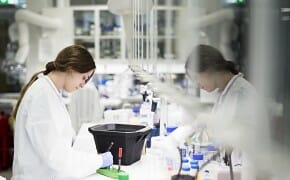
New research project examines Islamic State execution videos. "They are more than just a kind of exceptional evil," says PhD student Simone Molin Friis, who for the last few years has studied the terrorist group’s media strategy

Is it only individual tutors who should foot the bill when an intro week party goes overboard? Or does the problem run deeper? New research shows that there is a link between introduction week activities and the culture within a specific academic field.

It was research on popular culture that got Erik Steinskog into Le Monde and the Washington Post. But his heart and soul is with opera too. It's all a part of the same musical orbit.

When it comes to getting in the media, the political scientists dominate the University of Copenhagen list, followed by the lawyers and the economists. Here is the list of researchers who are most often quoted in the media.

Four new partnerships between the University of Copenhagen and the Capital Region are to bring the latest research in pediatric asthma, cancer, osteoarthritis and child infections out to doctors and patients.

Professor of bioarchaeology Matthew Collins is in charge of a new research project to investigate thousands of old parchments. It will lead to new insights into the animal husbandry and craftsmanship of the past. Collins can extract data about how people lived by analysing the thousand-year-old proteins.

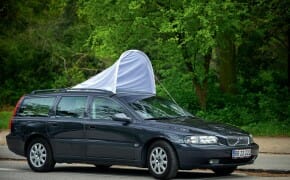
UCPH researchers want 300 Danes to help collect flying insects in huge nets mounted on their cars, transforming them into an “insect mobile.” It will be the first study of its kind in Denmark.
Two UCPH professors tried to find solutions to address fact denial - from climate change to HPV vaccines - at a popular debate at The People’s Political Festival 2018. We caught up with one of the speakers, Klemens Kappel, after the debate and asked him to elaborate.